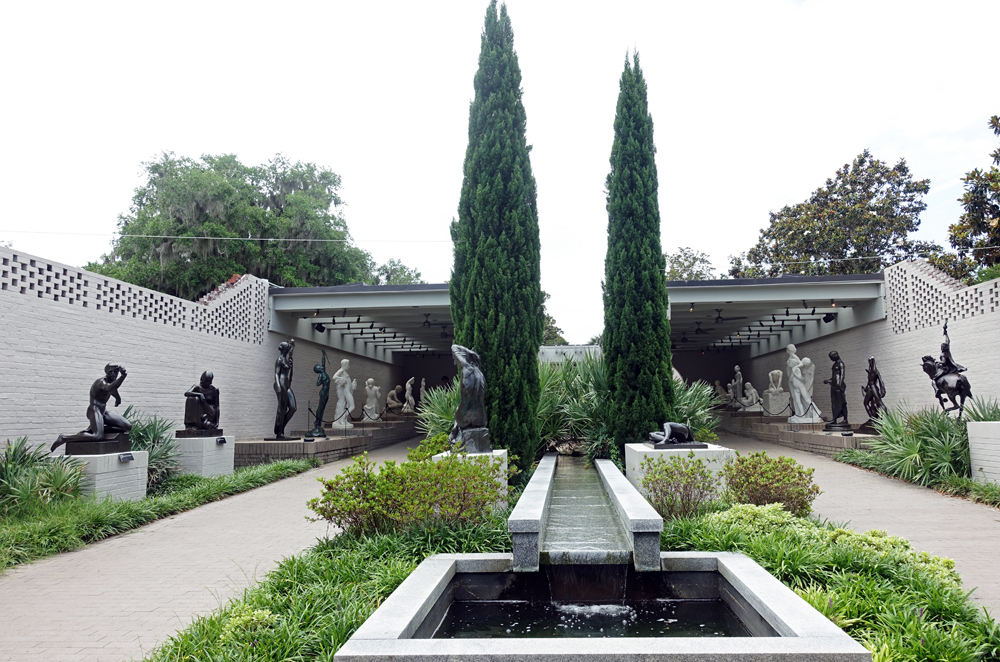
I’ve posted on Brookgreen Gardens before (see here), cropping the photos to show just the sculptures. But one of the marvelous features of Brookgreen is that many of the sculptures have a small garden or another area specifically designed to set them off. In this series of posts, with photos taken in early June when the gardens were full of flowers, I’m trying to give a sense of those gorgeous settings.
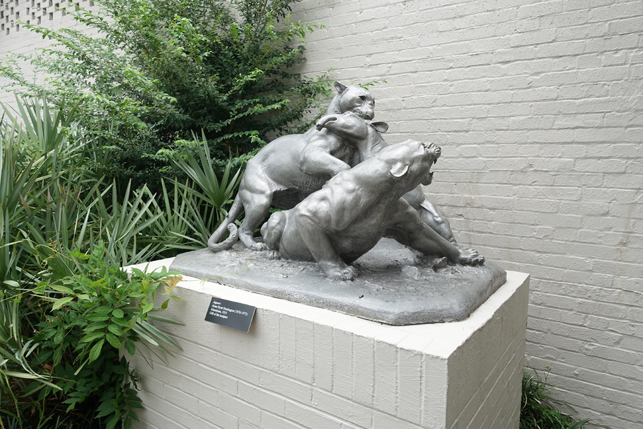
Animals of Spain, 1935
By Anna Hyatt Huntington. The Hispanic Society of America in New York City has marble versions of these, plus several other groups of animals by Huntington. (For a list, see this post on Huntington’s Boabdil.) Brookgreen’s versions are cast in aluminum.
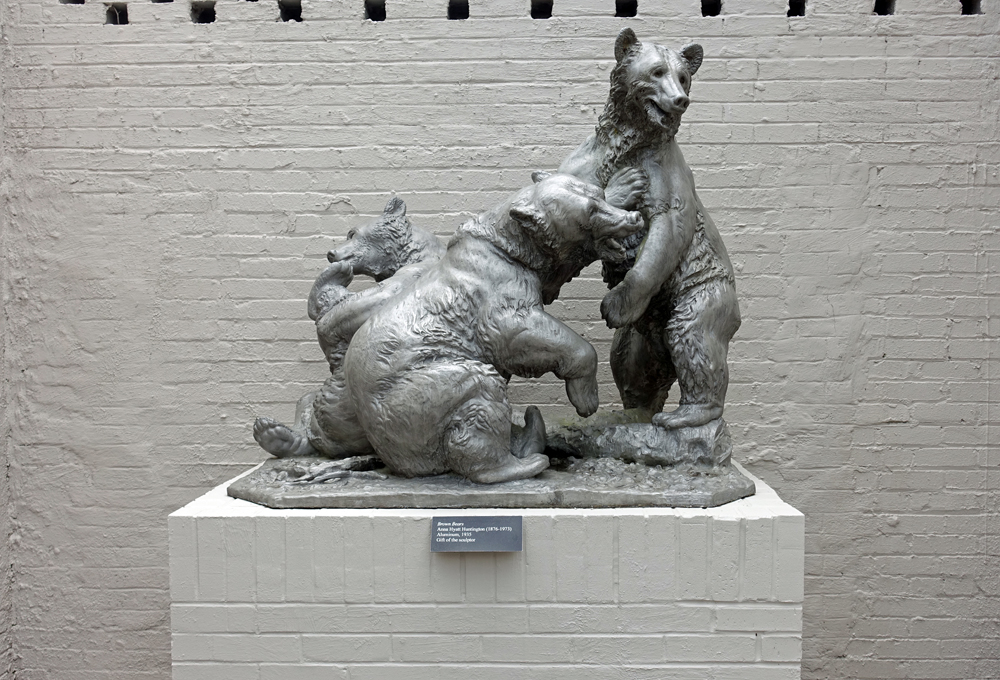
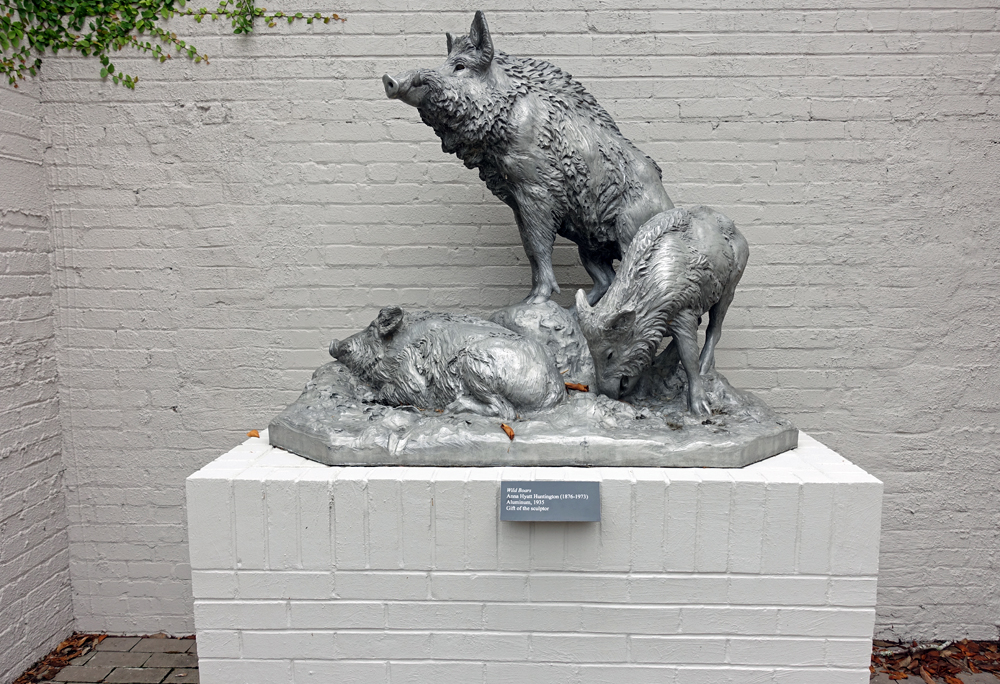
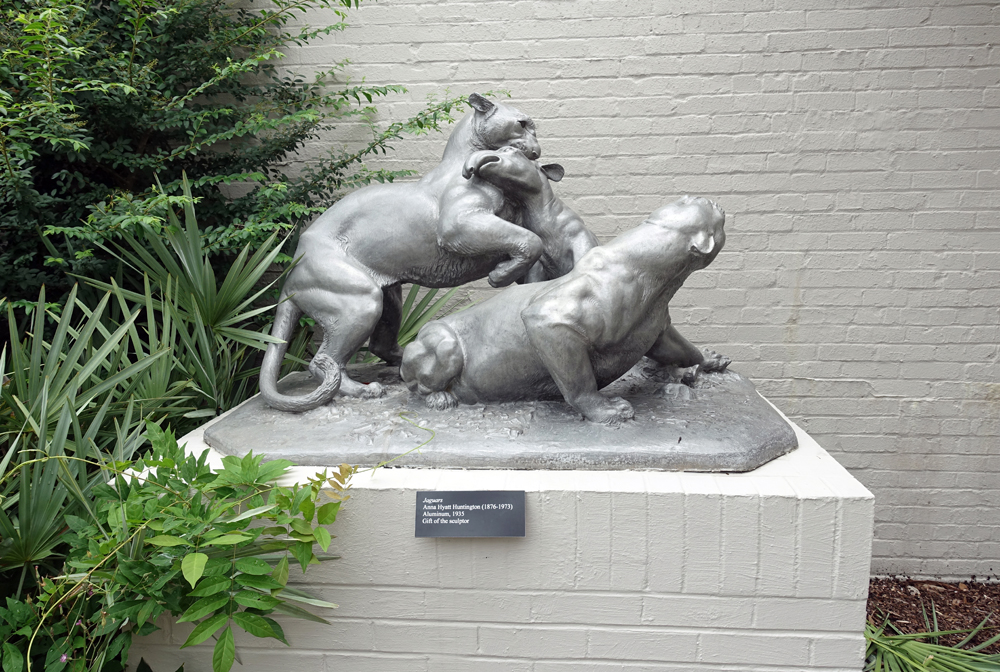
What sharp teeth you have!
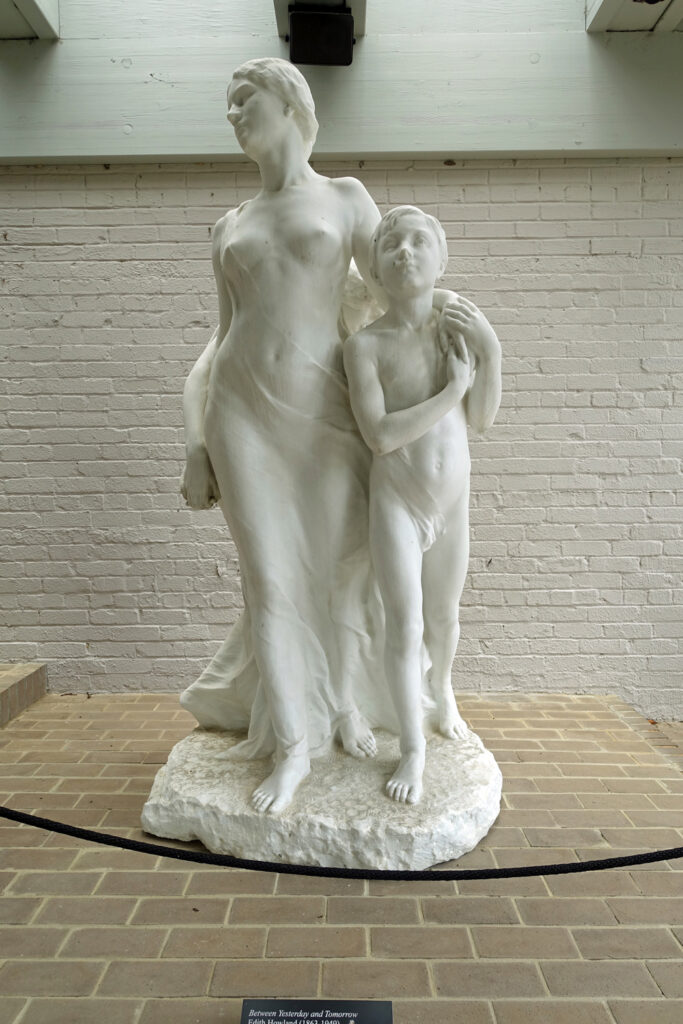
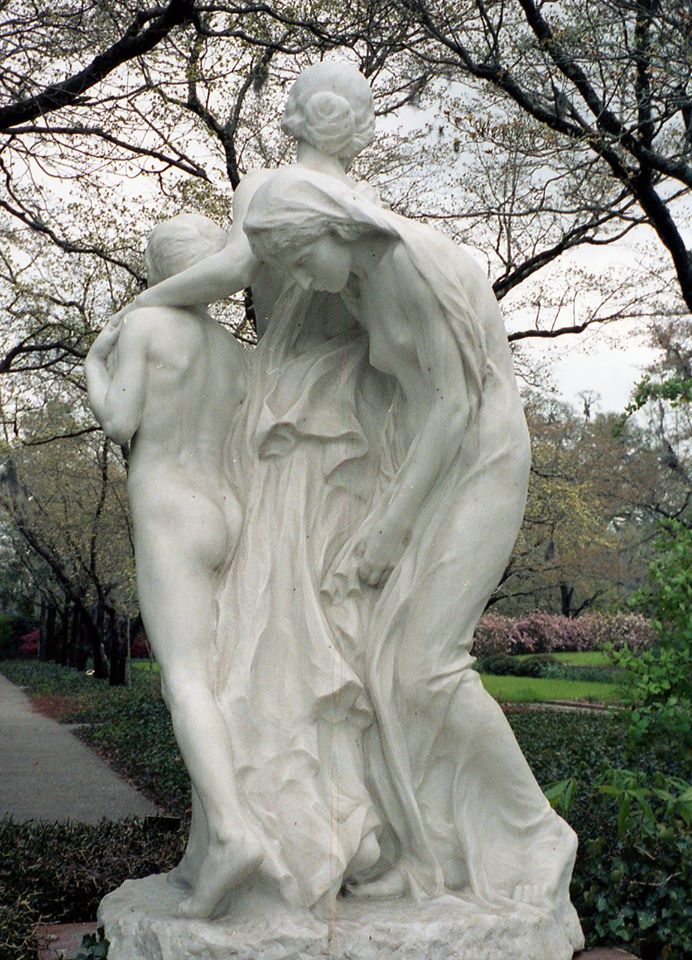
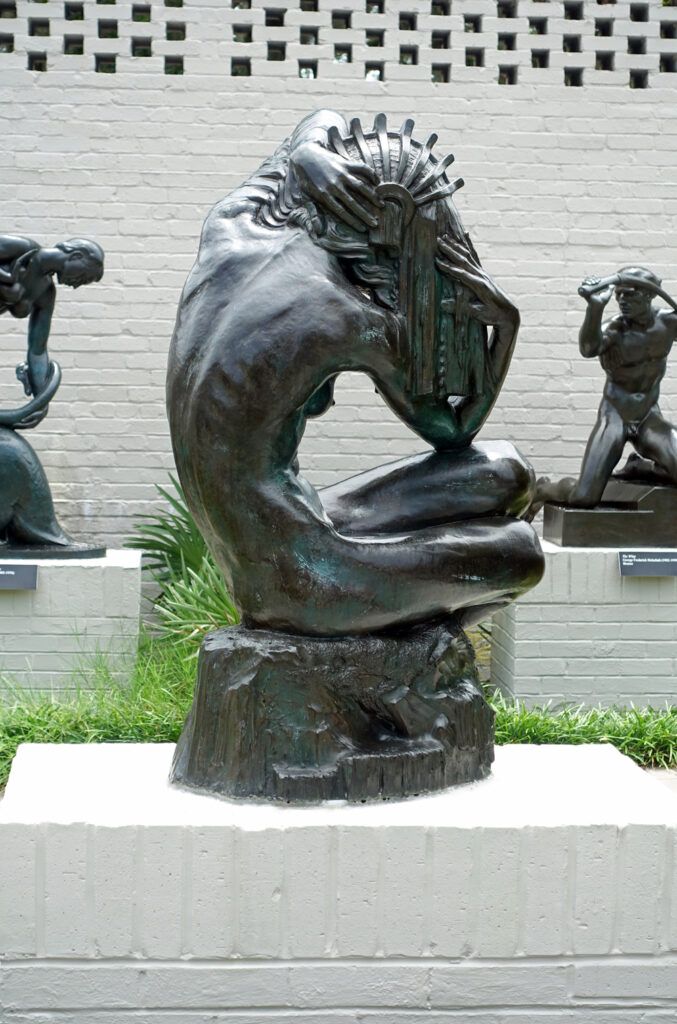
Between Yesterday and Tomorrow, 1914
By Edith Howland (1863-1940), who studied sculpture with Augustus Saint Gaudens and Daniel Chester French, among others. Behind the woman is a bowed old woman; in front is a young boy. Proske’s Brookgreen Gardens (I, 45) quotes an unattributed poem:
I move like a prisoner caught
For behind me comes my shadow
And before me goes my thought.
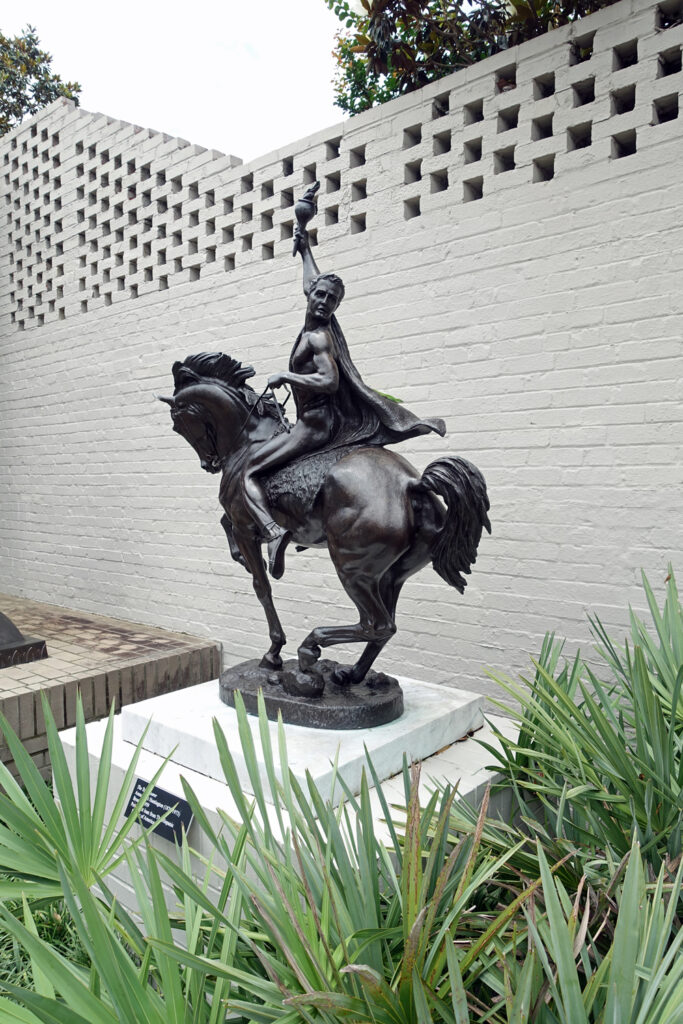
The Torchbearer, 1959
By Anna Hyatt Huntington. Depending on your level of optimism, this could be showing a moment before or after Huntington’s Torchbearers.
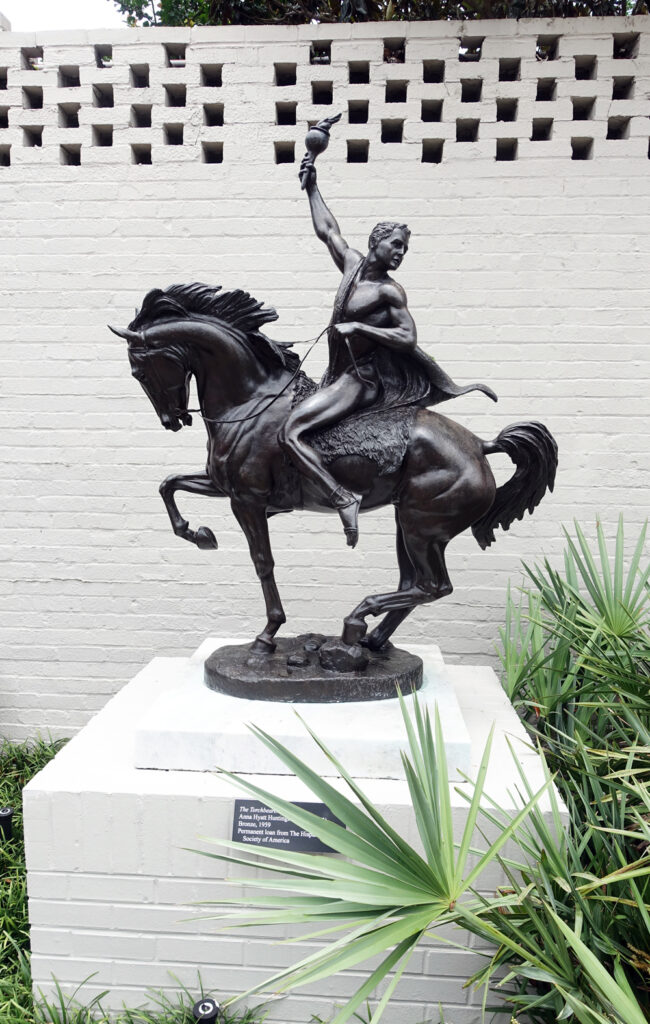
The maintenance at Brookgreen is amazing, particularly given that so many of the works are outdoors. Caught in this photo: a lizard explores the rider’s cape.
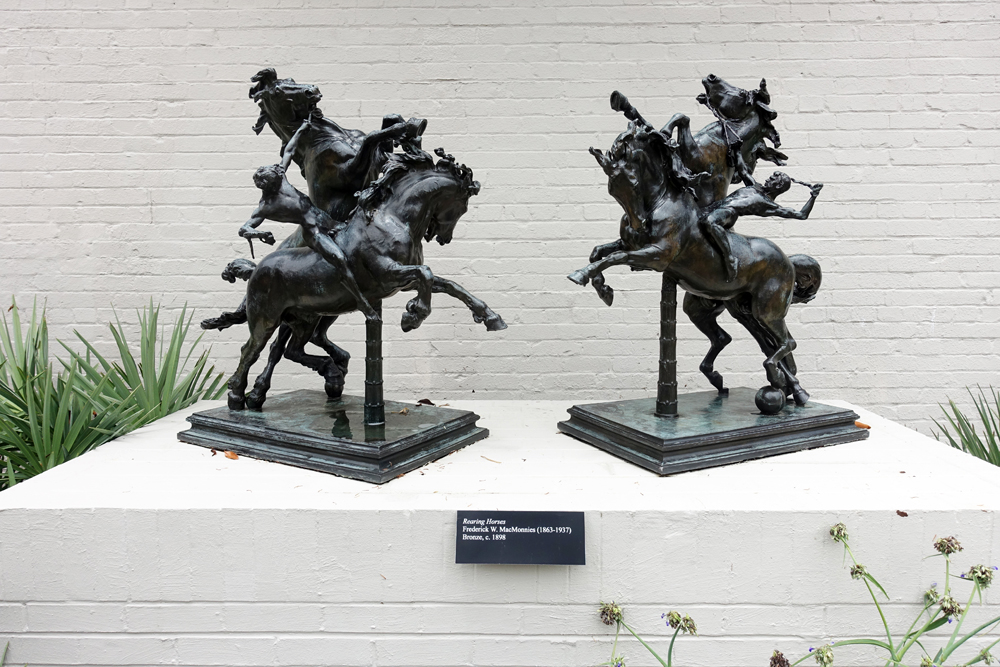
Rearing Horses, ca. 1898
By Frederick MacMonnies (1863-1937). This seems to be a small-scale version of MacMonnies’s Horse Tamers at the south end of Prospect Park. I say “seems” because the Prospect Park sculptures are set so high, and so crowded in with trees, that I’ve never been able to get good photos of them.
_003_-_Park_Circle,_Horse_Tamers.jpg)
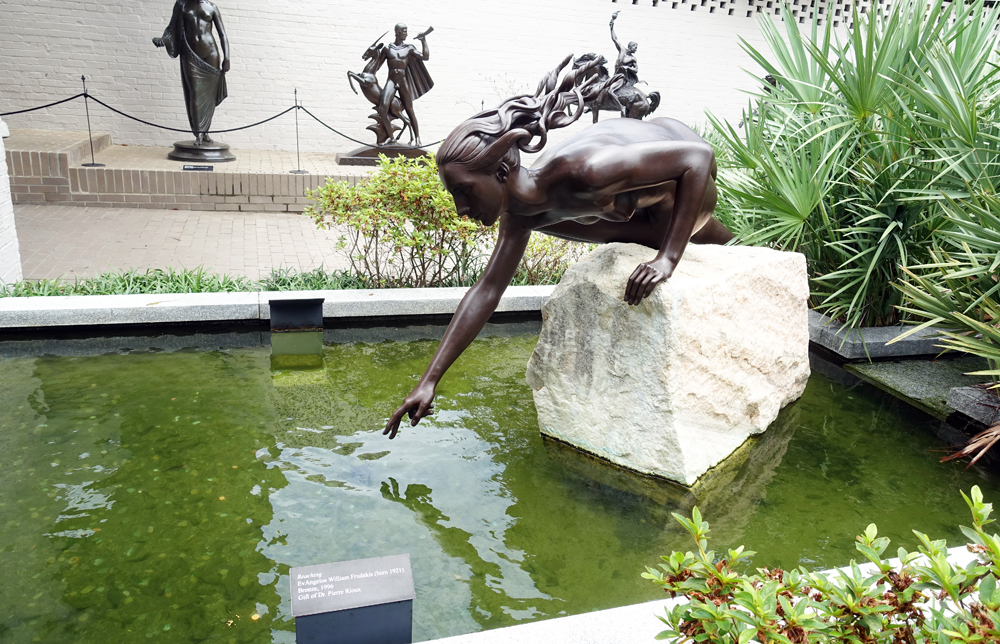
Reaching, 1996
By EvAngelos William Frudakis (1921-2019). In the preview to this video, you can see a model of Reaching at the right. EvAngelos is the brother of Zenos Frudakis, whom I’ve mentioned on this site several times. I like the smoothness of the finish on her skin, and the way the hair ripples.
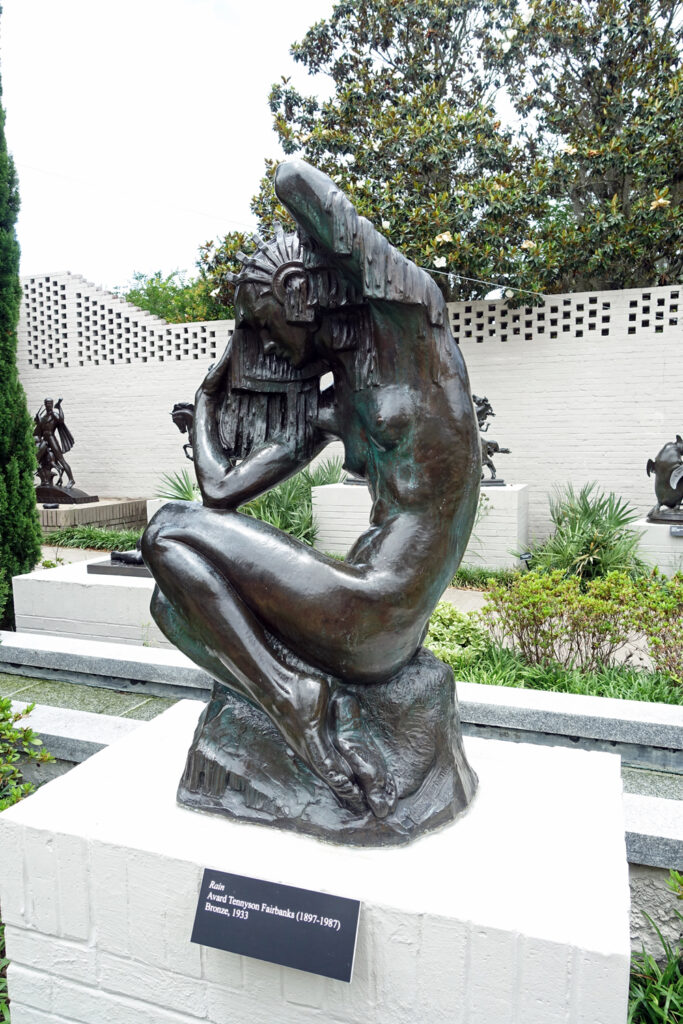
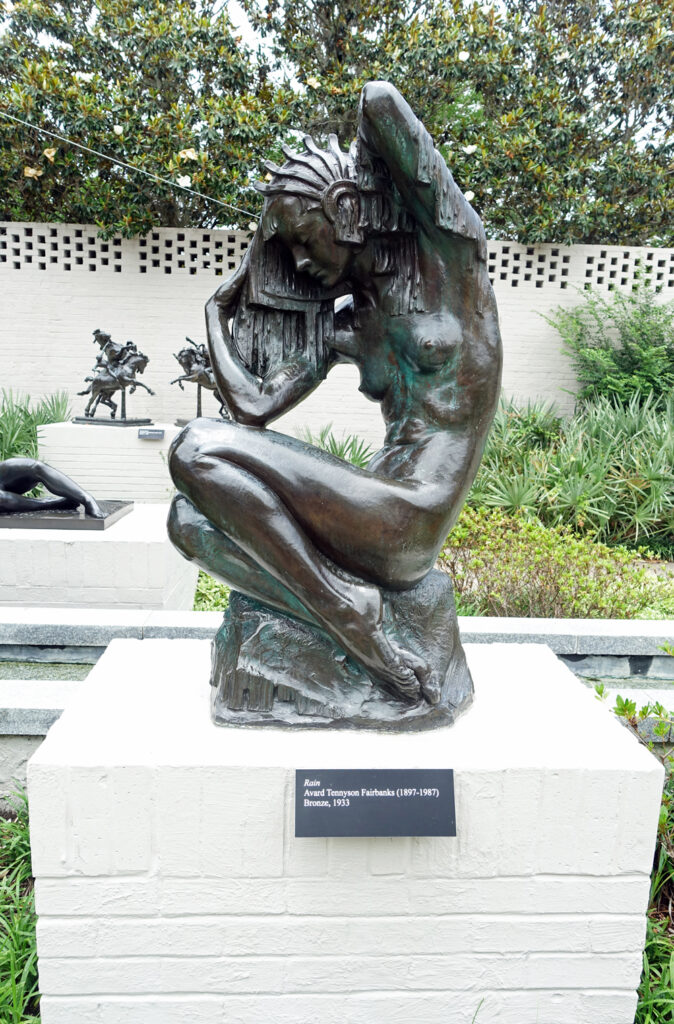
Rain, 1933
By Avard Tennyson Fairbanks (1897-1987), a native of Provo, Utah who eventually taught sculpture and industrial design. At first I saw the drops as tears, and read this as a sorrowful work. But Fairbanks said: “[Rain] enfolds itself and drops to earth to give growth and beauty to life” – and now that I look again, there are no tears on the woman’s face. Fairbanks is quoted in Proske, Brookgreen Gardens Sculpture, I, 256.
More
- For more of my posts on Brookgreen, click here. The official site is here.
- In Getting More Enjoyment from Sculpture You Love, I demonstrate a method for looking at sculptures in detail, in depth, and on your own. Learn to enjoy your favorite sculptures more, and find new favorites. Available on Amazon print and Kindle formats.
- Want wonderful art delivered weekly to your inbox? Check out my free Sunday Recommendations list and rewards for recurring support: details here.