I’ve posted earlier on my five favorites from the Gardner Museum (see here), but those were chosen from artworks I found on the Net. In August 2020, I visited the Gardner for the first time in decades. The introduction to this series is here. For all posts on the Gardner, click “Isabella Stewart Gardner Museum” in the tag cloud.
Stairwell
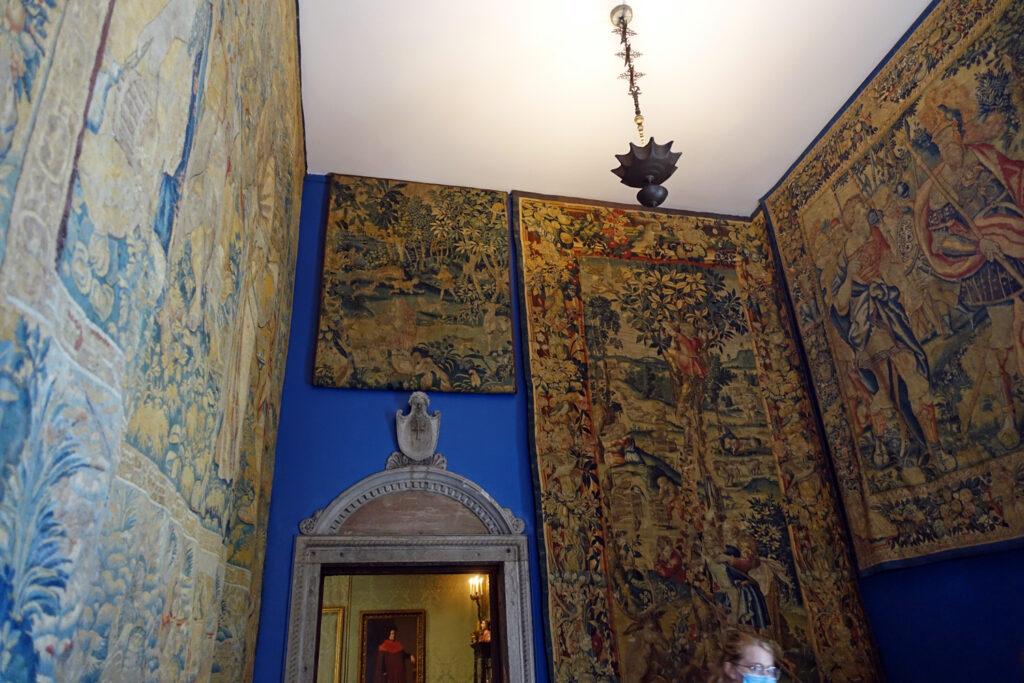
“Stairwell” seems too tame a word for it: it’s full of wrought iron, textile samples, and huge tapestries. Yes, that is the original color: “Bardini blue” is named after Stefano Bardini, a dealer of Isabella’s time who favored this color in his Florentine gallery.

The “Bardini blue” walls are more accurate in this photo. Yum.

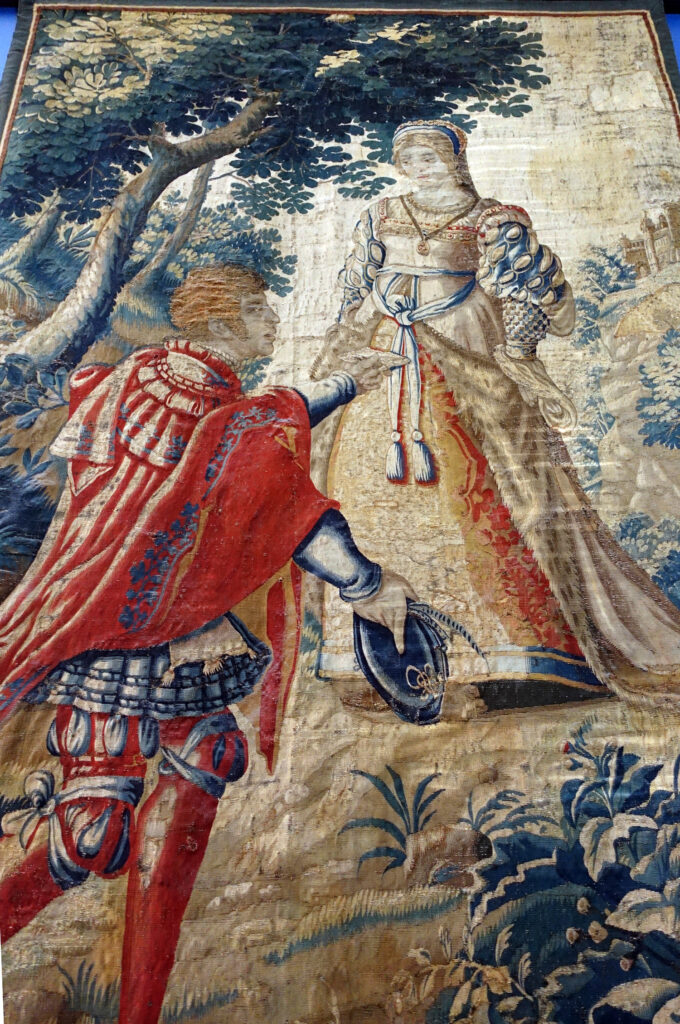
Detail of one of the tapestries in the stairwell.
Also in the stairwell: a cheerful fresco of musicians by Giorgio Vasari, ca. 1545. He’s more famous for being the first to write biographies of artists.

Dutch Room
Six works stolen from the Gardner in the notorious 1990 heist hung in this room, including two Rembrandts and a Vermeer. The empty frames have been left hanging: one is at the far left of this photo.
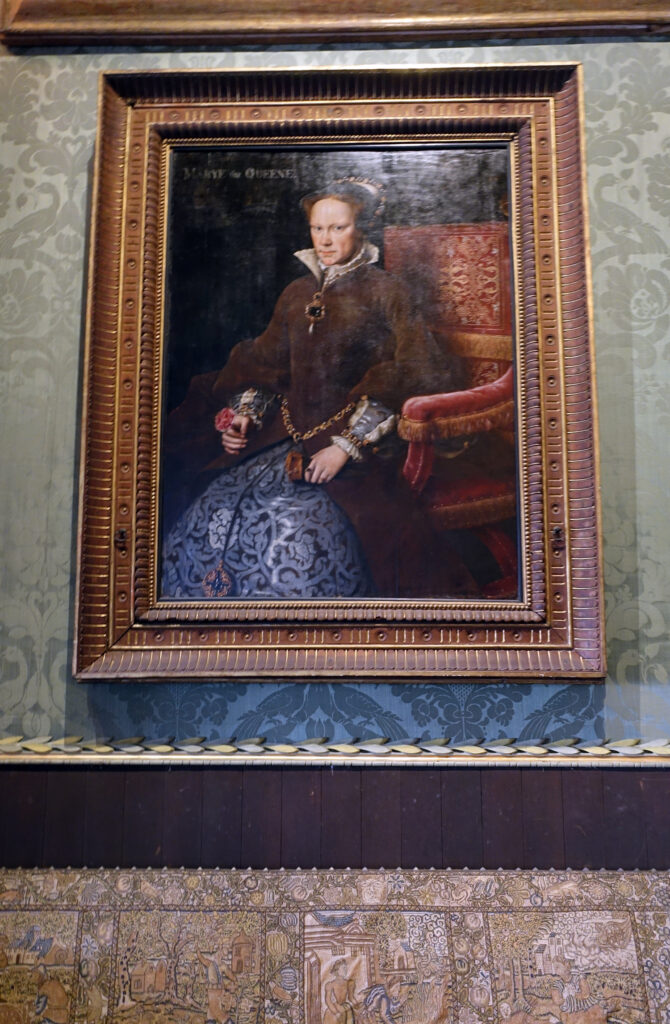
Looking fierce, which she was: Mary Tudor, Queen of England (r. 1553-1558), painted in 1554 by Antonis Mor and his workshop to celebrate Mary’s marriage to Philip II, King of Spain. In an unsuccessful attempt to reverse the Reformation, Mary ordered more than 280 English dissenters burned at the stake: hence her nickname “Bloody Mary”.
A self-portrait by Rembrandt, at age 23 (1669): one of the prized paintings in Isabella’s collection.
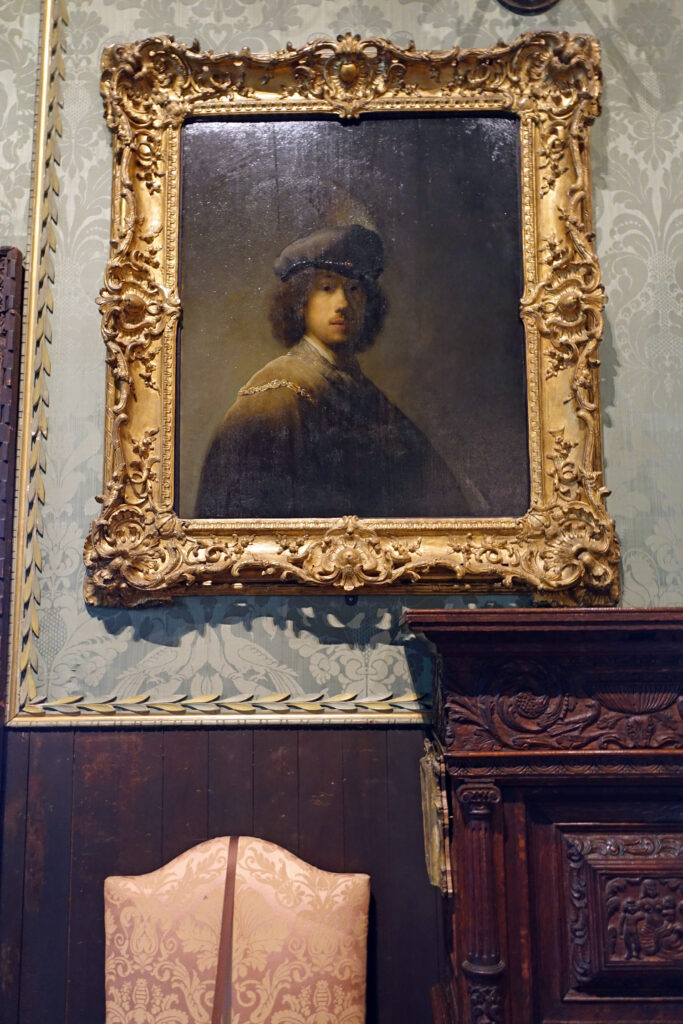
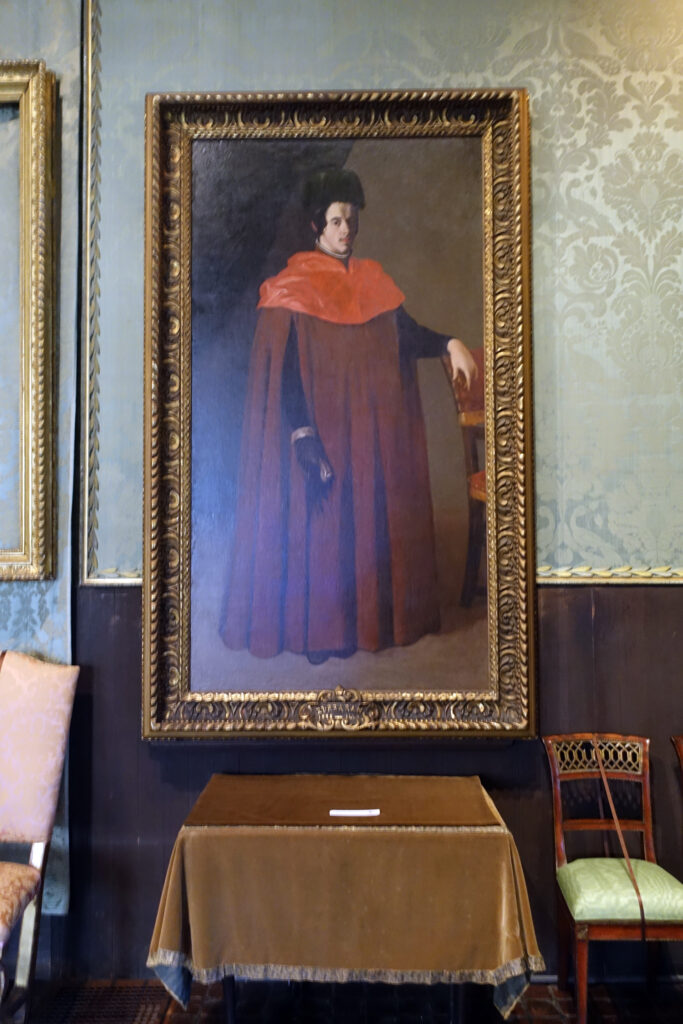
Zurbaran (1598-1662) is one of my favorite Spanish painters: such crisp, clear details! In this one, painted ca. 1635, the subject is a lawyer … which appeals to me far more than his usual saints. What is it doing in the “Dutch Room”? Only Isabella knows.
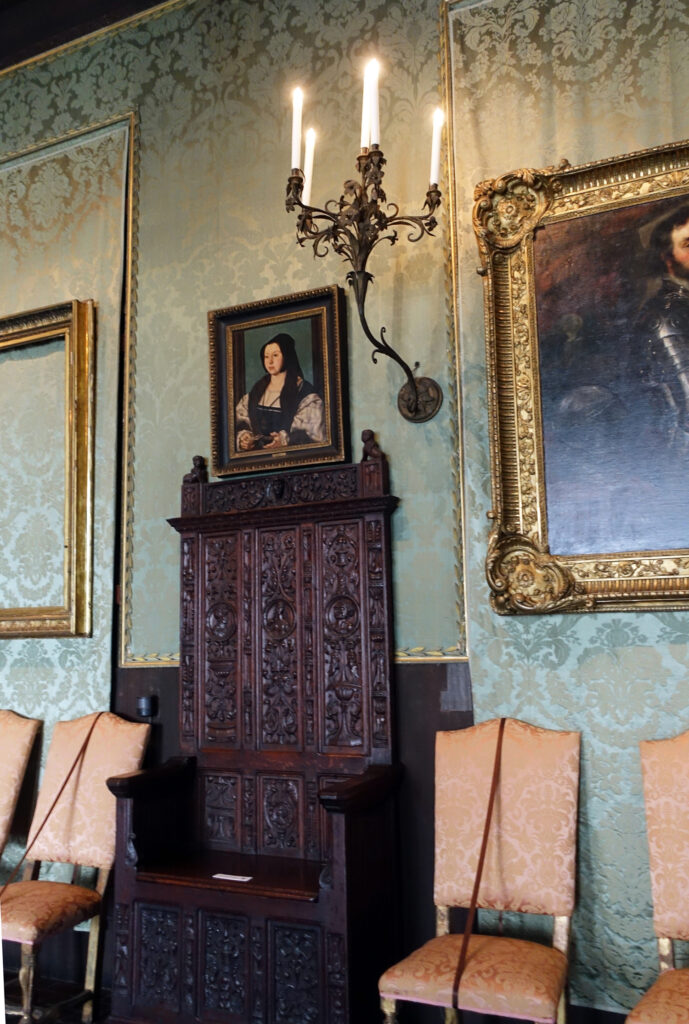
By Hans Holbein the Younger, an extraordinary portrait painter: Sir William Butts and Lady Margaret (Bacon) Butts, 1543. (I did not make that up.) Holbein also painted the stunning portraits of Sir Thomas More and Thomas Cromwell in the Frick Collection, which I discussed in detail in How to Analyze and Appreciate Paintings.


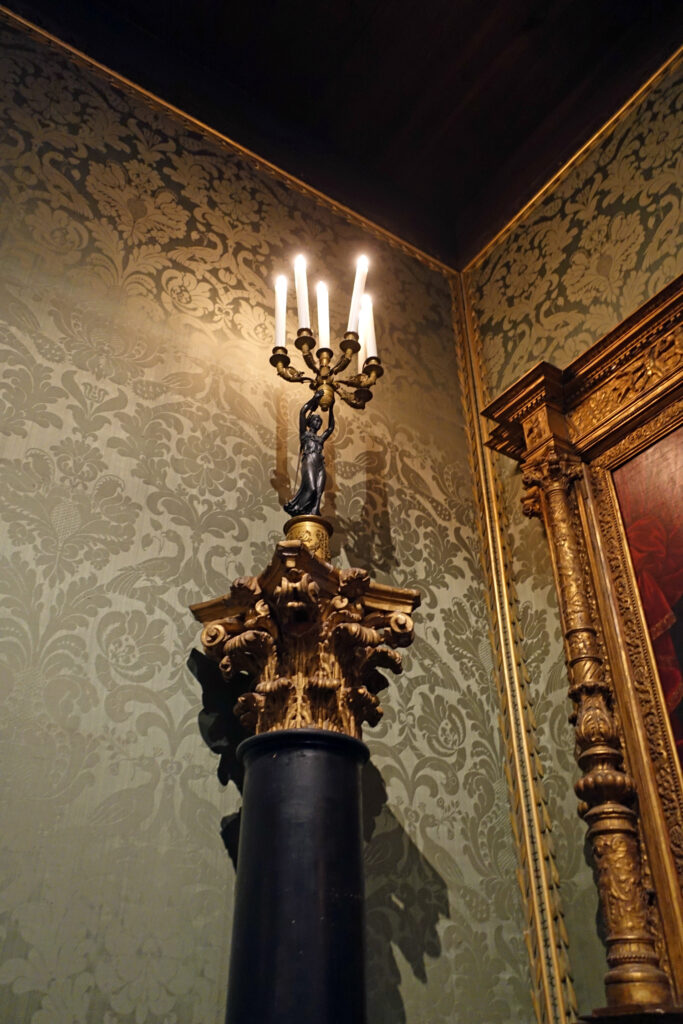
Wall sconce and gorgeous fabric wall coverings in the Dutch room. Now you know what all those imitations are imitating!
The Gardner is one of the few museums I know where it’s always worth looking at the ceiling.
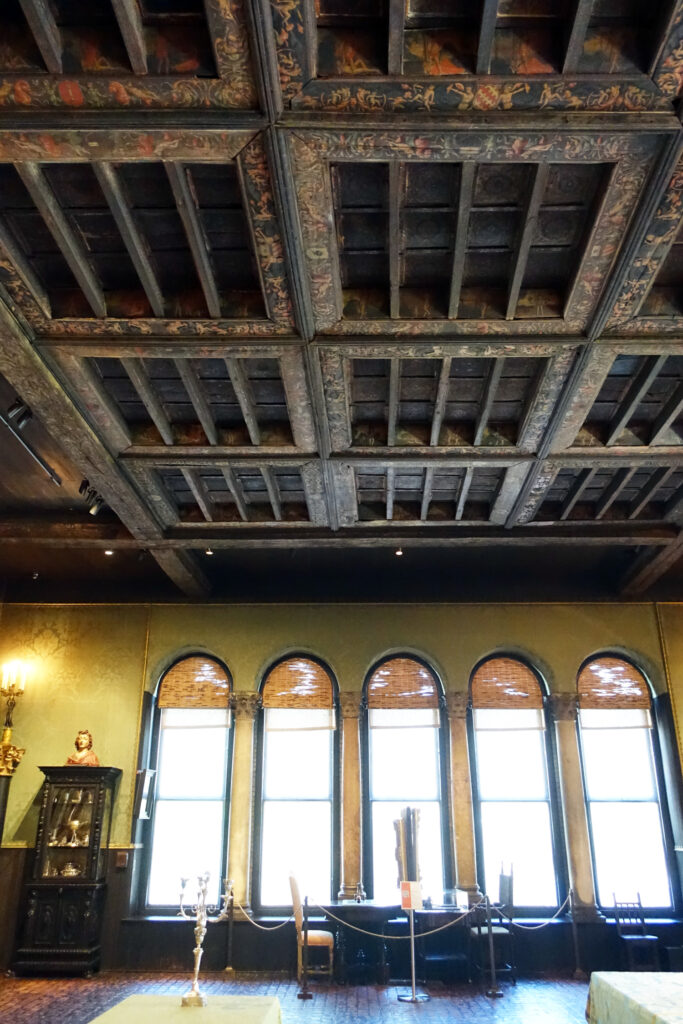
View of the courtyard from the second floor.
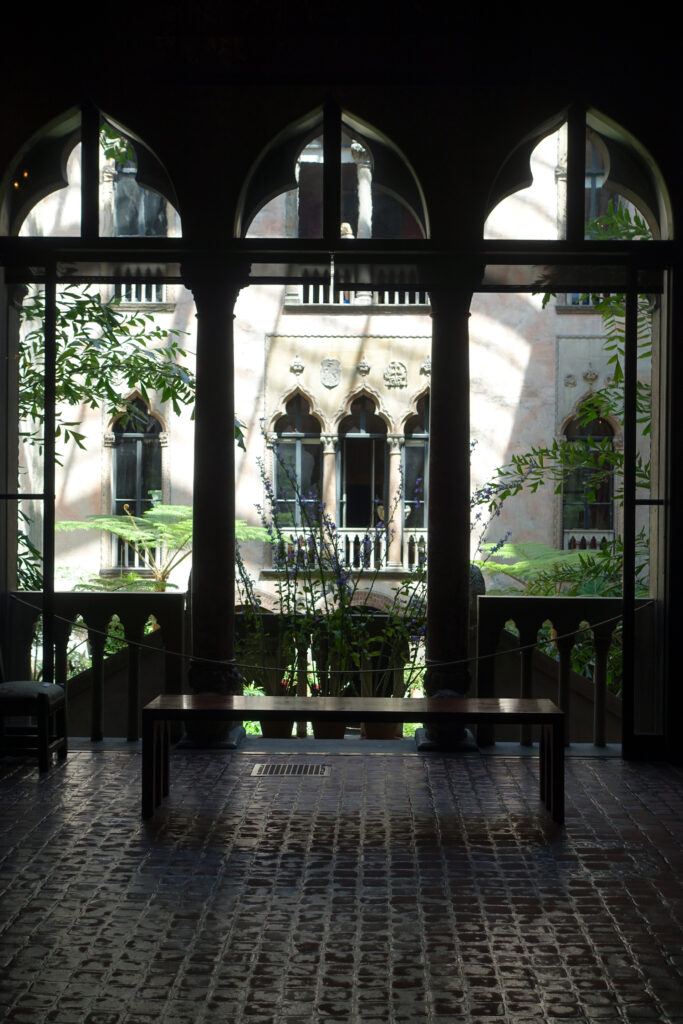
The Tapestry Room
A huge space that Isabella used as a concert hall. Again: look at the ceiling!

The Short Gallery
Portrait of Isabella by Anders Zorn, 1894. One of my favorite paintings at the Gardner, for the energy level.

Little Salon
The Chariot of Venus, by Francois Boucher: very 18th century, very Rococo, very charming! Far better image here.

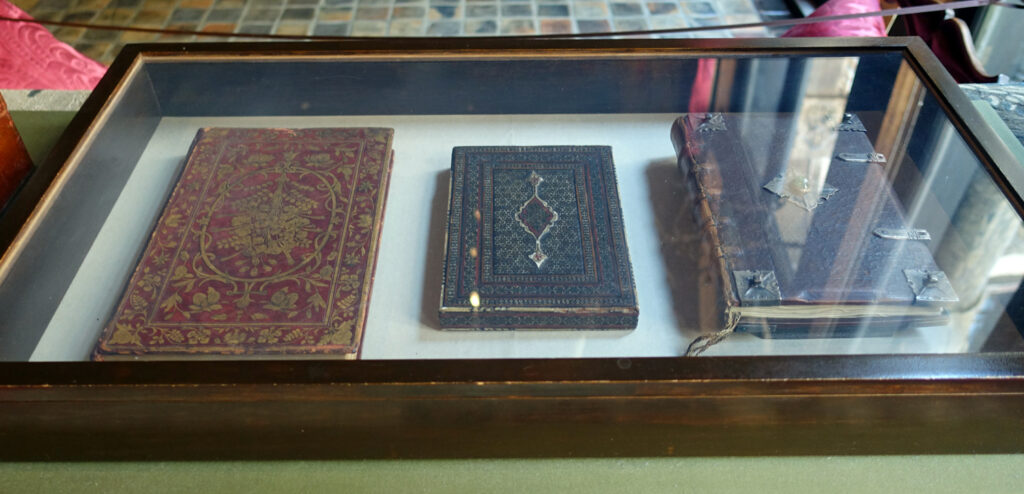
Bindings
From Isabella’s collection of books and autographs: a few lovely bindings.
Next week: third floor.
More
- In Getting More Enjoyment from Sculpture You Love, I demonstrate a method for looking at sculptures in detail, in depth, and on your own. Learn to enjoy your favorite sculptures more, and find new favorites. Available on Amazon print and Kindle formats.
- Want wonderful art delivered weekly to your inbox? Check out my free Sunday Recommendations list and rewards for recurring support: details here.