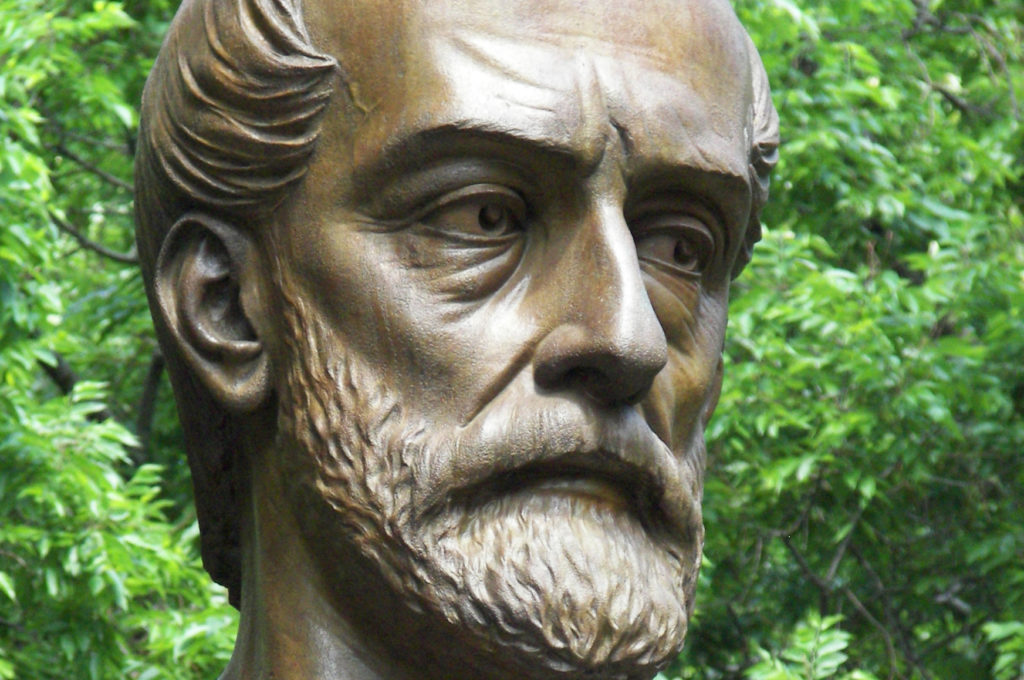
- Date: 1876
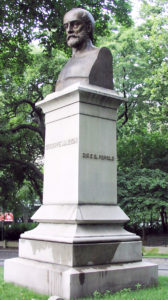
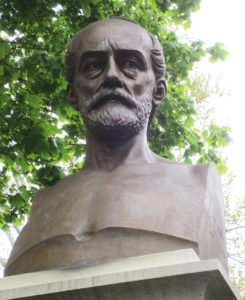
- Sculptor: Giovanni Turini. Granite pedestal by F. Matriati.
- Medium & size: Bronze, over lifesize.
- Location: Central Park, West Drive near West 66th St.
They seek him here
They seek him there
They seek Mazzini everywhere …
For forty years, Italian patriot Giuseppe Mazzini flitted through Europe, persecuted by the Austrians, the French, the Swiss, the British, and the Pope. Often in disguise or under an alias, he fled from Milan to Genoa, London to Marseilles, Sicily to Pisa. Young Carl Schurz, meeting Mazzini in London, felt as if he had been invited to the workshop of a master magician who was able to evade authorities “as if the earth had swallowed him.”
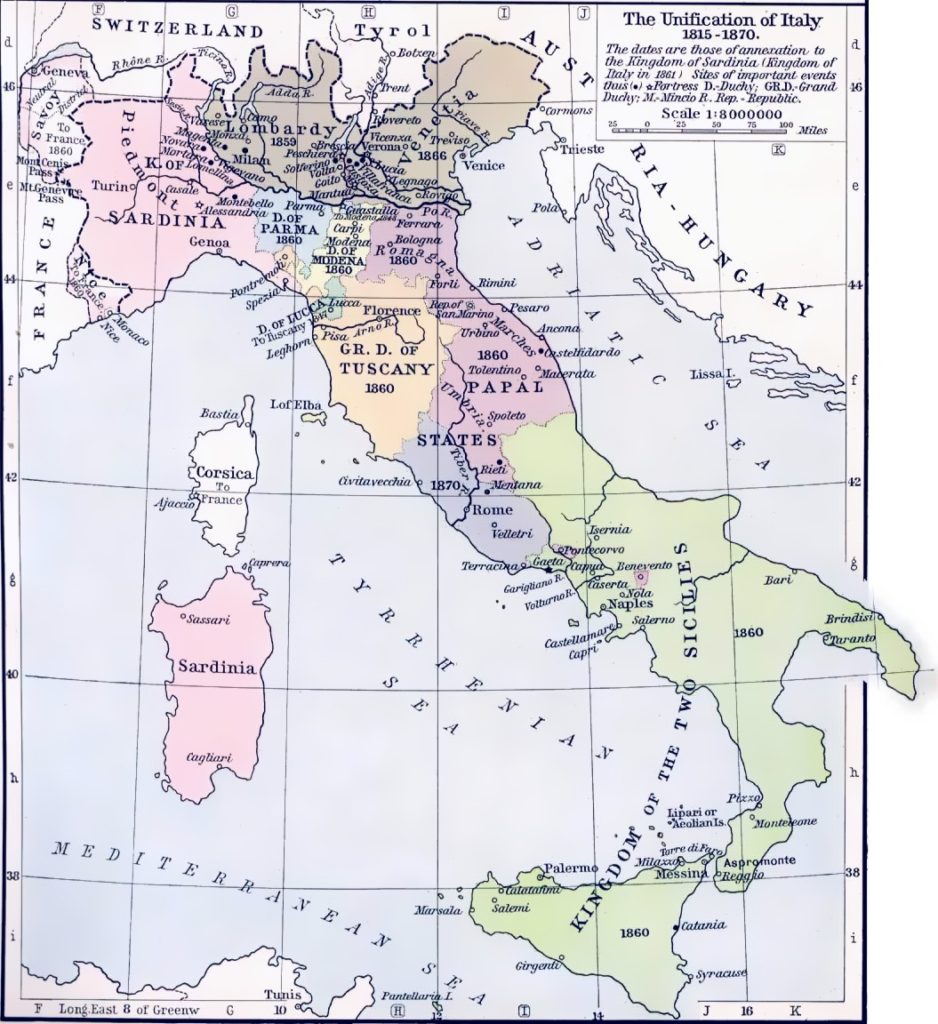
After the fall of the Roman Empire, the Italian peninsula became a patchwork of separate territories under the control of various rulers – some more repressive than others. The men most responsible for Italy’s eventual unification were Mazzini, Garibaldi, and Cavour.

Conte di Cavour. Image: New York Public Library Cartoon of the Conte di Cavour, 1857. Image: Wikipedia Garibaldi leading a charge, 1866. Image: Allposters Turini, Garibaldi, 1888. Union Square, New York. Photo copyright © 2019 Dianne L. Durante
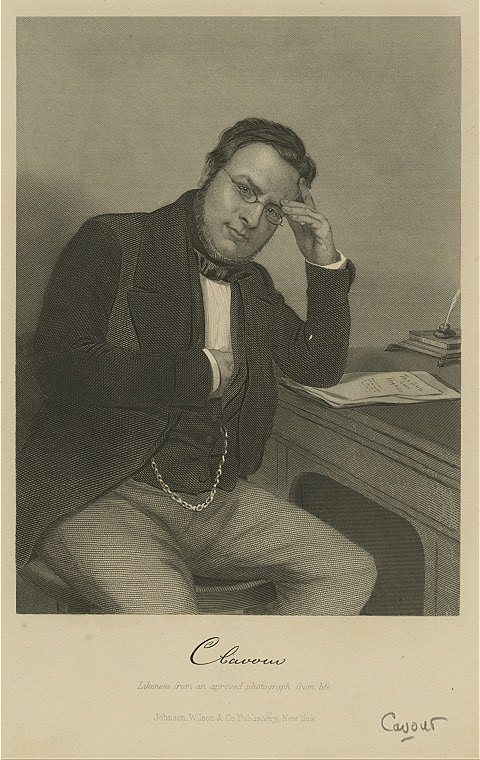
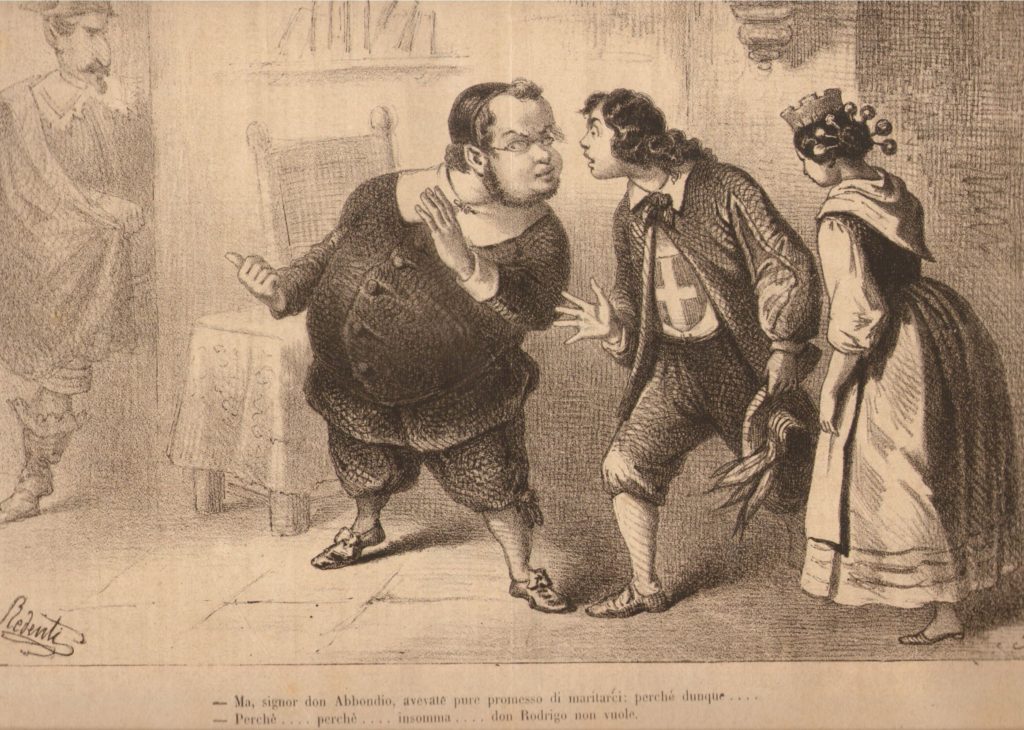
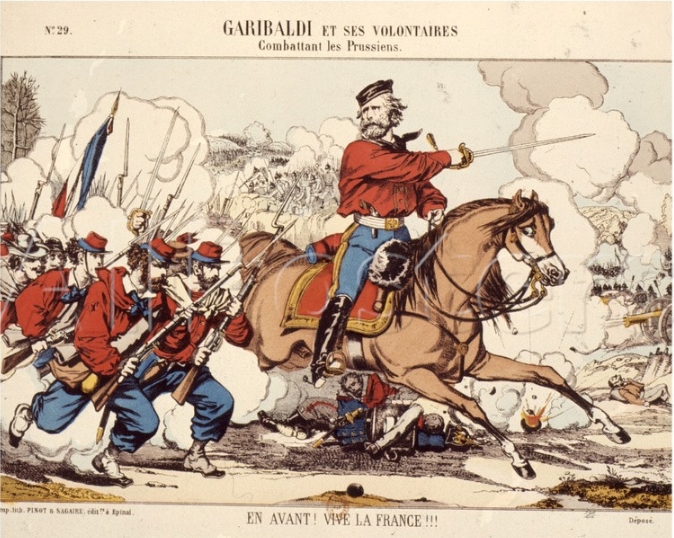
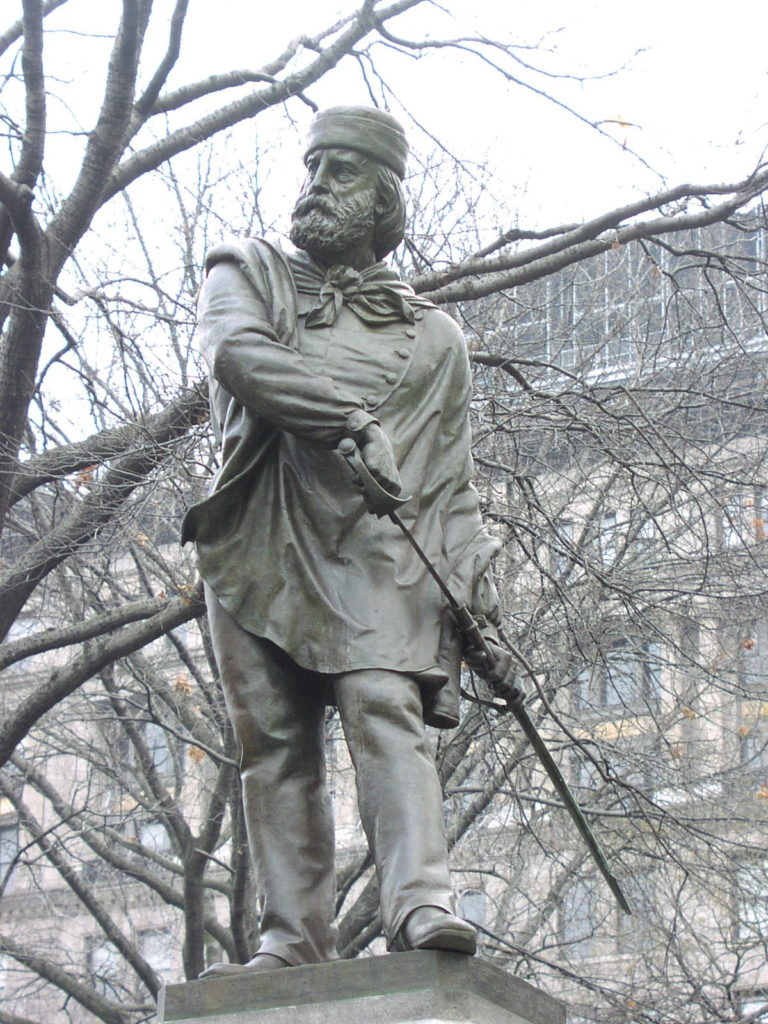
The Conte di Cavour was a politician’s politician. Giuseppe Garibaldi was a soldier’s soldier. And Mazzini was a thinker’s thinker, who believed that the right ideas could change the world. “Great revolutions,” he said, “are the work rather of principles than of bayonets, and are achieved first in the moral, and then in the material sphere.”
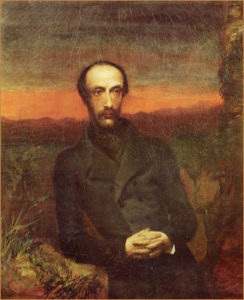
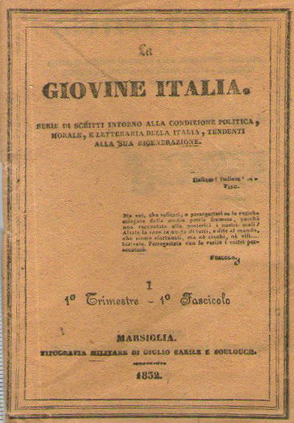
Mazzini wanted Italy to be not only unified and independent, but governed as a republic. Beginning in the 1830s, his periodicals and clandestine organizations attracted tens of thousands willing to fight for an Italian republic. So much did Austrian authorities fear this grassroots movement that they declared reading Mazzini’s periodicals to be high treason, punishable by death.
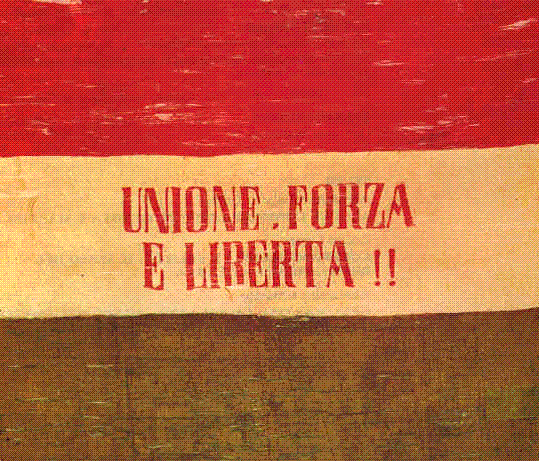
The periodical Giovine Italia, founded by Mazzini. Image: Wikipedia Flag of La Giovine Italia, a political movement for Italian youth founded in 1831 by Mazzini.
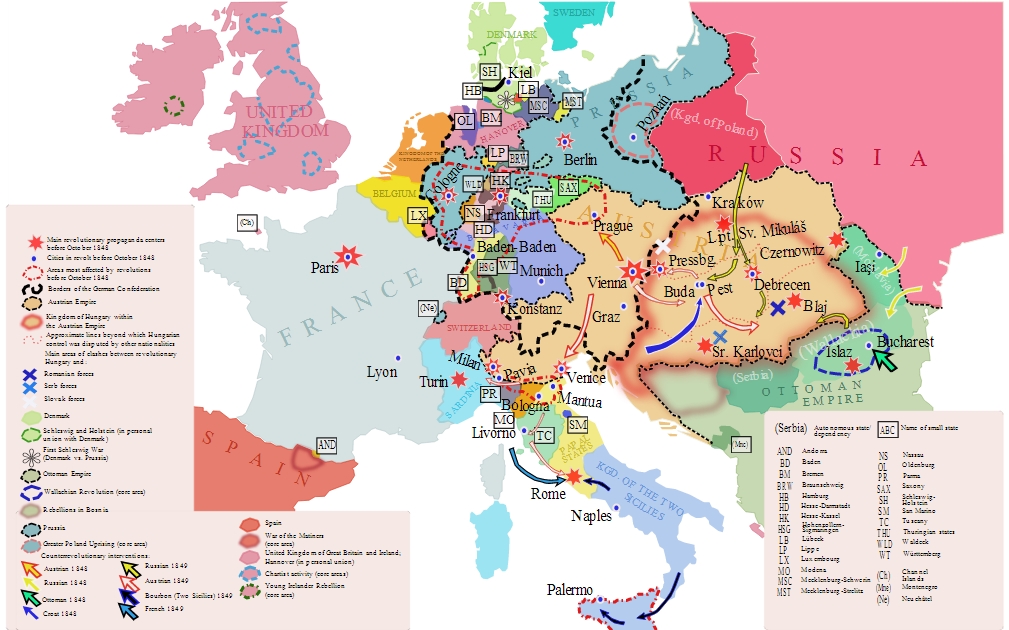
The high point of Mazzini’s political career came in the Year of Revolution, 1848. Across Europe, centuries-old monarchies were temporarily overthrown in favor of socialism, republicanism, or anarchy.
After a revolt in Rome, the newly elected assembly appointed Mazzini to a triumvirate that would lead the new Roman Republic. But French and Spanish soldiers forced him into exile yet again after a mere three months.
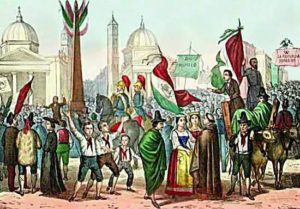
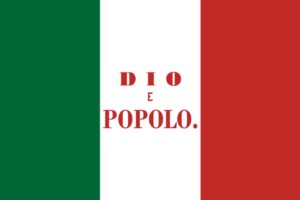
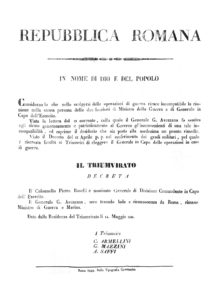
Most of the popular uprisings that Mazzini helped rouse were crushed even more quickly than that. When unification finally came, beginning in 1860, it was brought by Victor Emanuele, king of Piedmont and Sardinia, with professional soldiers.
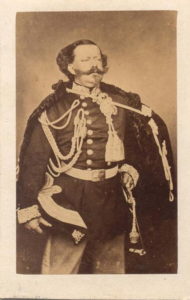
Garibaldi, who had fought for the king for a decade, continued to lead Italian armies.
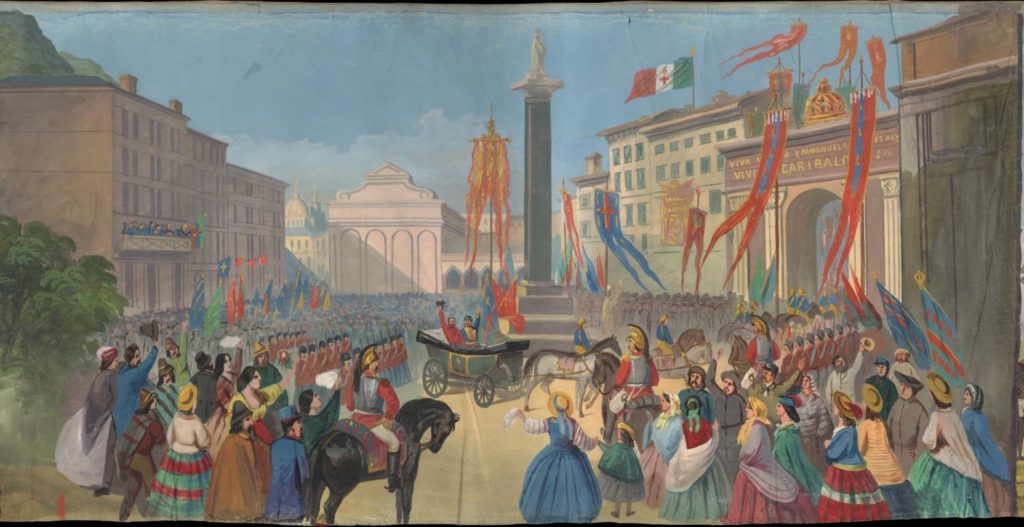
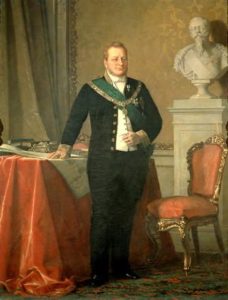
Cavour, who had served as the king’s minister for a decade, became Italy’s first prime minister.
Mazzini, who had opposed monarchical government for forty years, was elected to the Italian parliament. He refused to assume the office because it required him to swear allegiance to King Victor Emanuel.
More
- For the story of Central Park in the 1850s-1870s, see my book Central Park: The Early Years.
- For early images of Central Park, see the pages on this site for through 1860, 1861-1865, and 1866-1870.
- In Getting More Enjoyment from Sculpture You Love, I demonstrate a method for looking at sculptures in detail, in depth, and on your own. Learn to enjoy your favorite sculptures more, and find new favorites. Available on Amazon in print and Kindle formats. More here.
- Want wonderful art delivered weekly to your inbox? Check out my free Sunday Recommendations list and rewards for recurring support: details here.