For more on the the Saint Gaudens National Historical Park, see last week’s post. This post is available as a video at https://youtu.be/6CBhkexXSog.
This week we take a quick look at the stables and the nearby garden, and then move on to Saint Gaudens’s studio and some of the works inside it.
The Stable
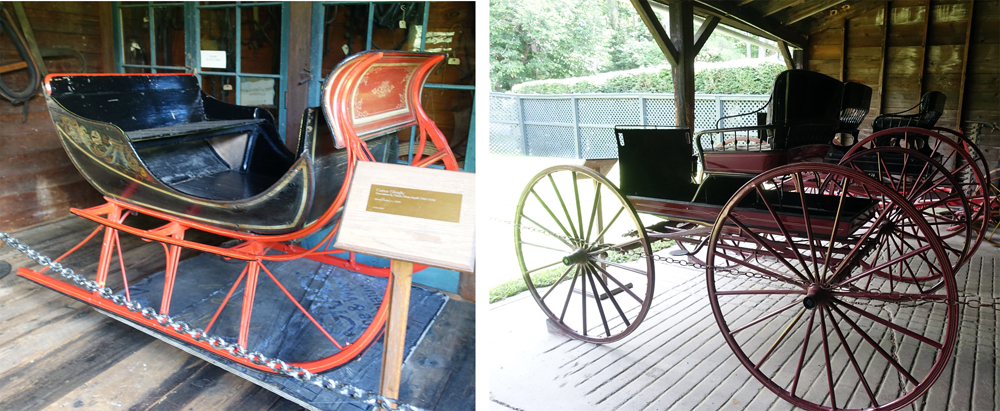
The stable has on display a variety of vehicles that were used in Saint Gaudens’s time. I’m not terribly interested in vehicles, so I’ll only give you two images. But if you want to visit the Saint Gaudens site and have a kid who’s only interested in cars, this might be a way to get them interested.
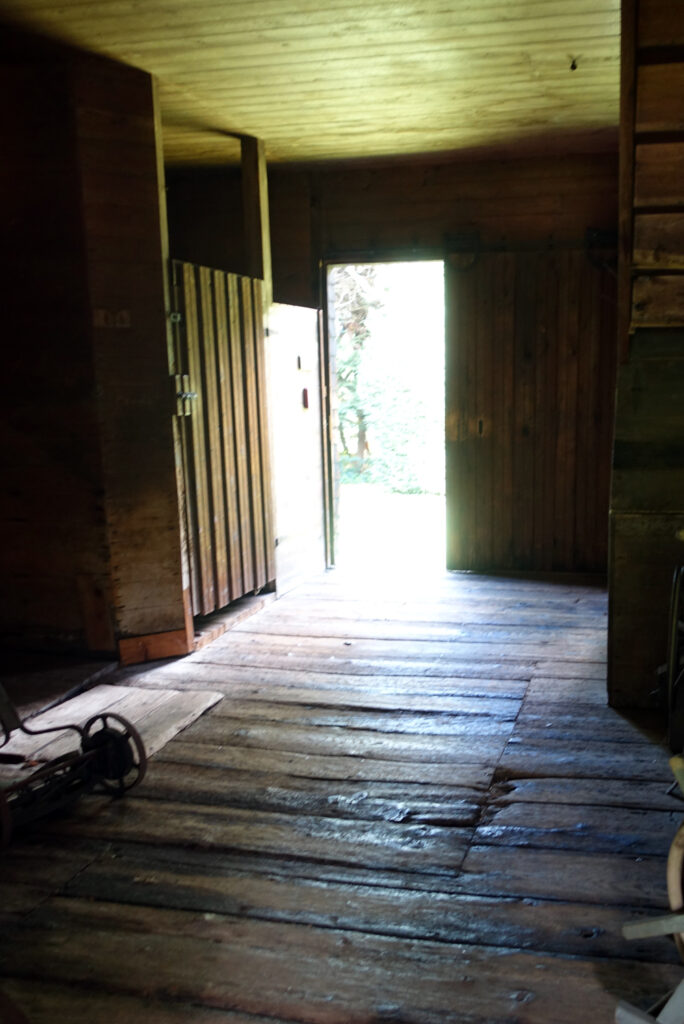
What I did like about the stables was this: the wooden floor looks so old that Saint Gaudens probably walked on it!
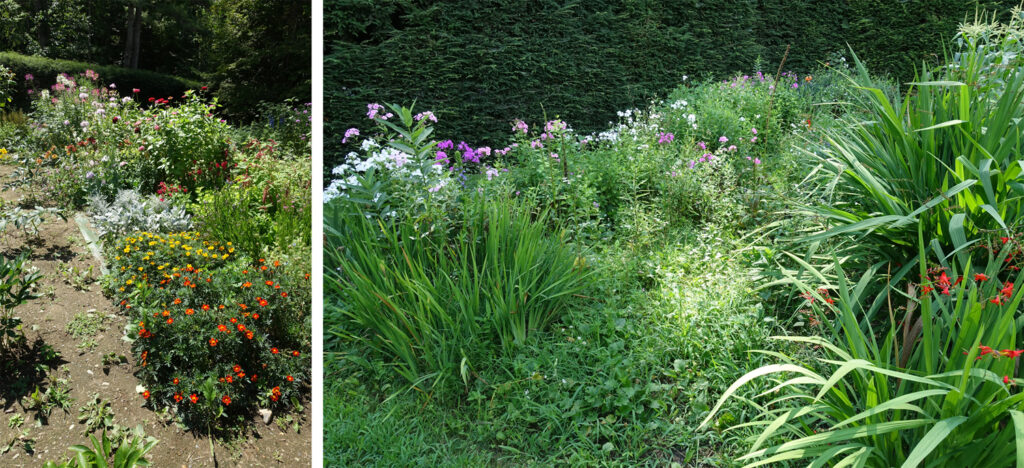
The Cutting Garden
The area near the stable was once a vegetable garden. It’s now used to grow flowers for arrangements in the buildings. I believe there’s a full-time horticulturalist on staff.
The Little Studio
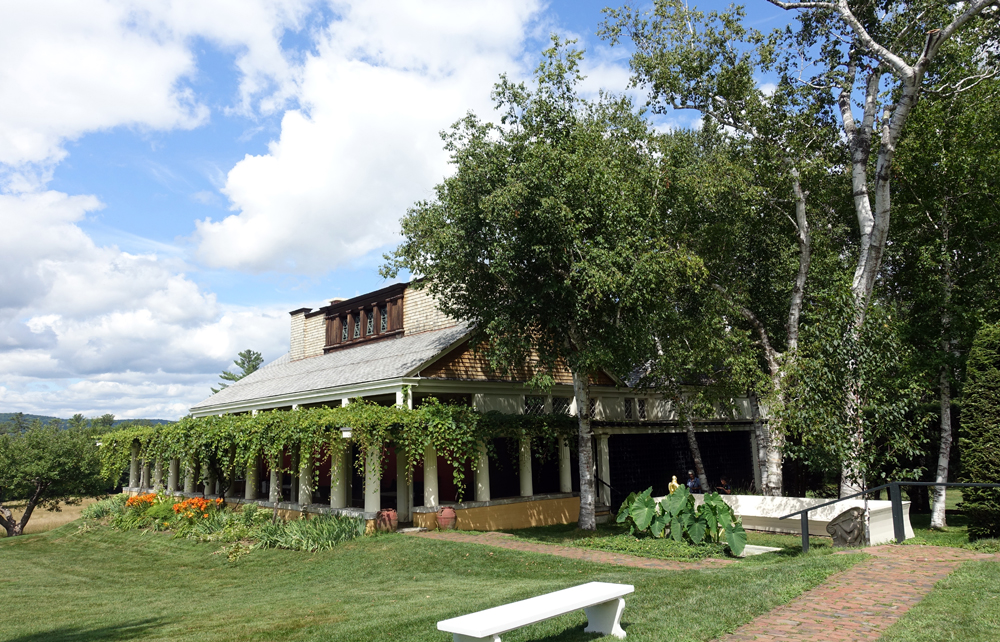
When Saint Gaudens moved to Cornish in 1885, he converted the barn on the property to a studio. There Saint Gaudens worked on models, and assistants helped him complete commissions. The barn burned down in 1904, destroying Saint Gaudens’s sketches, some models, and his correspondence – a sad loss for him and for us. The studio that Saint Gaudens built to replace it burned in 1944. It was replaced by the New Studio, shown here on the left. I don’t know how much of it recalls the earlier studios, but it’s a lovely exhibition space with great lighting.
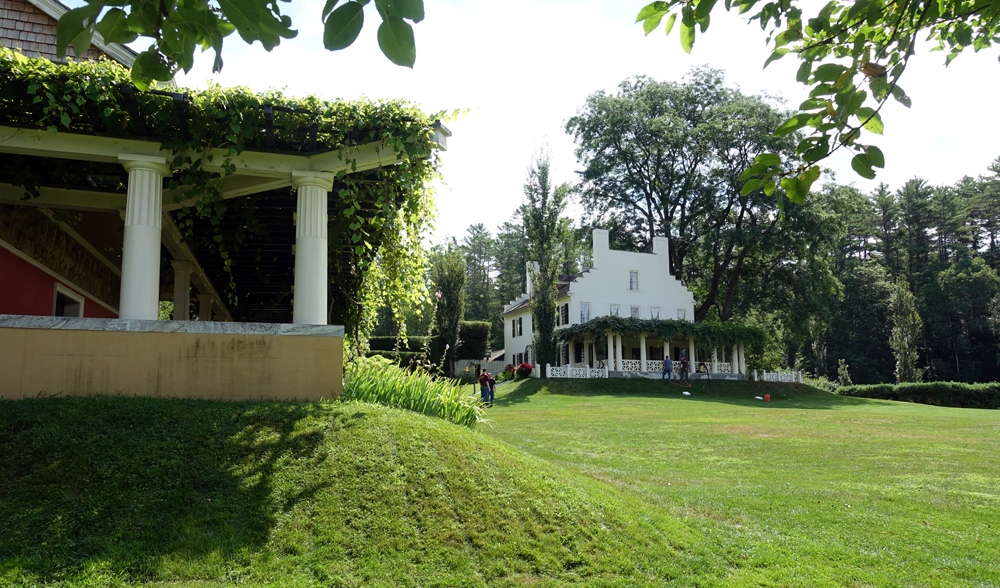
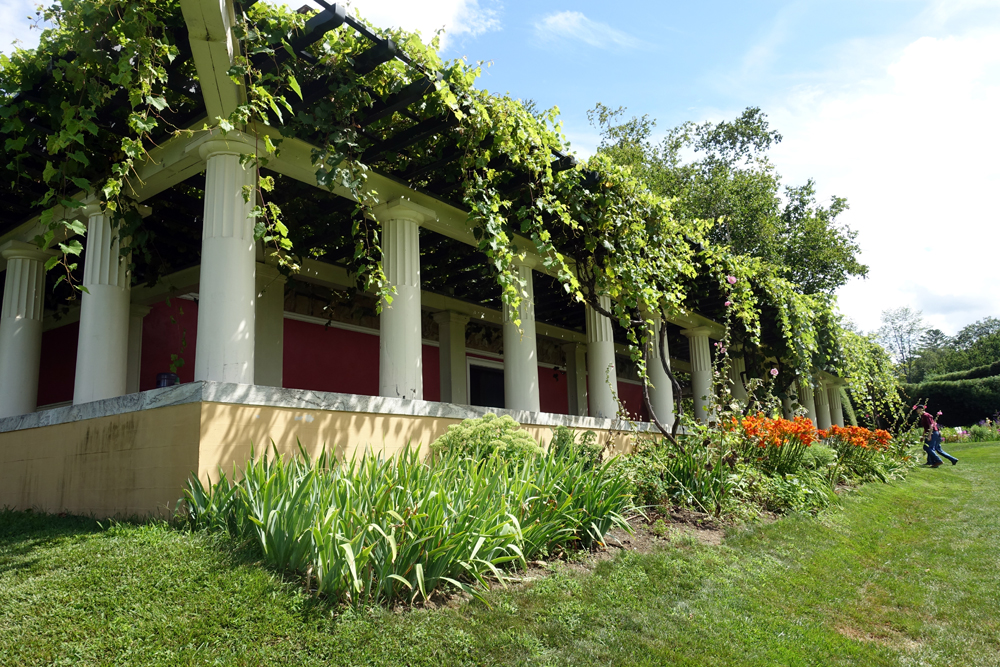
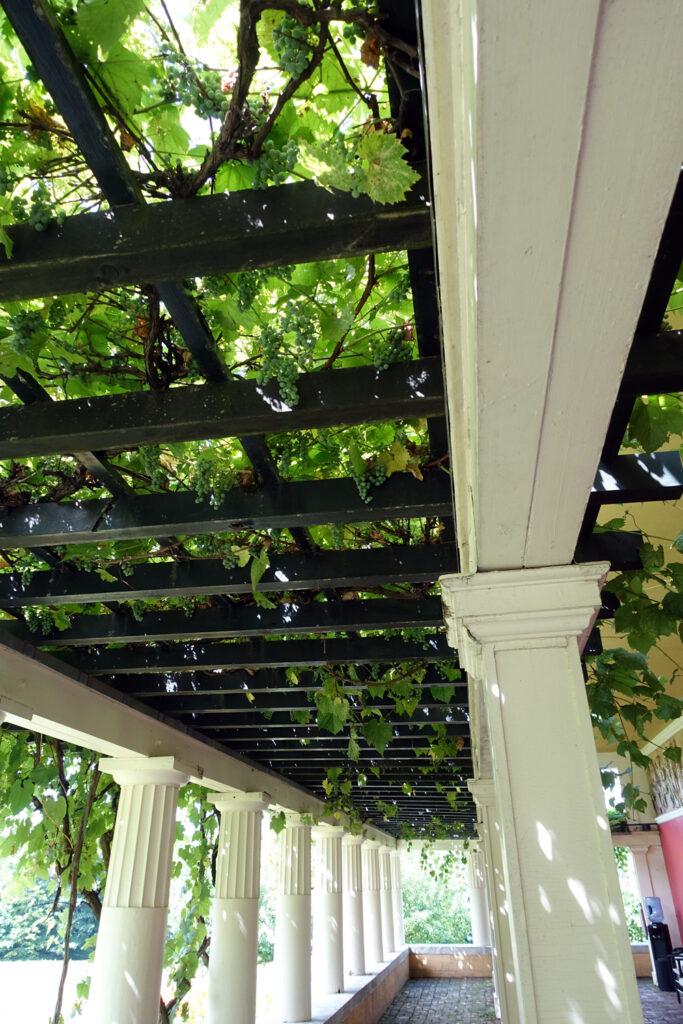
Outside the New Studio: a pergola for shade.
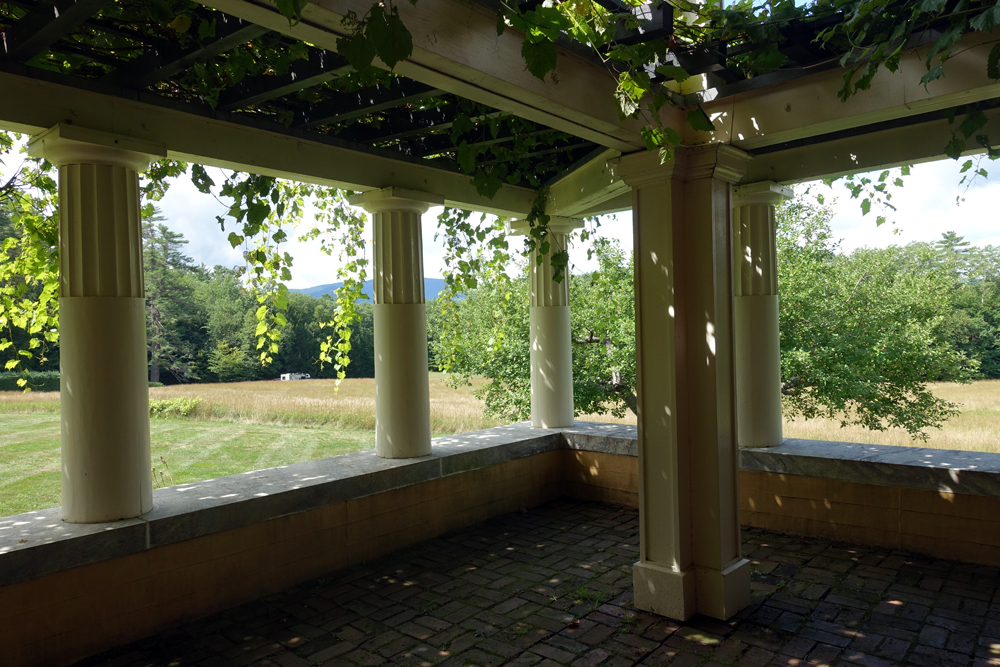
In the distance: views of the mountains of New Hampshire.
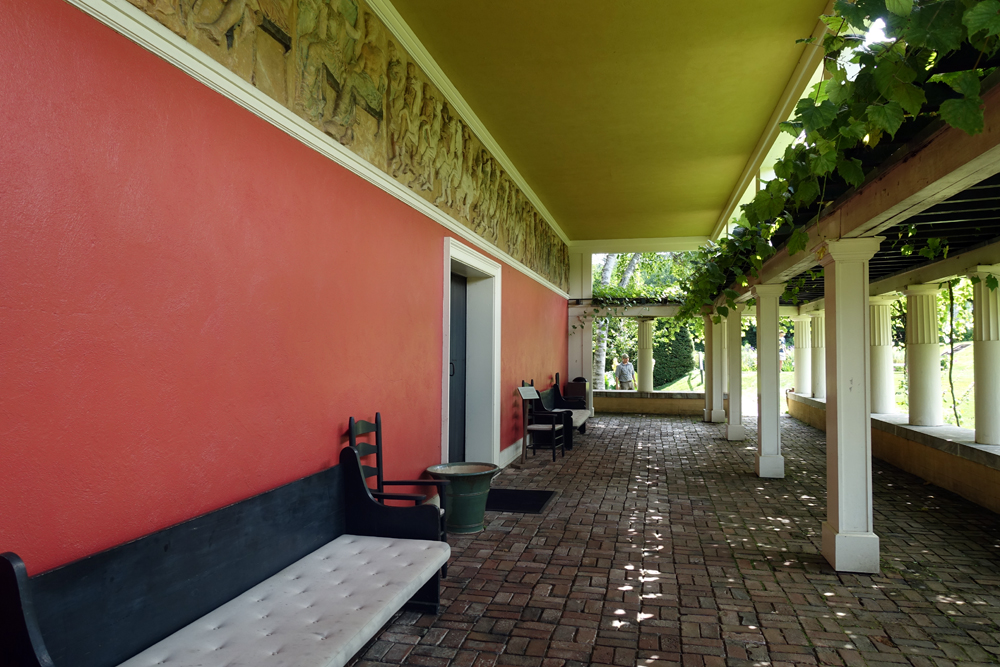
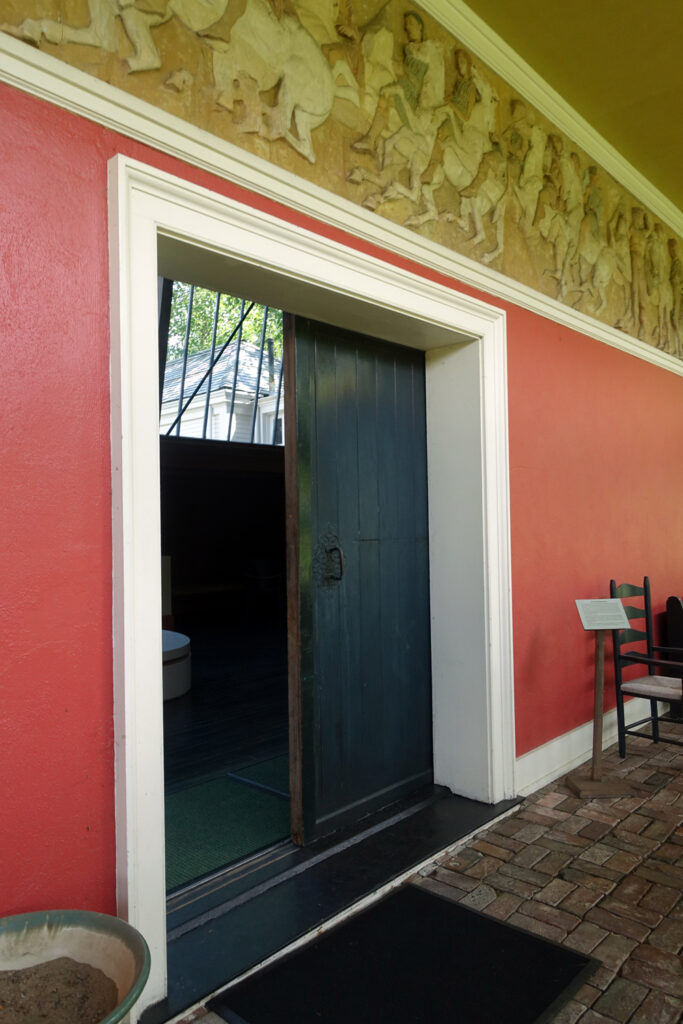
Running at the top of the walls by the pergola are reproductions of the Parthenon frieze, tinted with color.
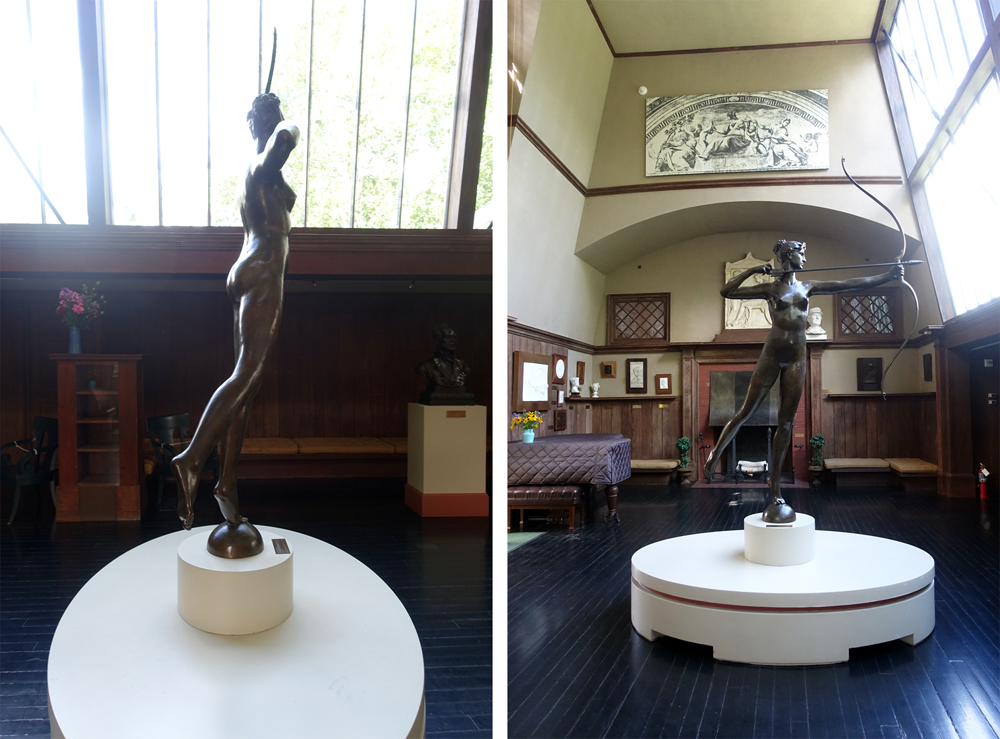
Diana, 1892-1893
Diana stood atop Madison Square Garden, an all-purpose pleasure palace at Madison Avenue and 23rd Street in New York City. She was higher than the tallest Manhattan building, higher even than the Statue of Liberty. She was also the first outdoor sculpture in New York to be illuminated by electricity, and the first sculpture of a nude woman to be prominently displayed in that city.
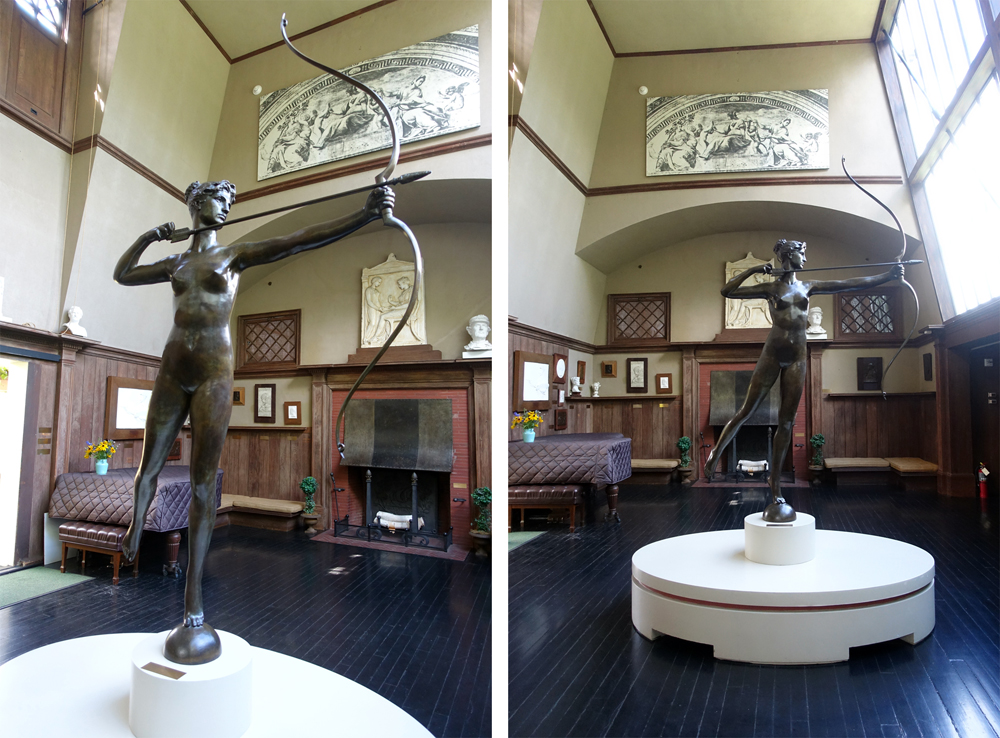
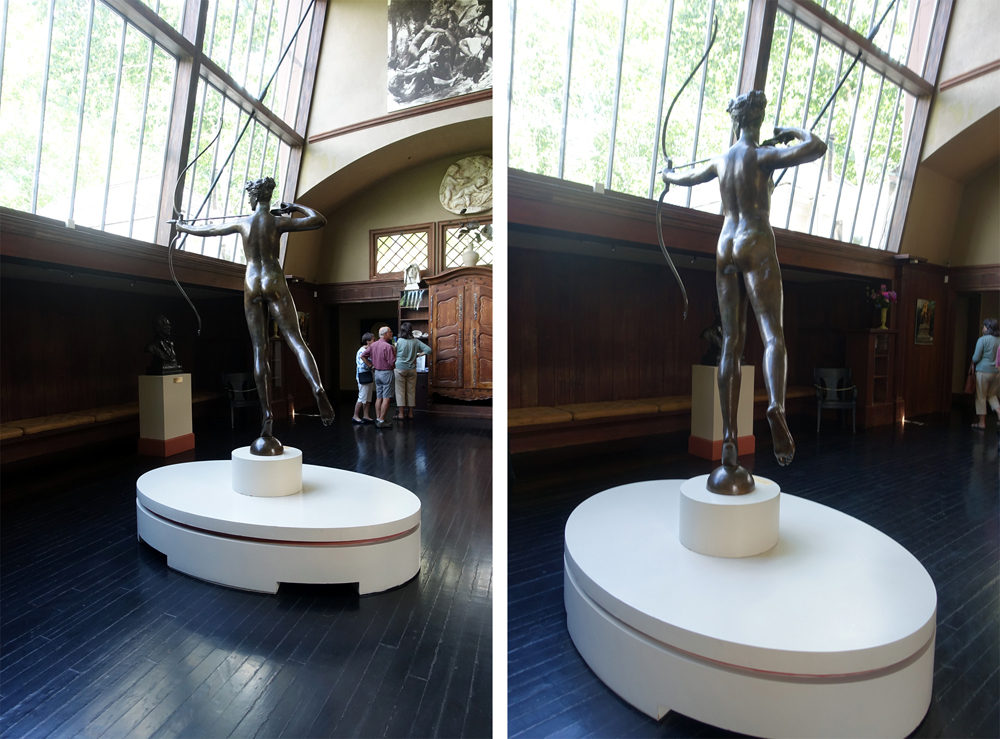
Saint Gaudens supplemented his income by selling “reductions” (reduced-size copies) of some of his works. In the 1890s, you could walk into Tiffany’s and purchase a three-foot-tall bronze of Diana. A number of museums have examples of genuine Saint Gaudens sculptures, because the reductions are gradually making their way into institutional collections.
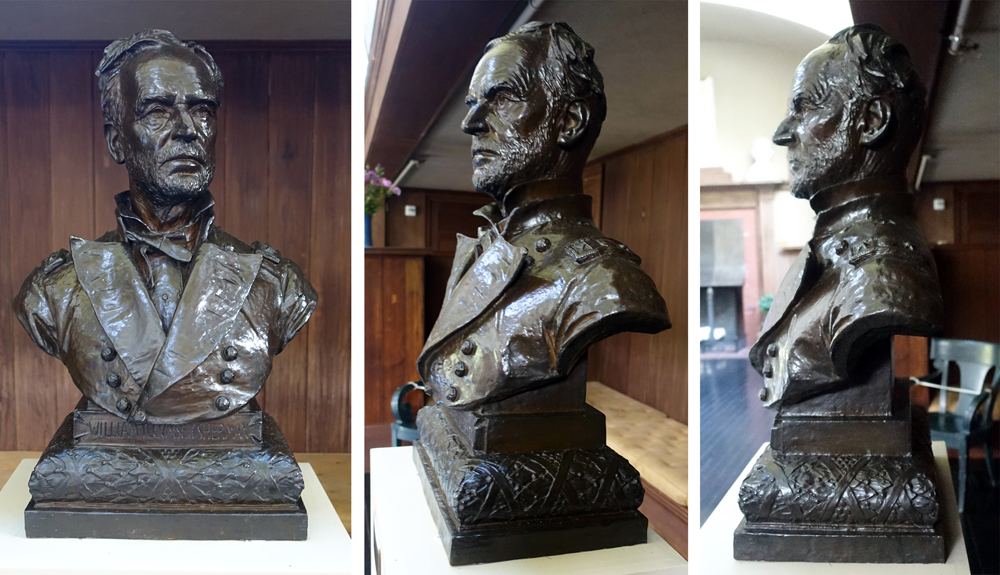
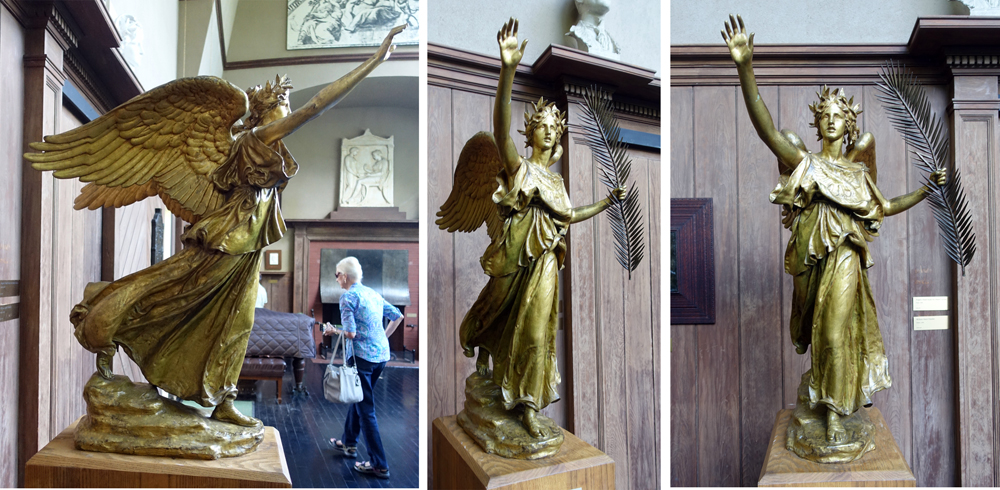
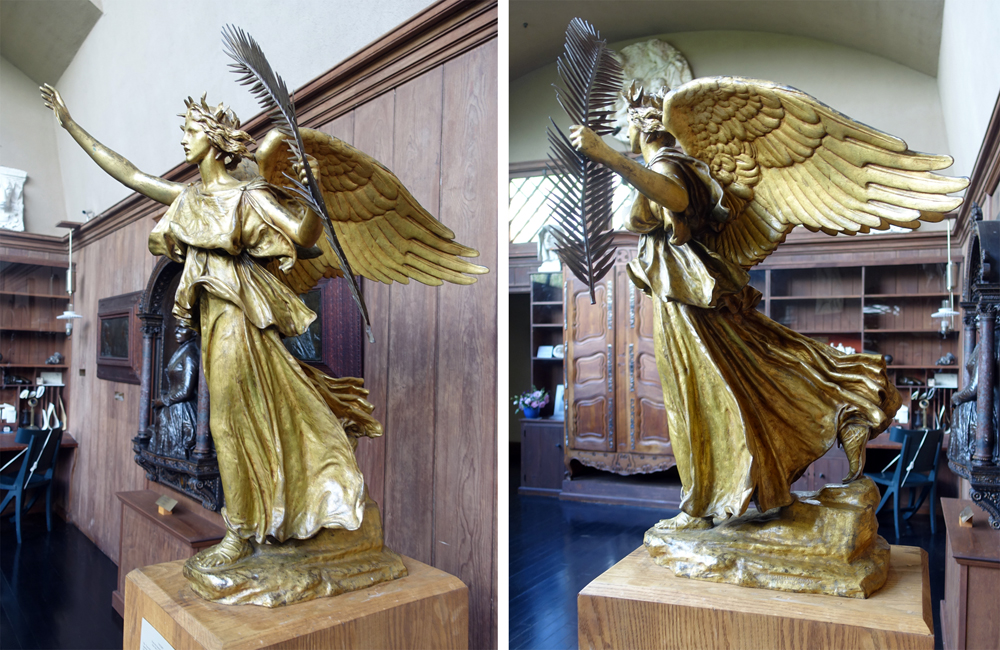
For the Sherman Monument: Victory and bust of Sherman, 1903 and 1888
Sherman was admired by contemporaries for the 1864 March through Georgia, which cut Confederate supply lines and demoralized the South, hastening the end of the brutal Civil War. After he retired from the army, Sherman moved to New York City, where Saint Gaudens modeled a bust of him in 1888.
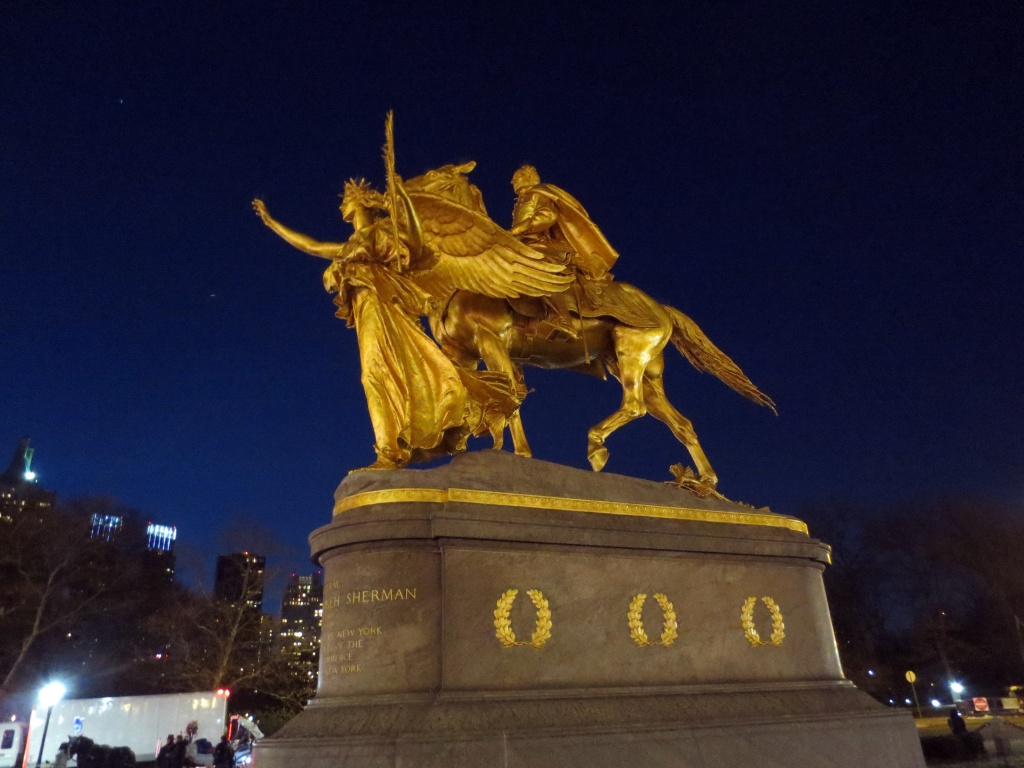
After Sherman died in 1891, Saint Gaudens was commissioned to create a memorial to stand at the southeast corner of New York’s Central Park. Saint Gaudens chose to show Sherman on horseback, led by an allegorical figure symbolizing Victory or Fame. The New Studio has a reduced-size copy of that allegorical figure. For more on how Saint Gaudens made the combination of portrait plus allegorical figure work, see Artist-Entrepreneurs.
Here’s the Sherman Monument as it stands today in New York City.
One more sculpture (for this week)
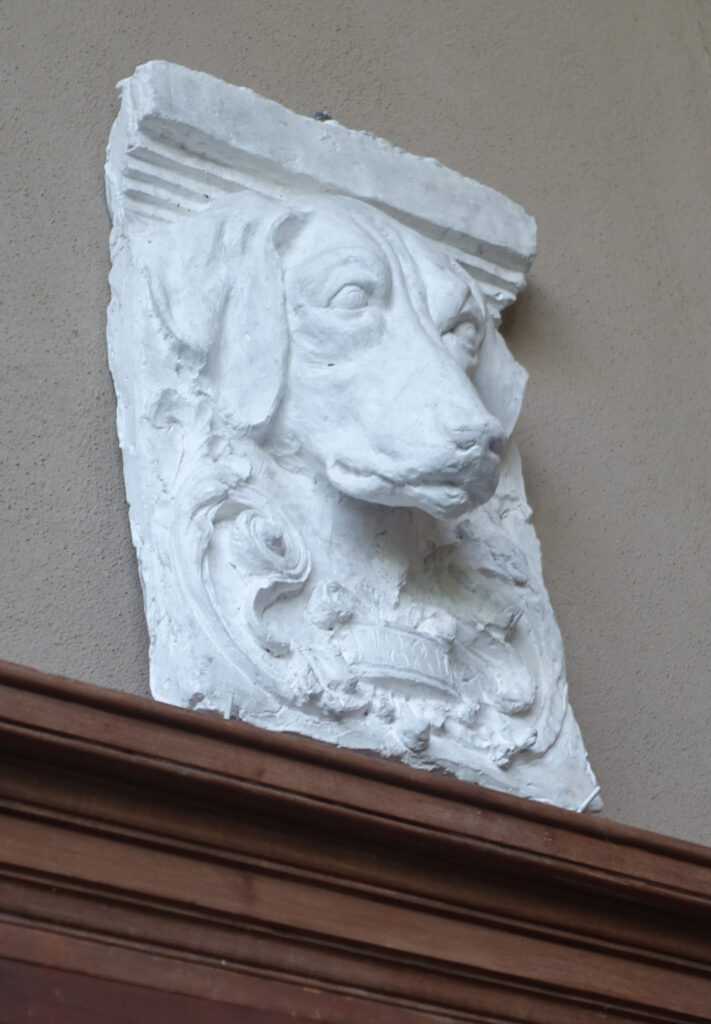
A light-hearted and charming work designed as the “guardian” of a gate-house.
Next week: more from the New Studio.
More
- Admission to the Saint Gaudens National Historical Park is free if you have a senior pass from the National Parks Service, which can be purchased for a one-time fee.
- Want wonderful art delivered weekly to your inbox? Check out my free Sunday Recommendations list: details on it, and on becoming a paid supporter, are here. I do not share my mailing list with anyone, ever.