In the period when books and magazines were America’s mass recreation, N.C. Wyeth (Newell Convers Wyeth, 1882-1945), was one of the great American illustrators. He created more than 3,000 paintings and illustrated 112 books.
Back in 2019, the Brandywine Museum had a major exhibition of his works. Most of these paintings are about 3×4 feet, so yes, it made a big difference to see them in person. My photos often include the frame, which helps give some sense of scale. This amount of detail doesn’t work on frames for 6×9 inch works, but it does appear on frames for large paintings.
These photos were taken while there were many other visitors in the gallery, so they’re often from odd angles. I could straighten them in PhotoShop, but that would make the frame disappear – which I don’t want to do. The exhibition catalogue, N.C. Wyeth: New Perspectives, has excellent photos.
Originally I posted my photos from the exhibition on Facebook, but I’ve decided I’d rather have them on my own site. This post is available as a video at https://youtu.be/sloz3hRnox0.
Early life and illustrations
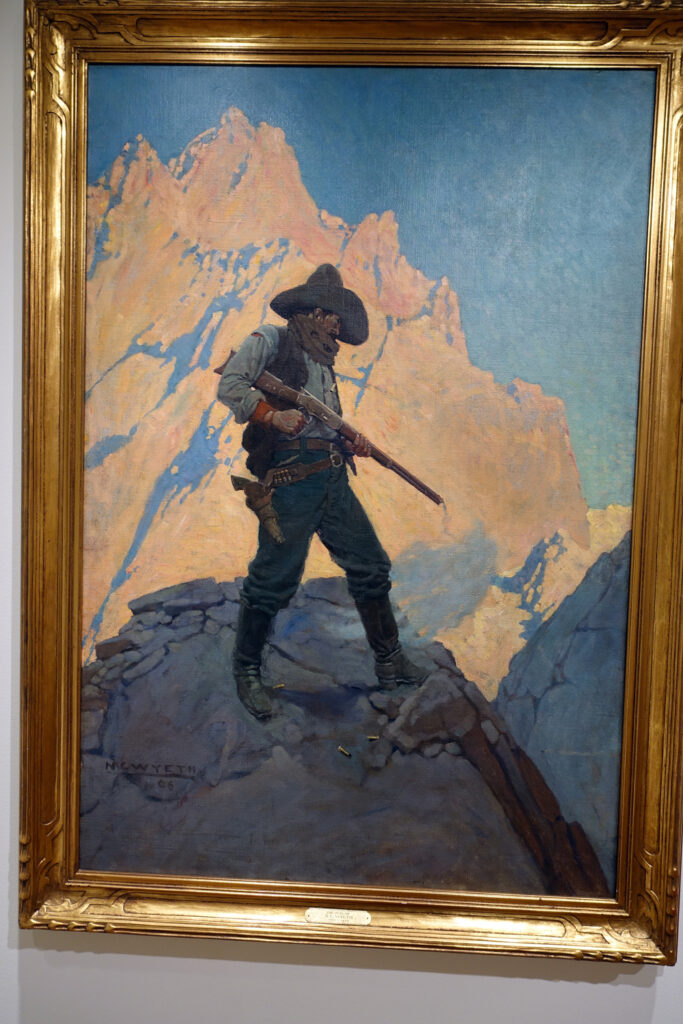
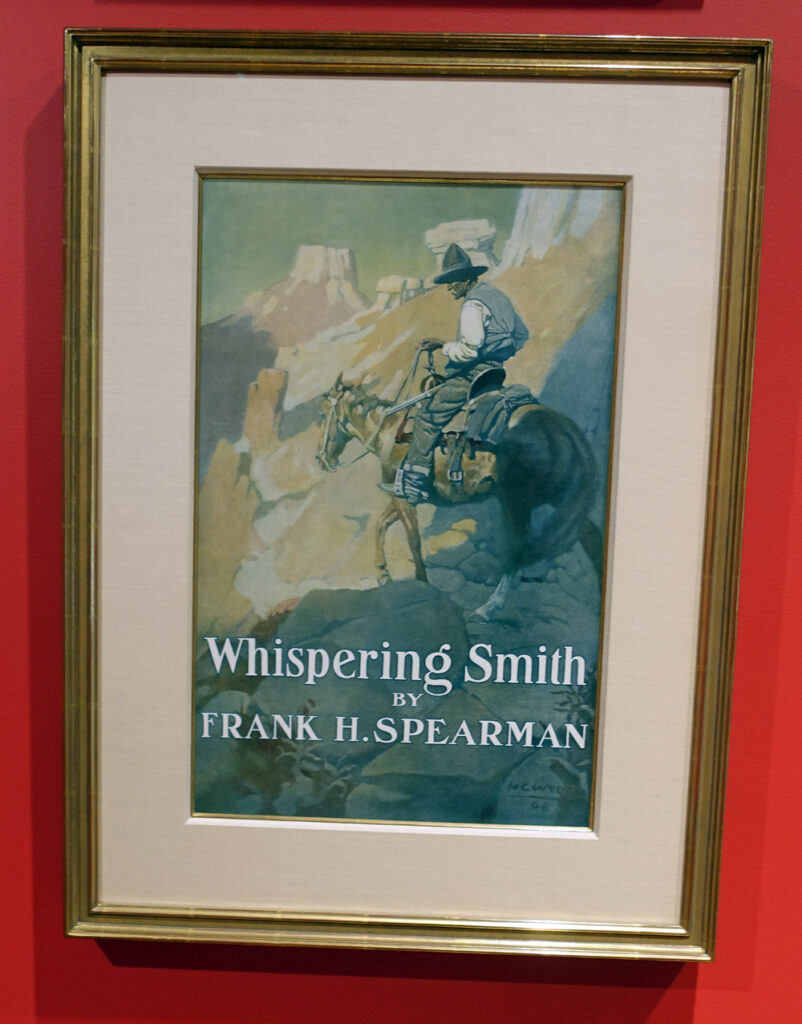
Wyeth studied at several art schools in his native Massachusetts, then with famous illustrator Howard Pyle. His first commission was for a 1903 cover of the Saturday Evening Post: quite a coup for a twenty-one-year-old! Wyeth soon traveled to the West to gather material for illustrations, including cowboy and Indian clothing.
Montana (below) has a very dramatic composition. I can’t help wondering what’s going on here: is it a good guy defending himself against the villains, or a villain firing down on the good guys? Is that a mask to disguise his face, or just a cowboy’s way of keeping the dust of the trail off his face?
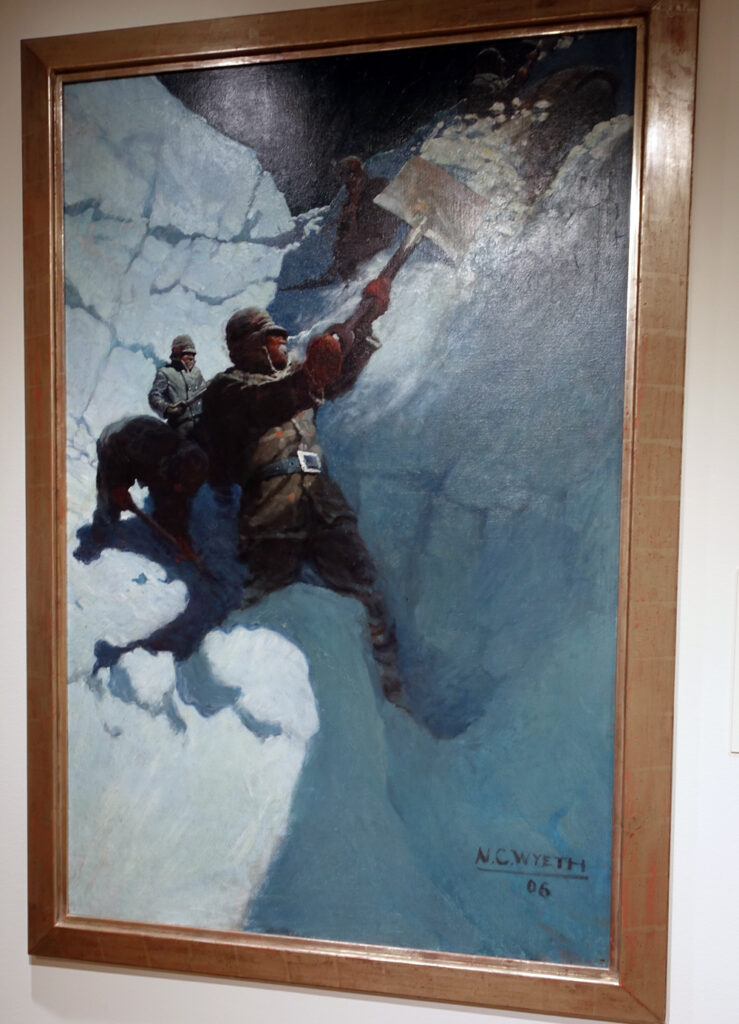
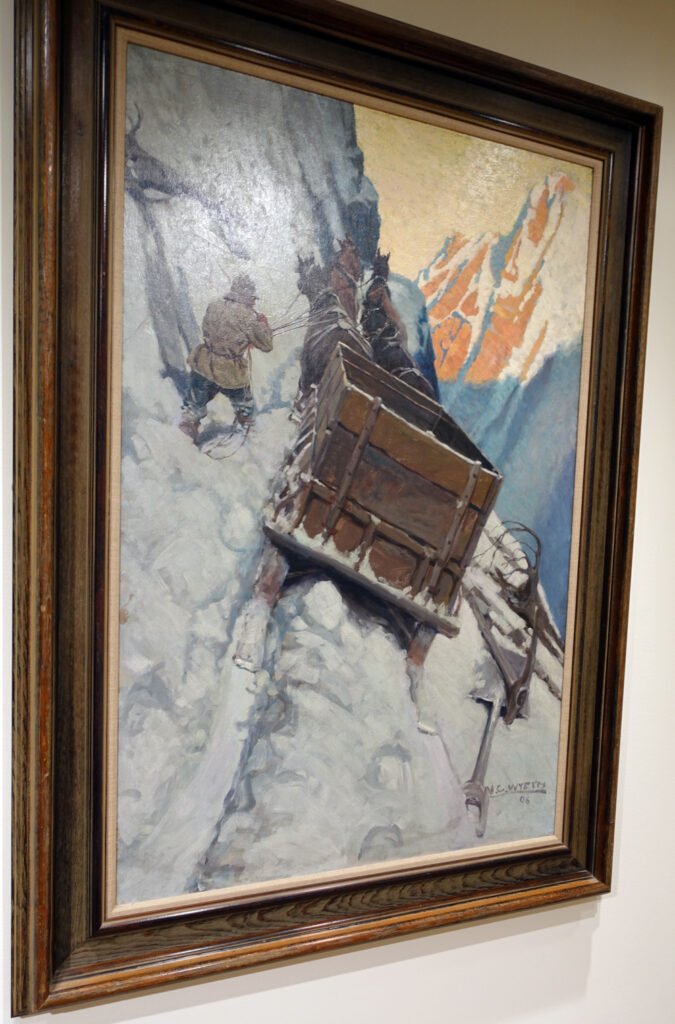
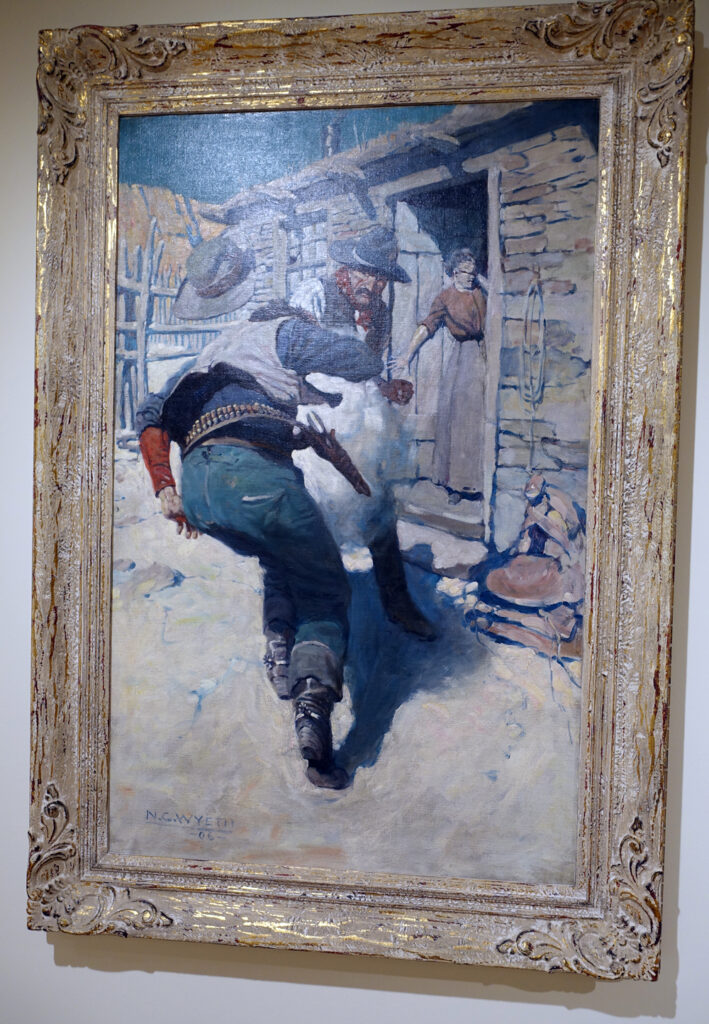
Below: in this illustration for a story in McClure’s Magazine (1906), Wyeth creates a sense of danger by having us, as viewers, almost directly behind the man who’s being shot at.
Illustrations for classic novels
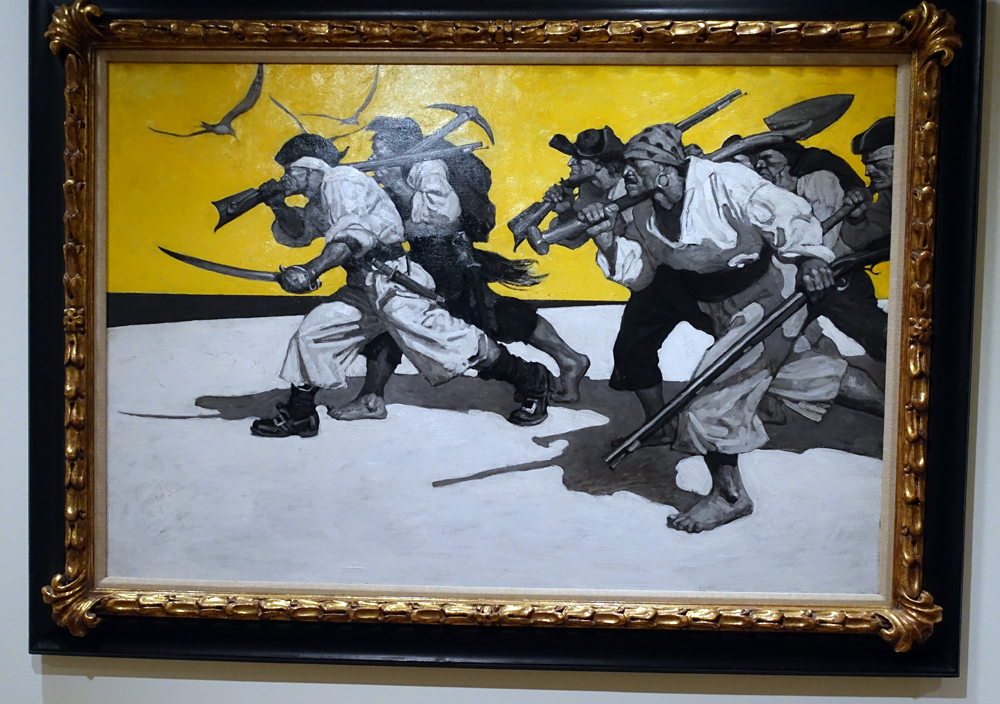
In 1911, Wyeth began creating the illustrations of classic novels such as Robert Louis Stevenson’s Treasure Island. The endpapers really give a sense that this is going to be an adventure story: Aaaarh, matey, here be pirates! Wyeth was paid to do so many book illustrations because he had the ability to make you want to read this book, right now.
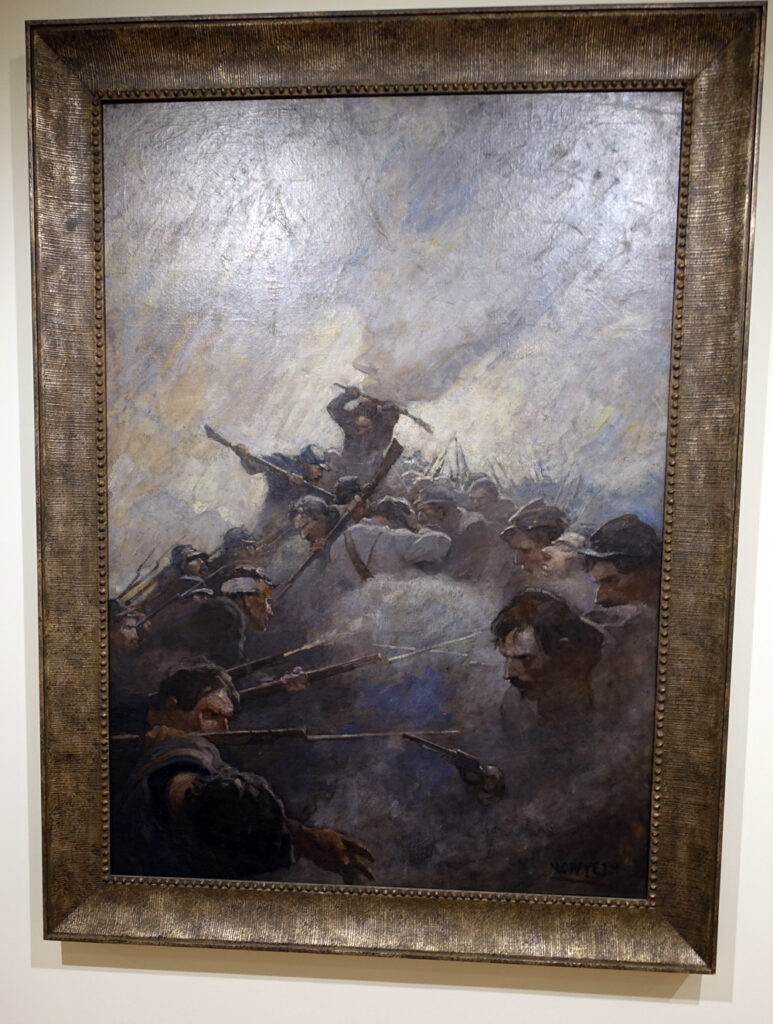
This painting, an illustration for a Civil War novel by Mary Johnston, ranks among with fiercest depictions of war that I’ve ever seen – and it doesn’t actually show blood and gore.
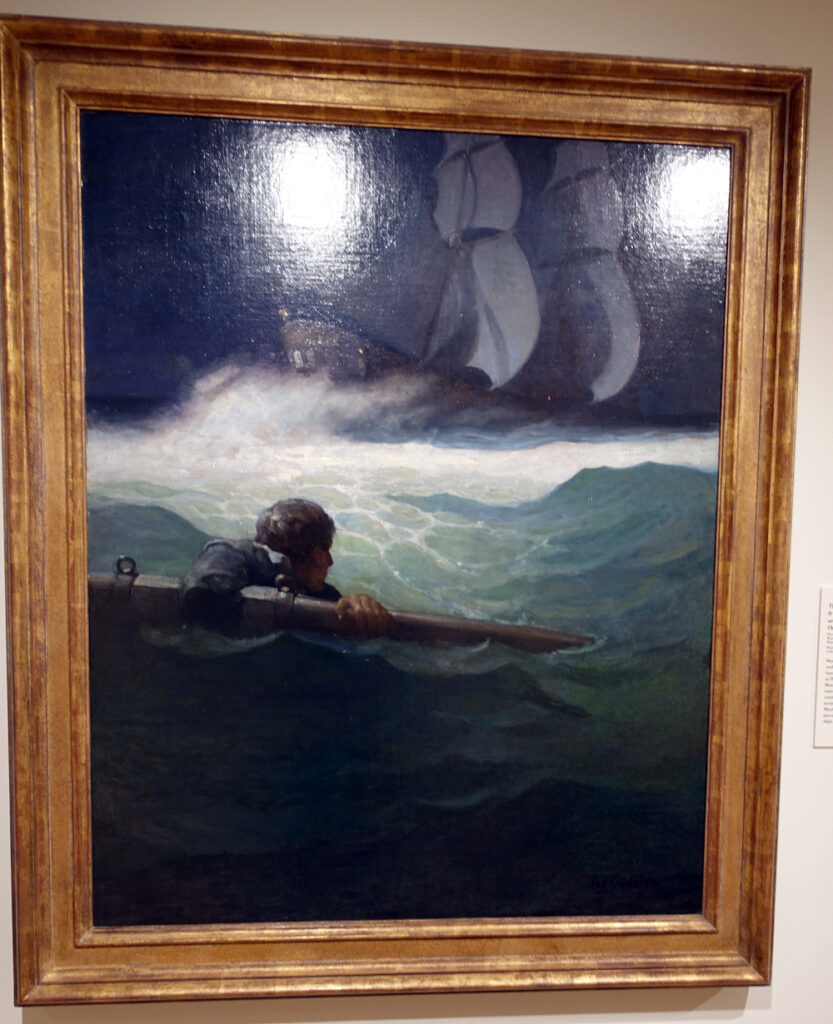
From Stevenson’s Kidnapped. The composition is great, and the water is fantastic.
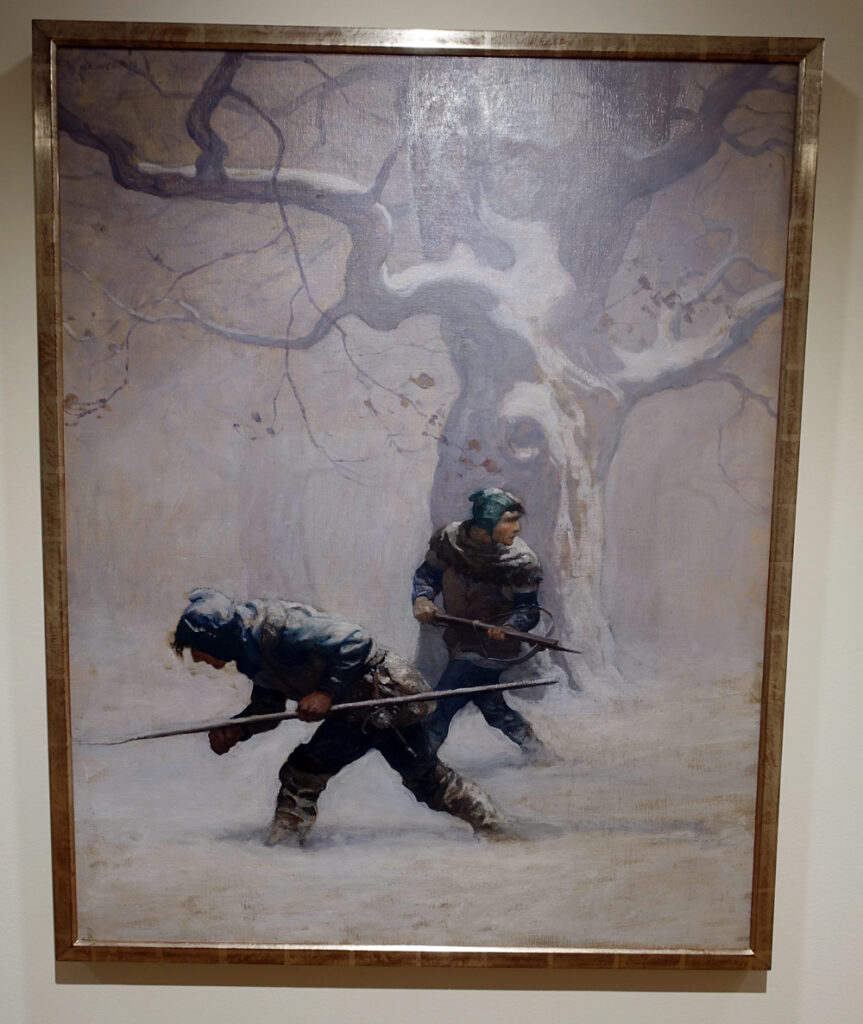
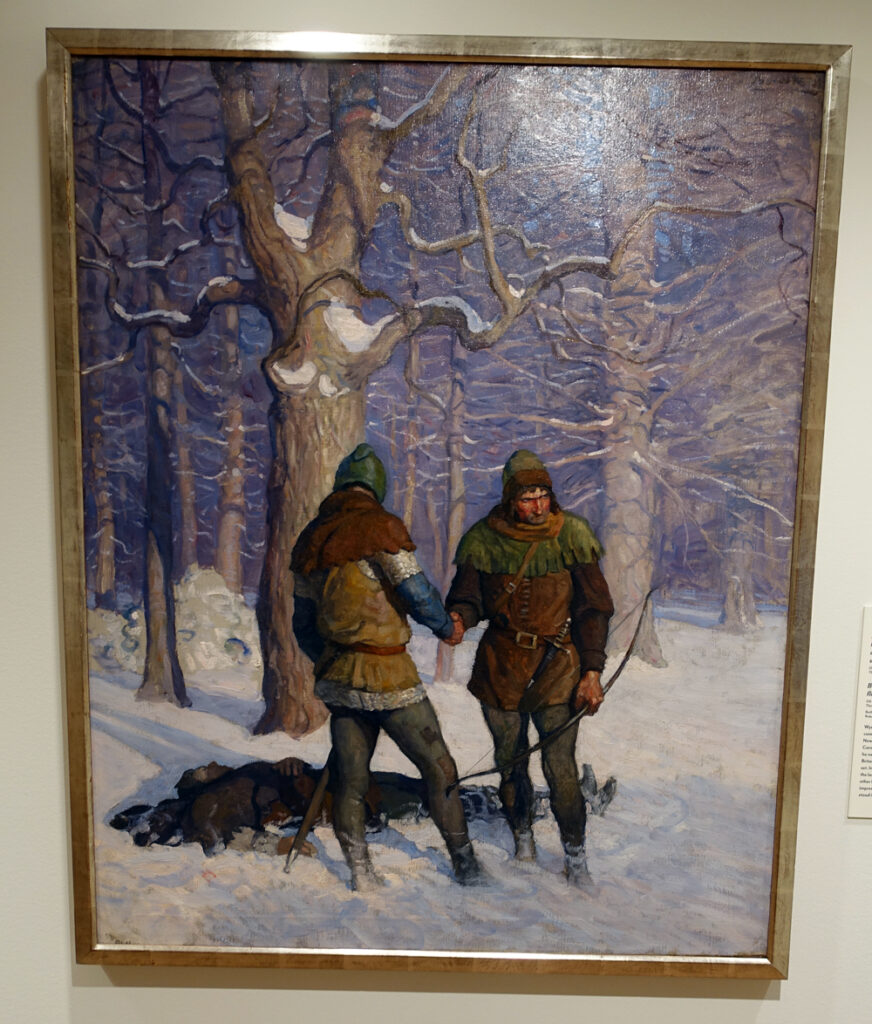
Two more from Robert Louis Stevenson: The Black Arrow, 1916 edition.
The ocean in the foreground of this one is amazing.
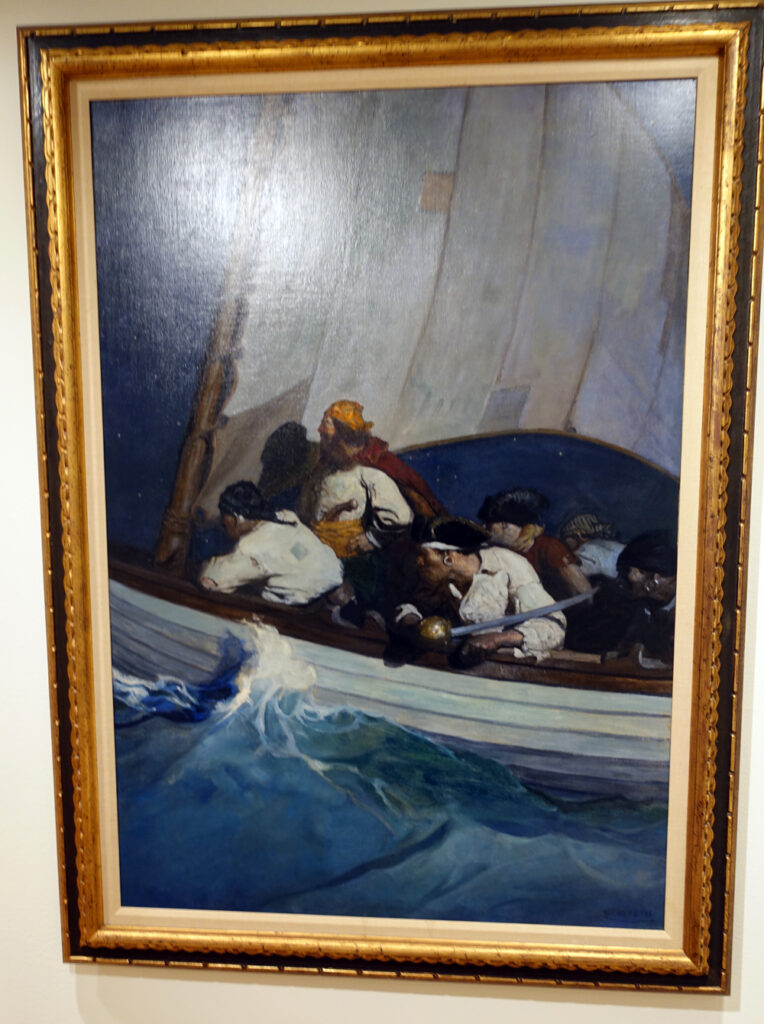
For The Boy’s King Arthur, the figures are precise, the landscape Impressionist-style. Works for me.
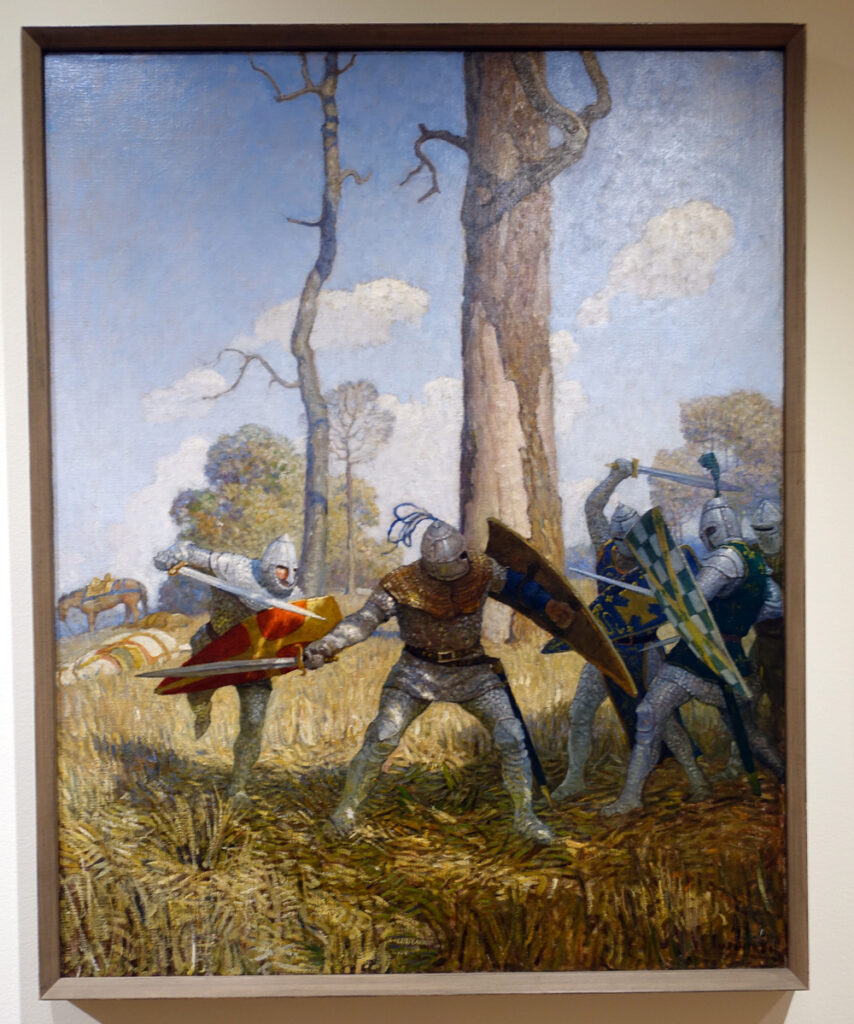
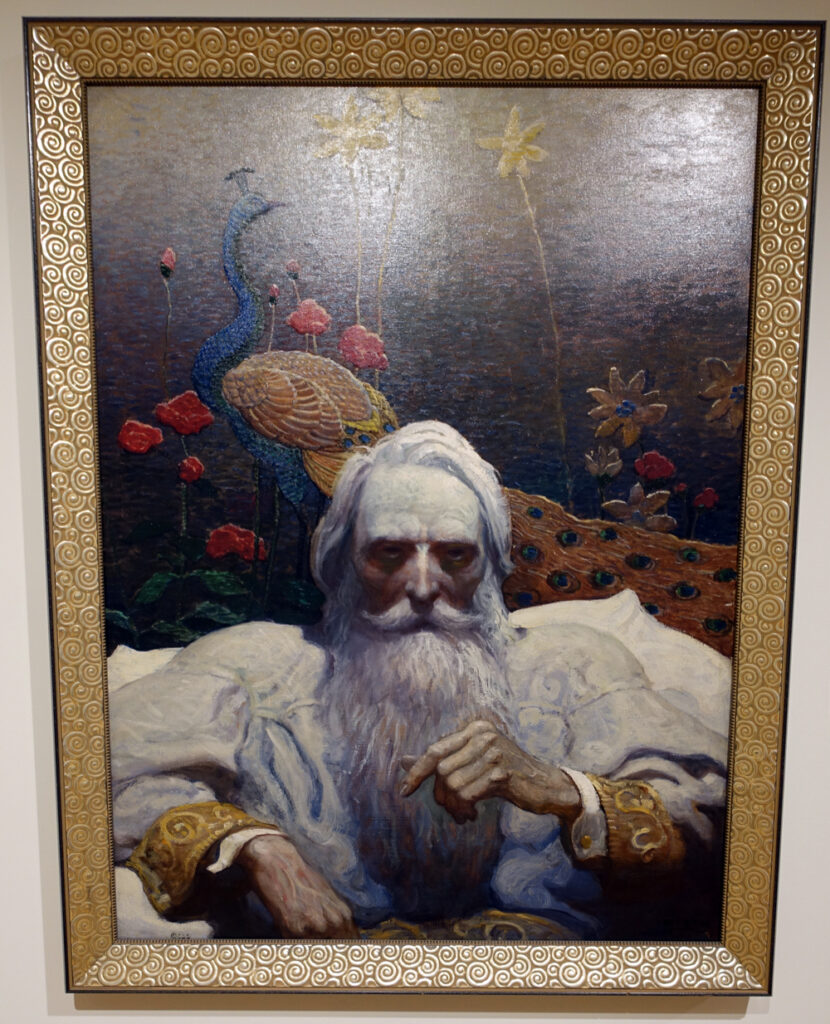
A powerful image of Captain Nemo, from Jules Verne’s The Mysterious Island.
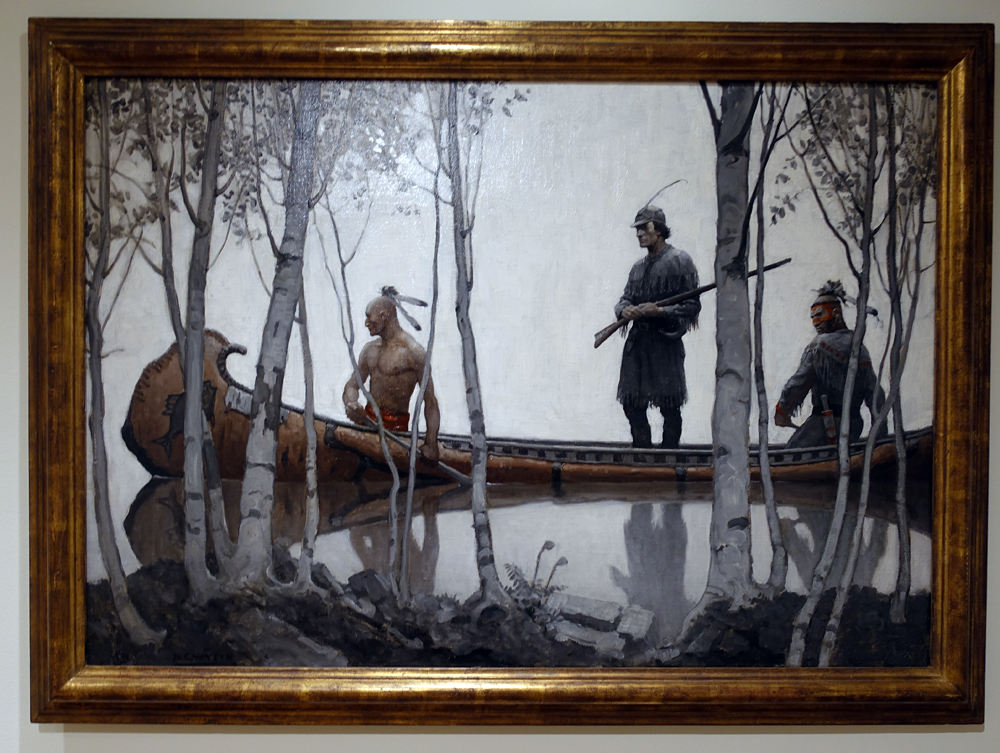
This 1919 image finally made me add James Fenimore Cooper’s Last of the Mohicans (which I’ve never read) to my Goodreads list.
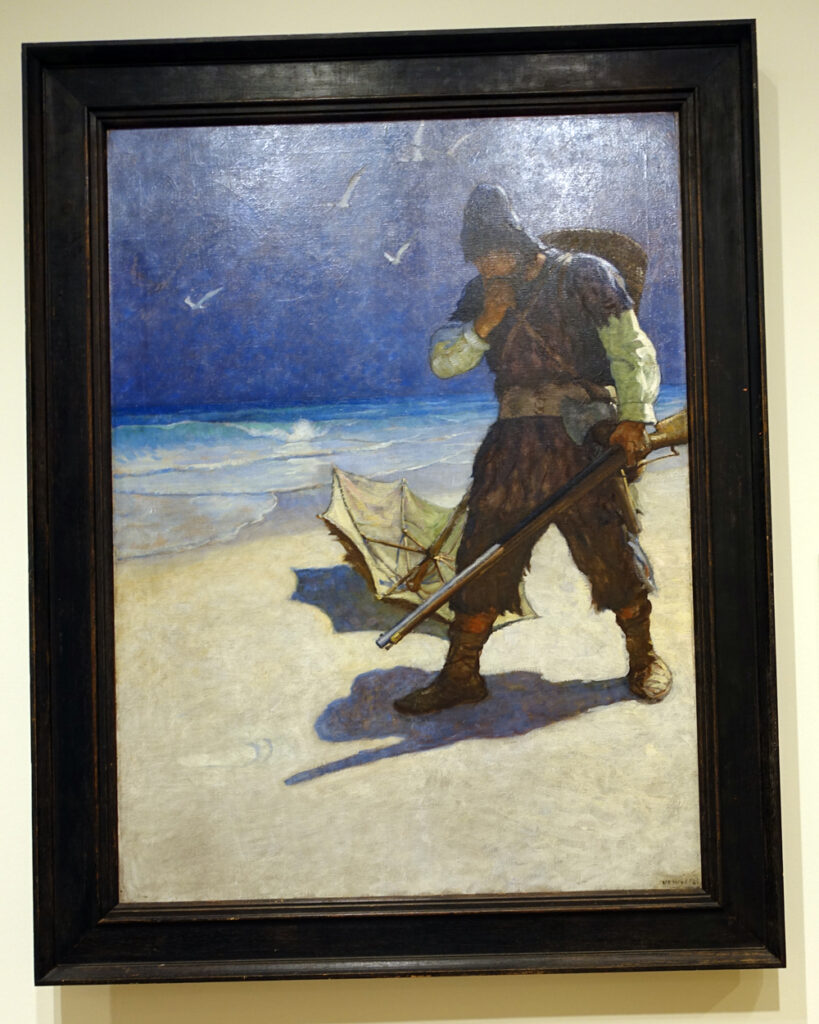
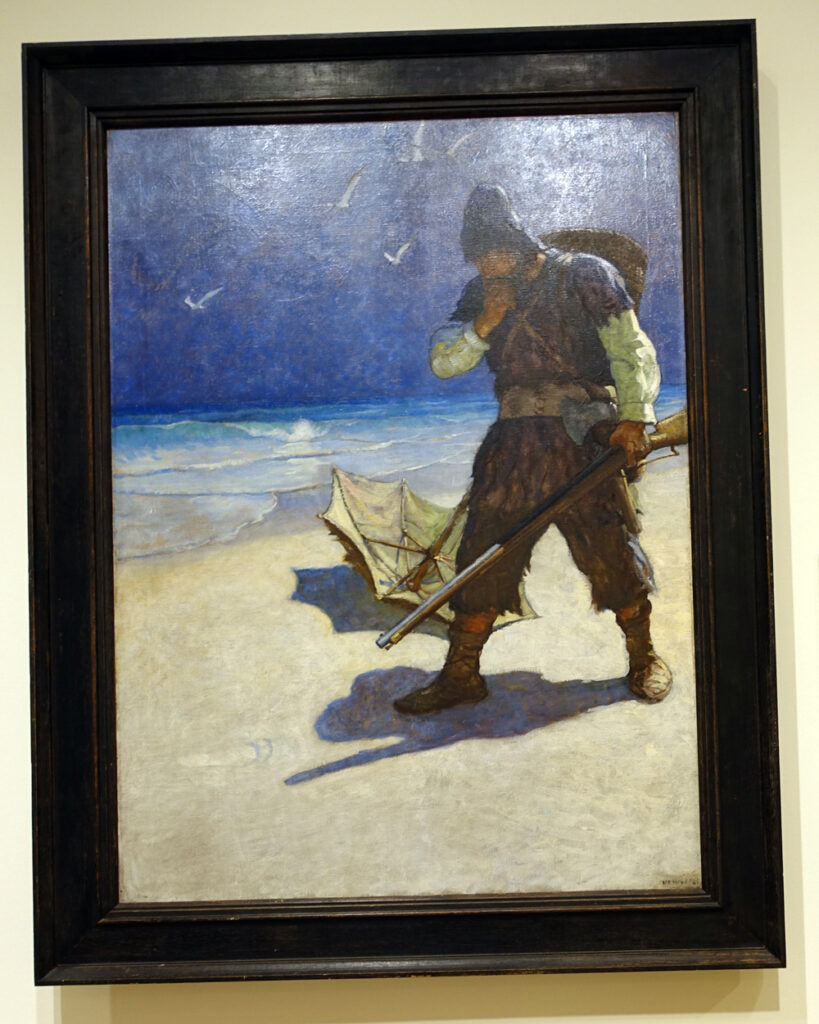
Gorgeous blues and purples for Defoe’s Robinson Crusoe,1920.
Two from Washington Irving’s Rip Van Winkle, 1921.
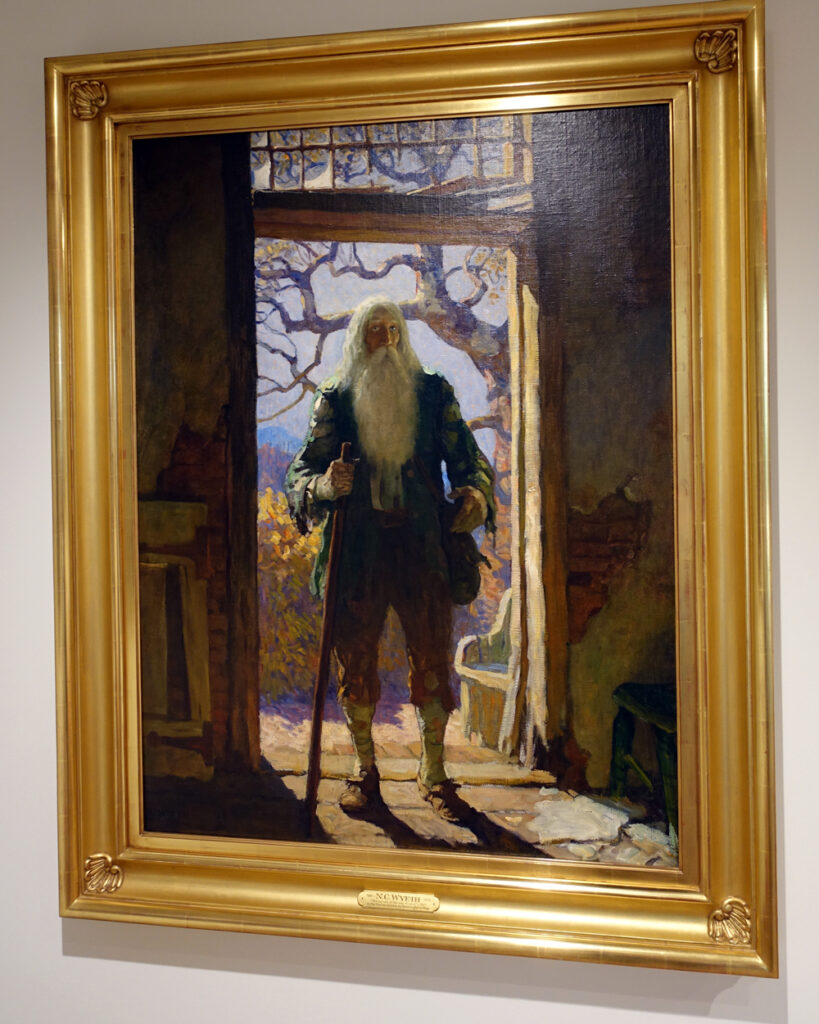
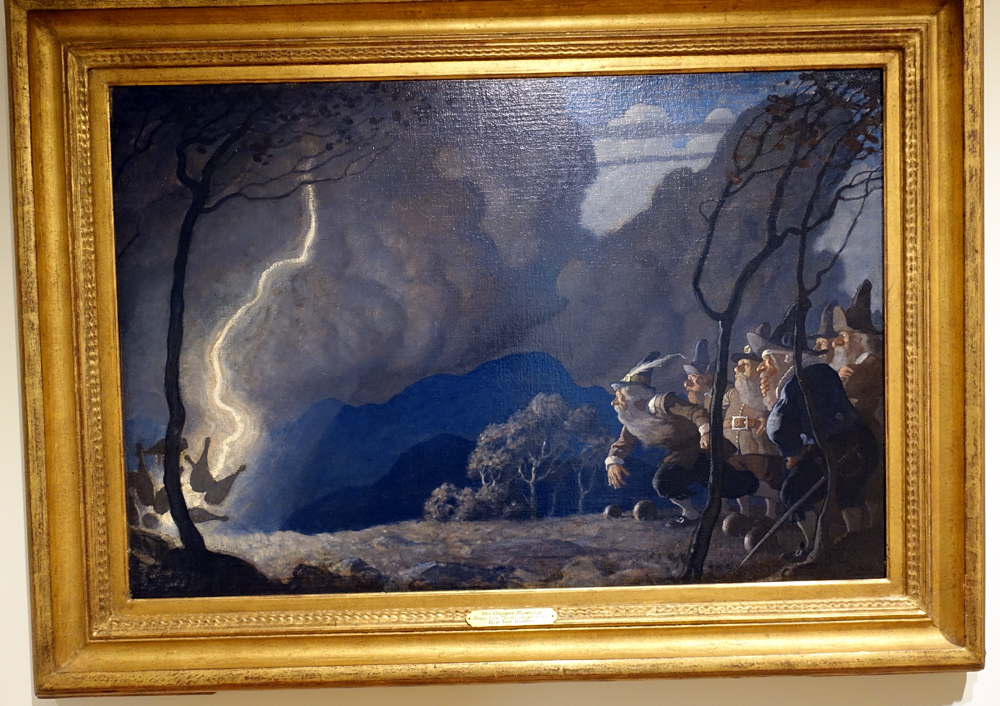
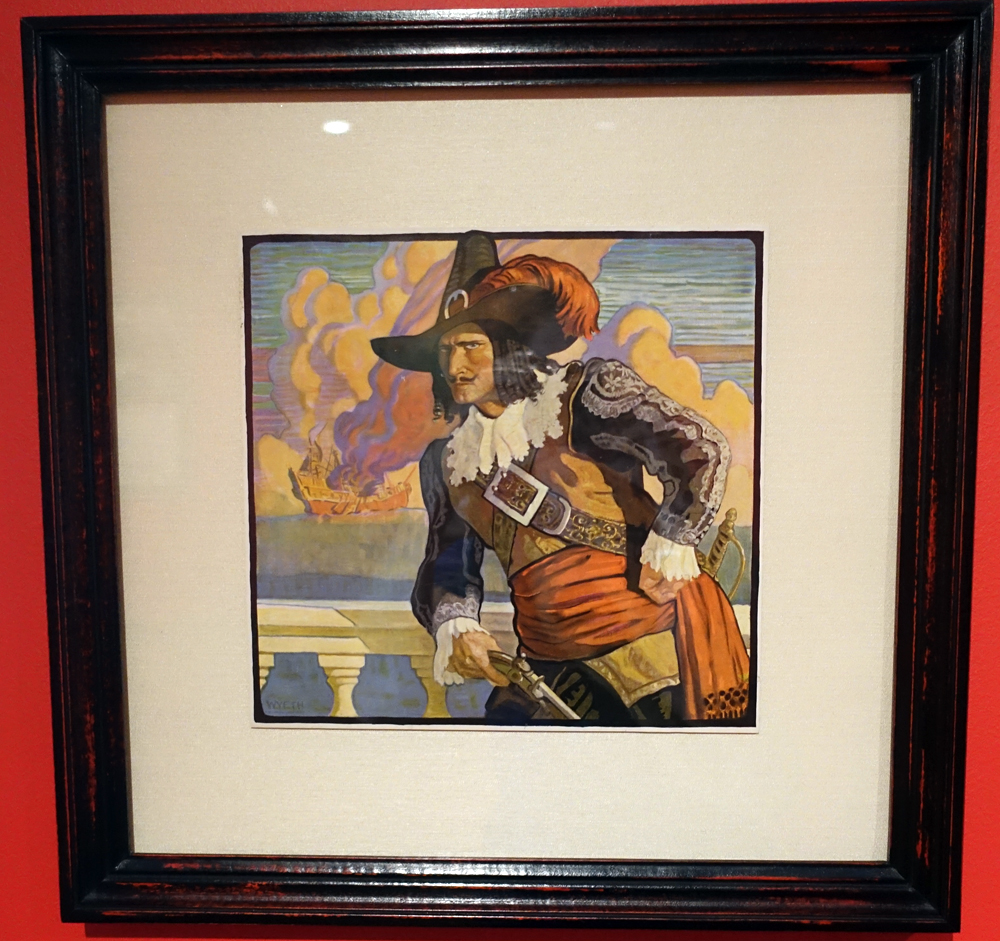
And one for Sabatini’s Captain Blood.
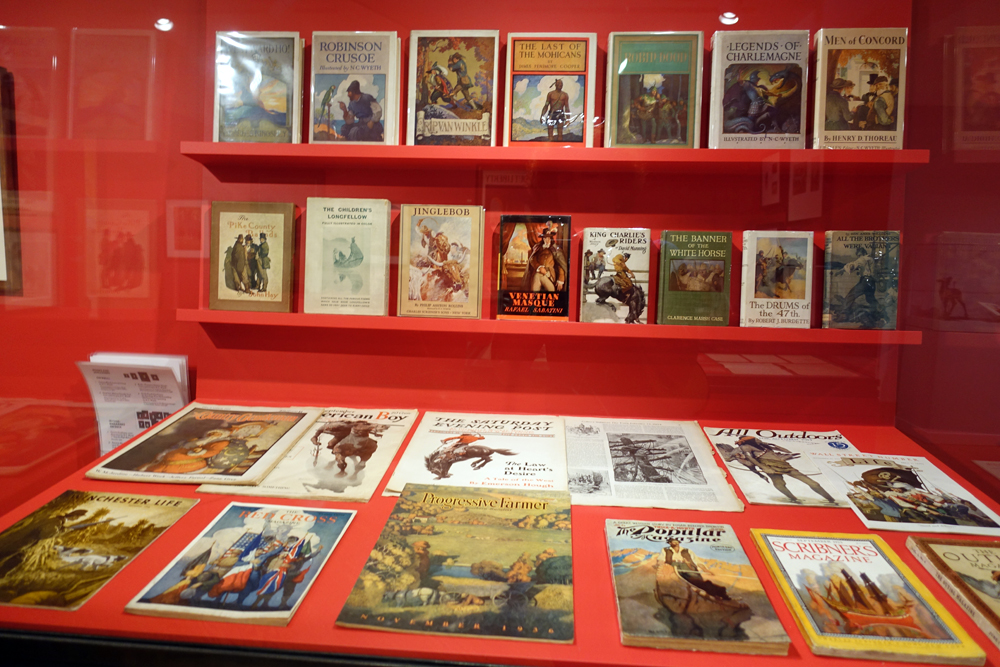
A selection of works with covers and/or illustrations by NC Wyeth. A remarkable body of work!
Next week: paintings from the same 2019 exhibition that were created for advertisements and institutions.
More
- Wyeth’s studio was in Chadds Ford, Pennsylvania. Wyeth’s son and grandson, Andrew and Jamie Wyeth, became well-known as painters. The Brandywine Museum in Chadds Ford showcases their works. N.C. Wyeth’s home and studio are also open to the public.
- The Brandywine’s website has a very useful catalogue raisonné of N.C. Wyeth’s works, with color illustrations.
- Want wonderful art such as these recommendations delivered weekly to your inbox? Check out my free Sunday Recommendations list and rewards for recurring support: details here.