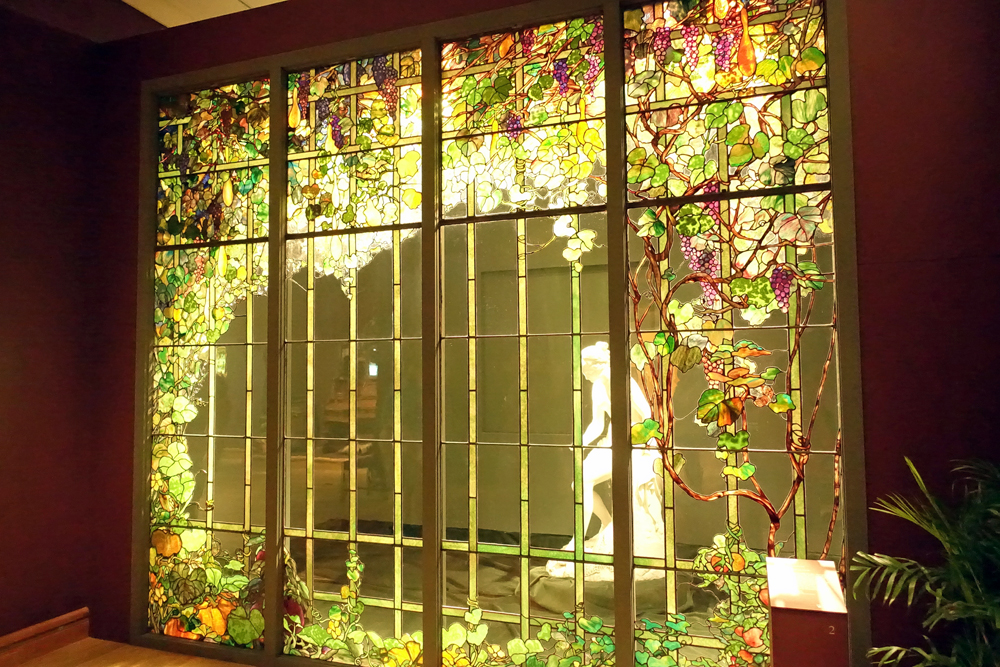
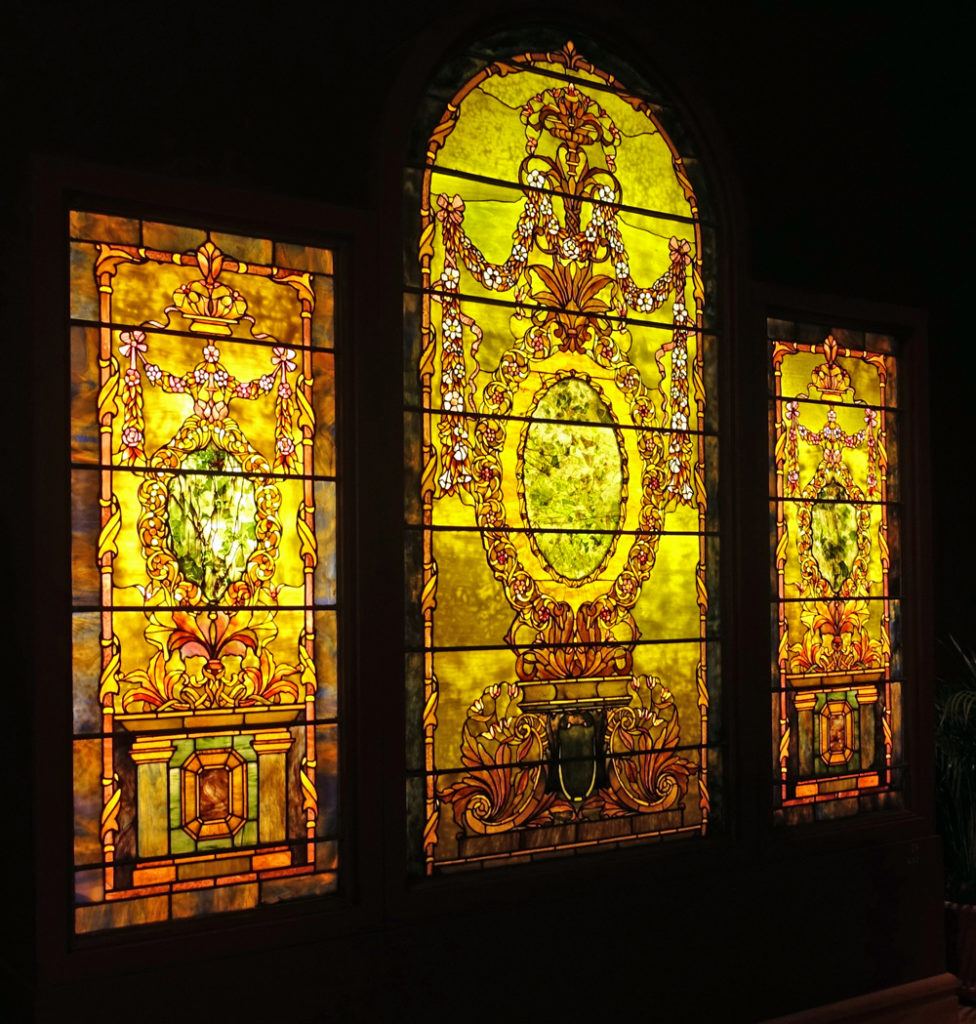
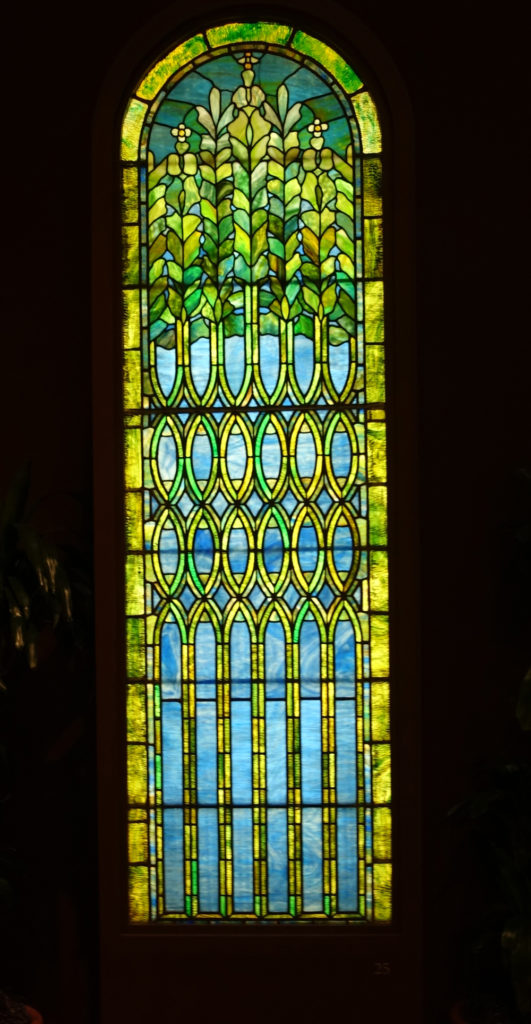
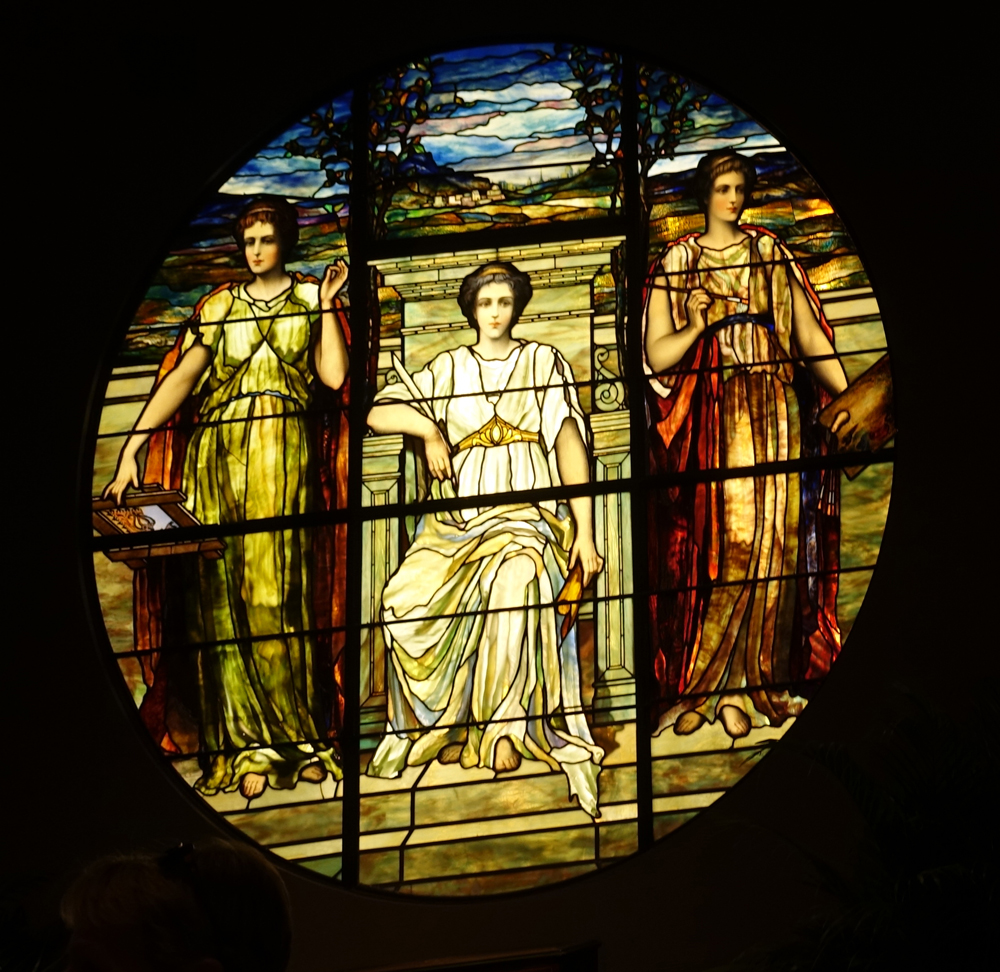
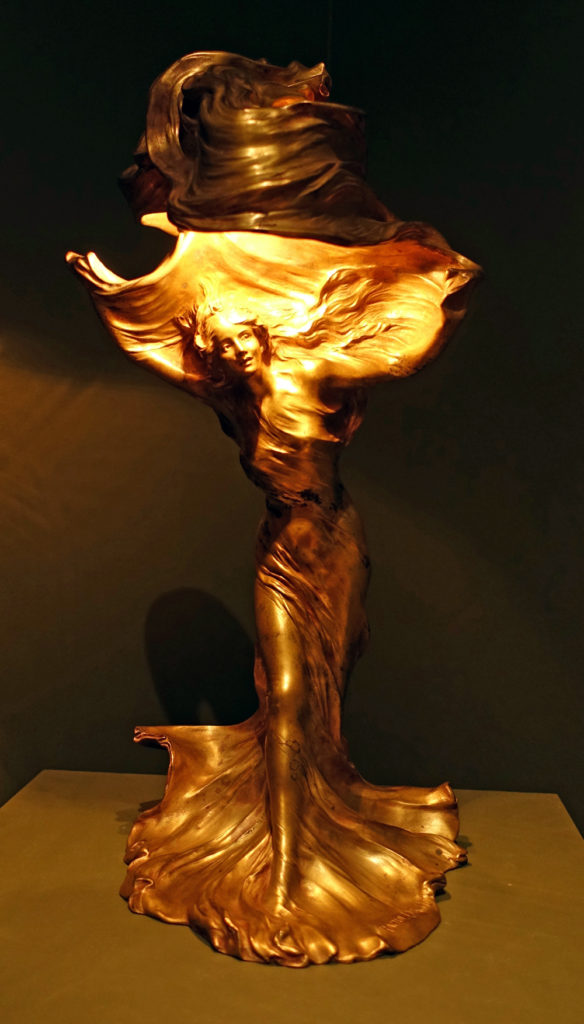
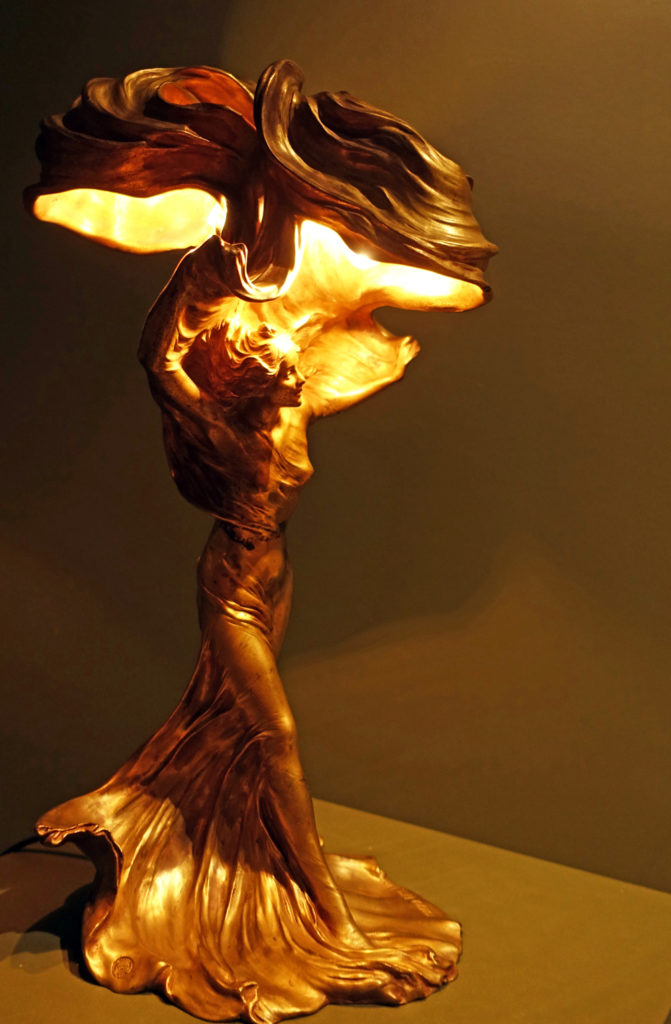
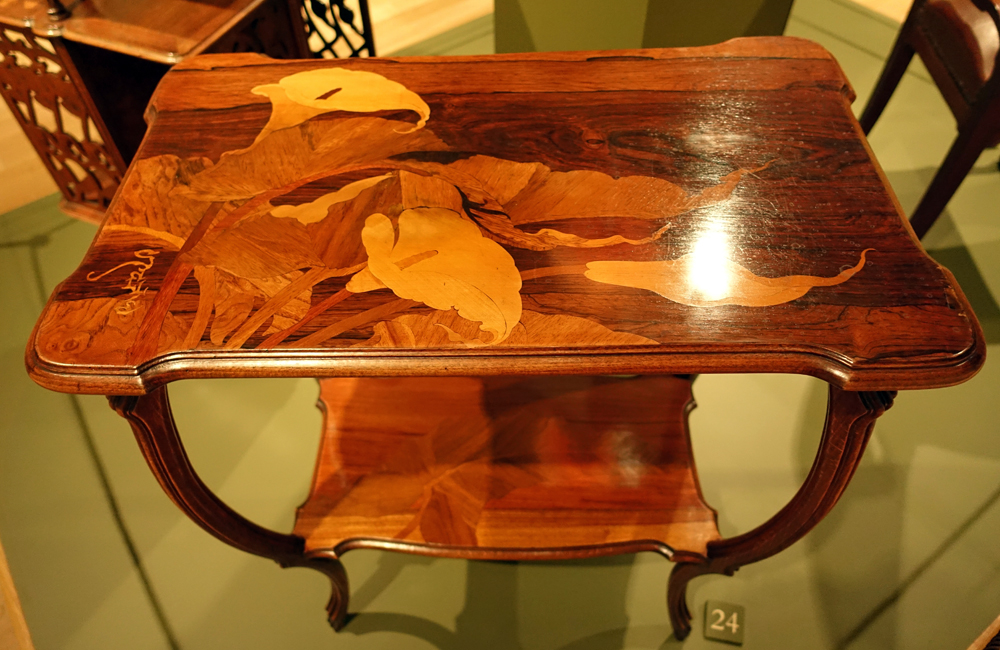
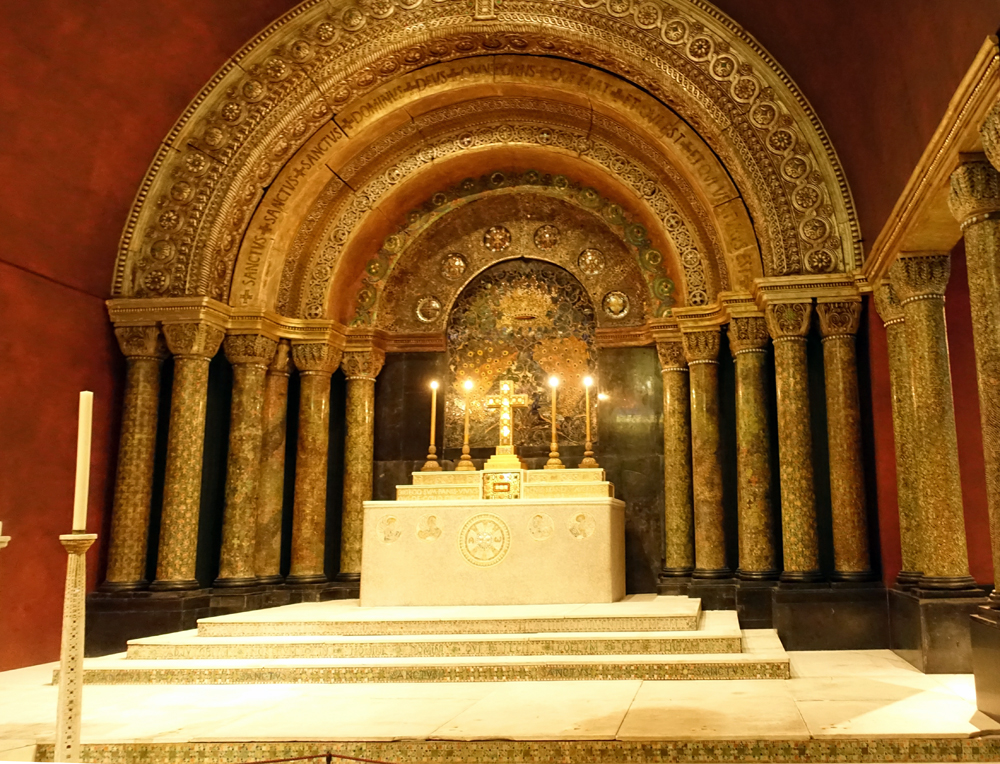
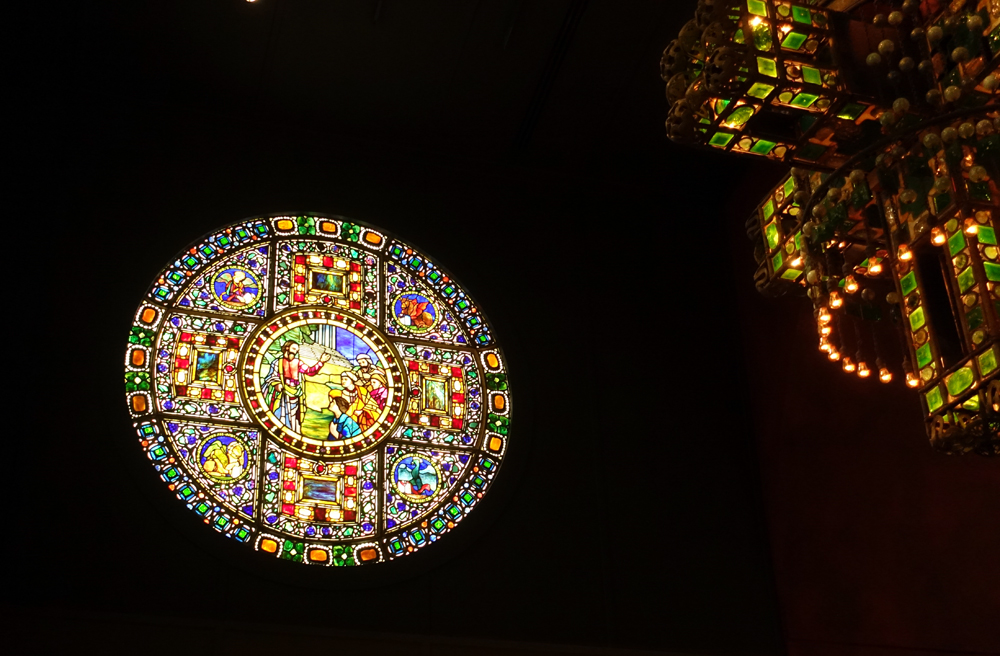
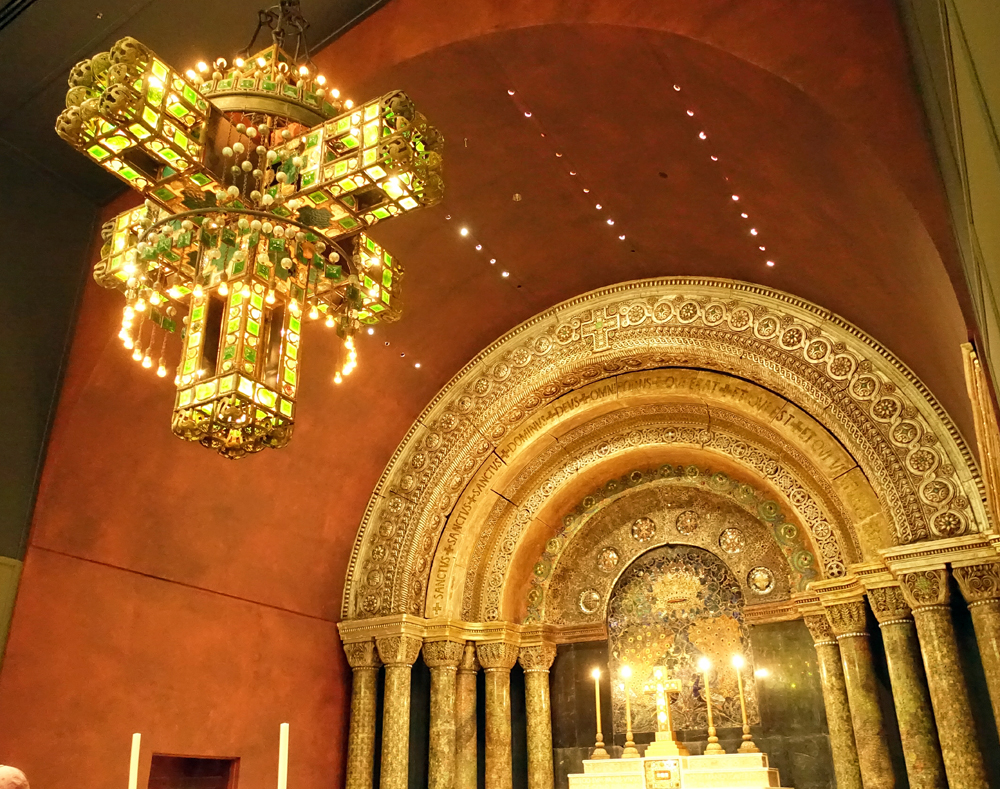
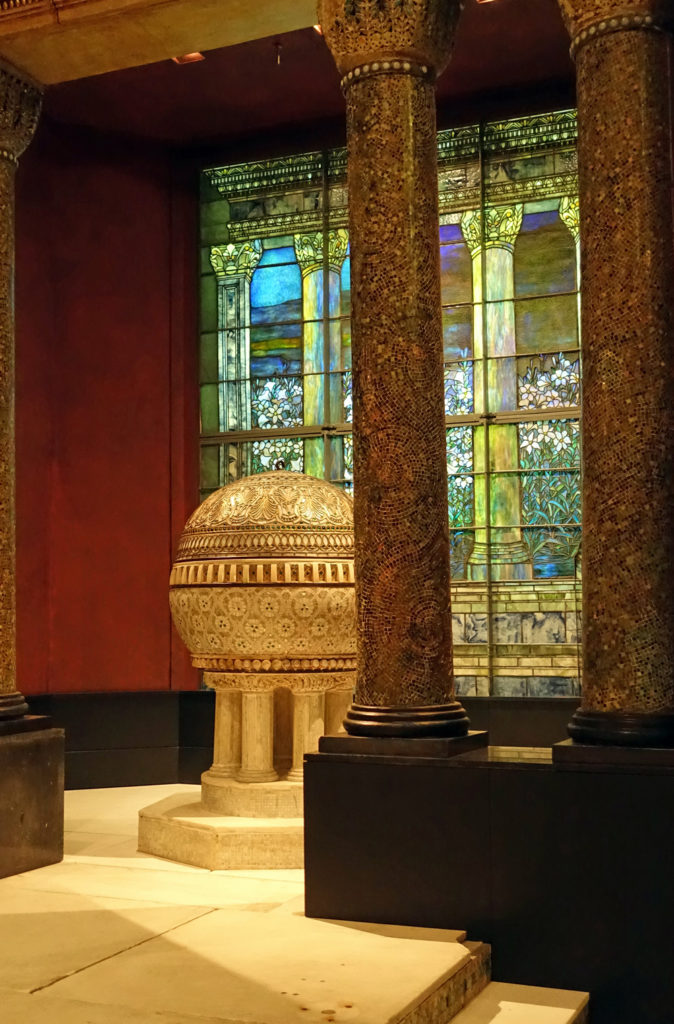
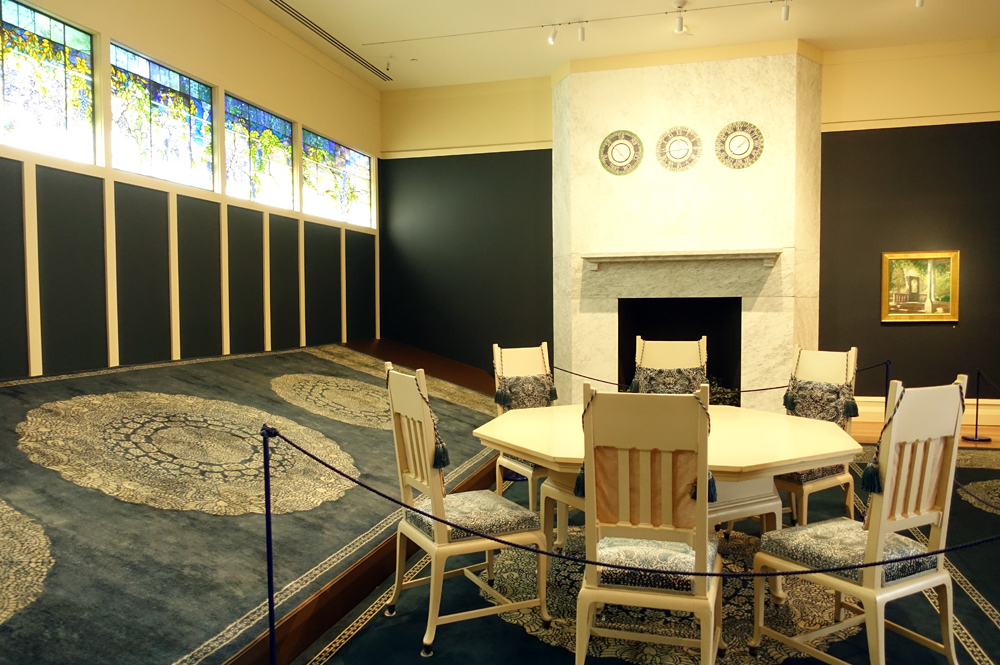
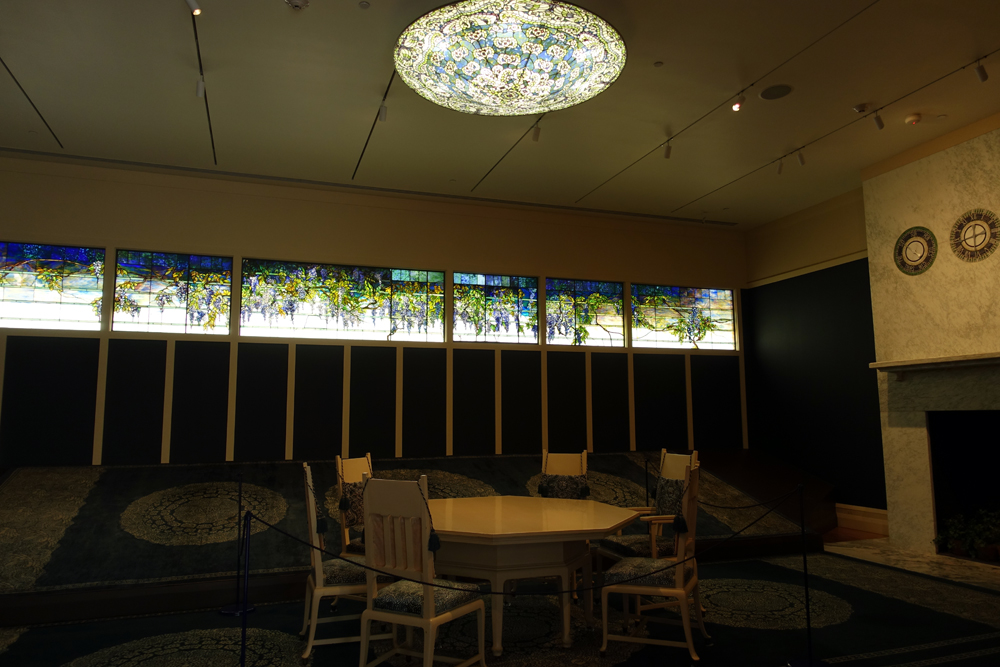
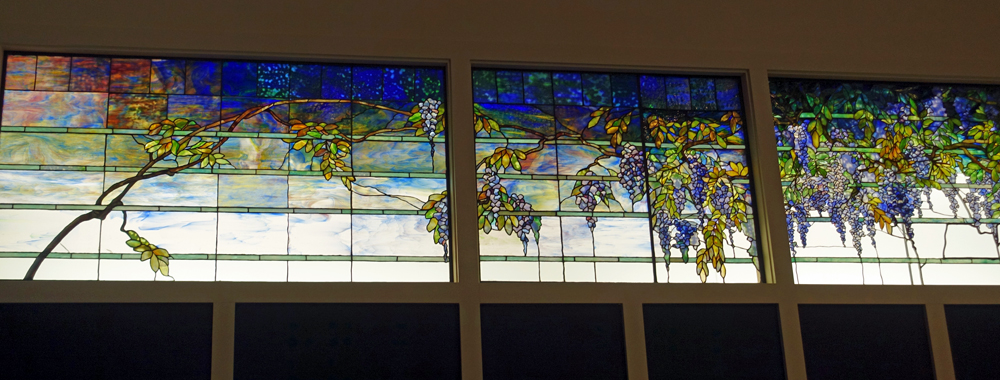
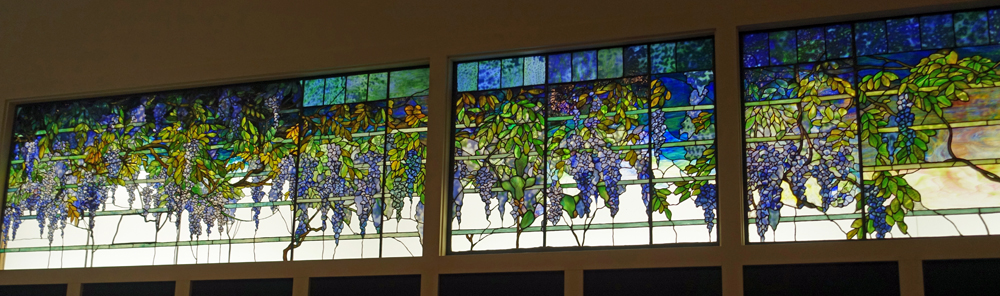
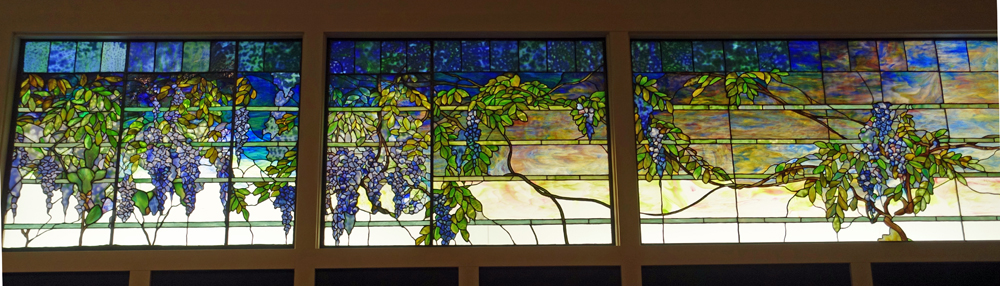
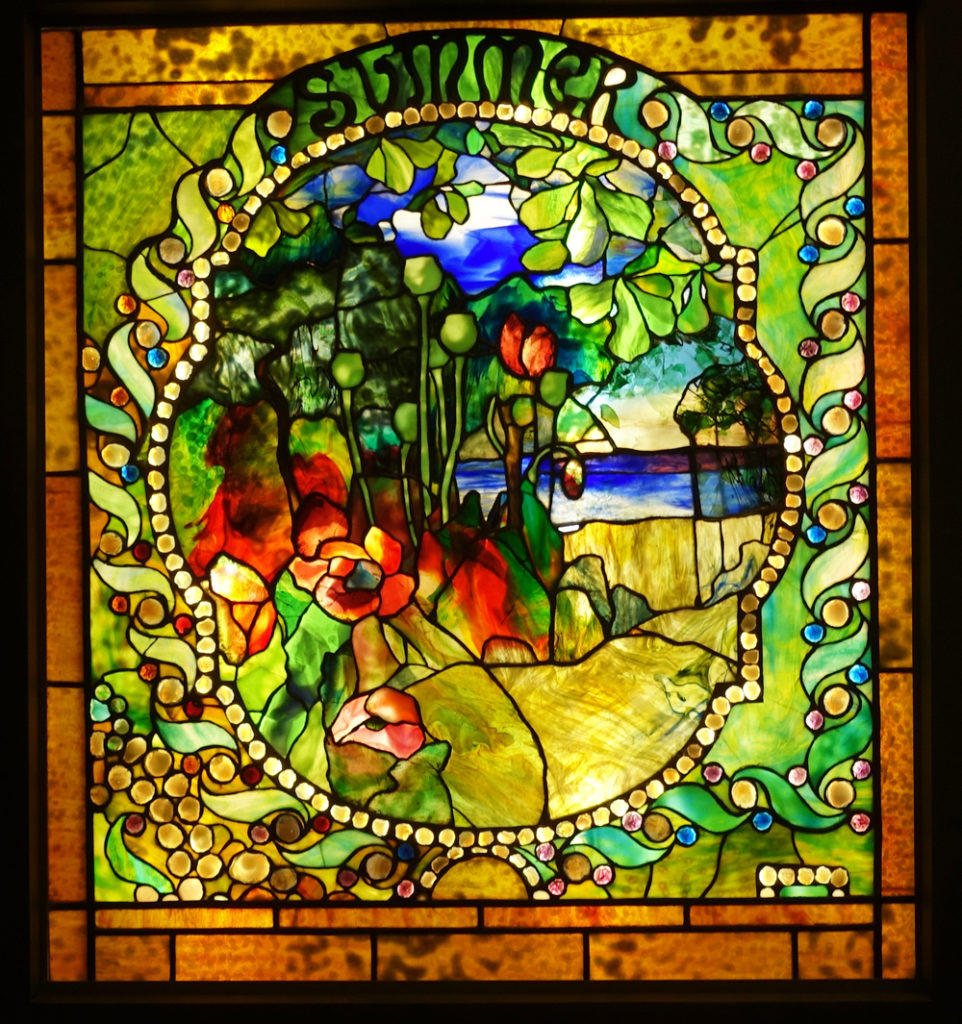
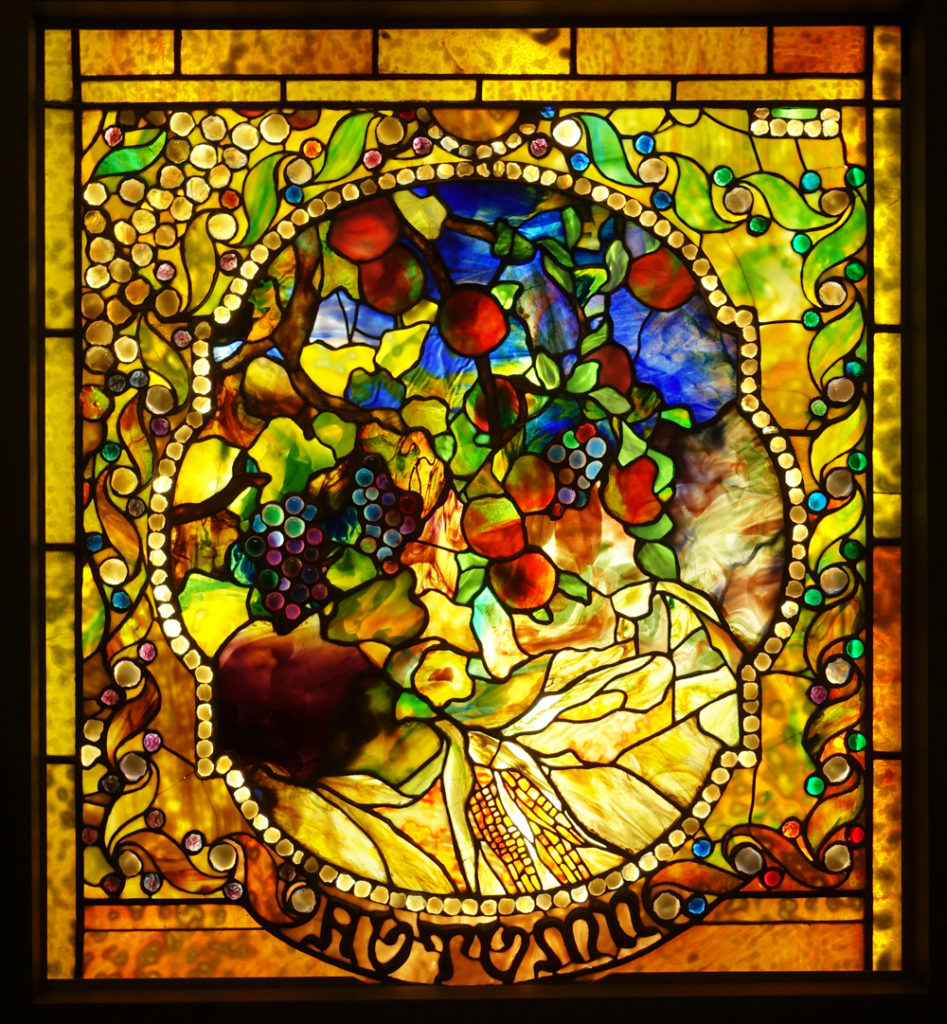
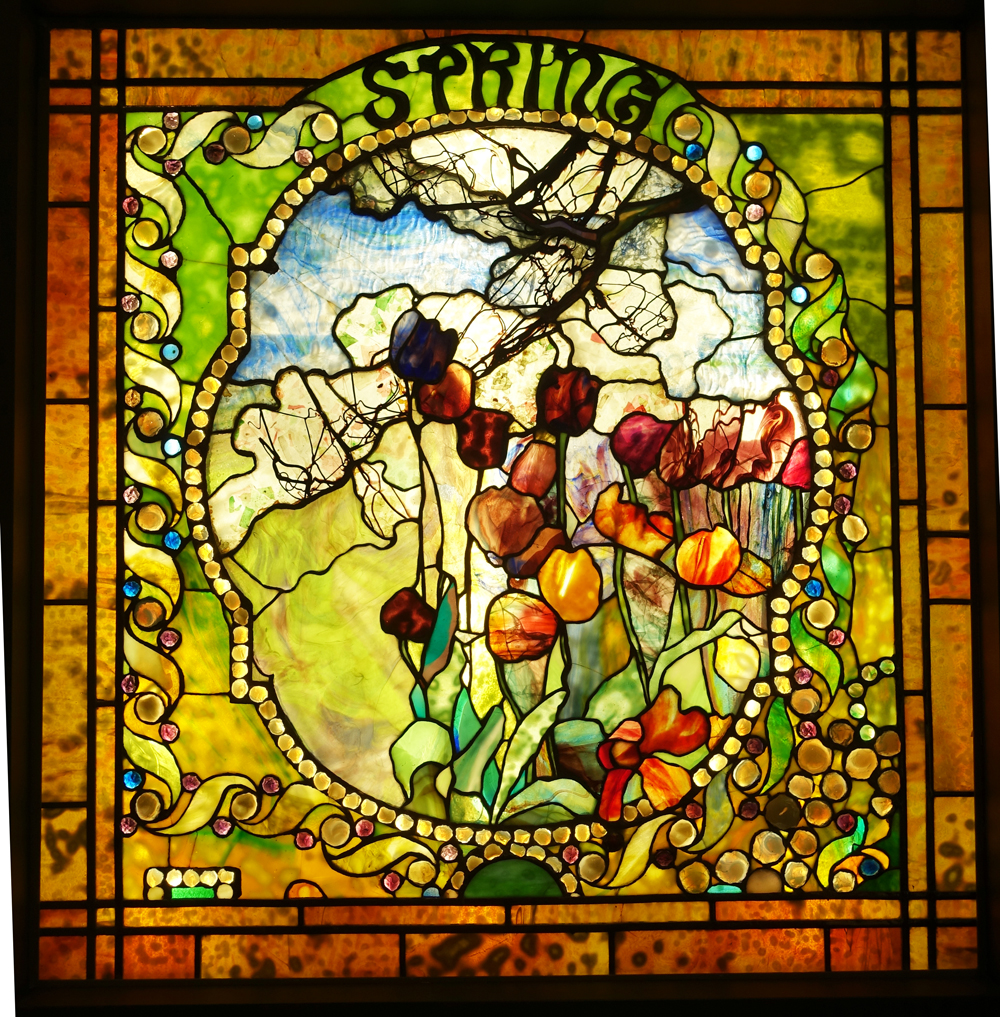
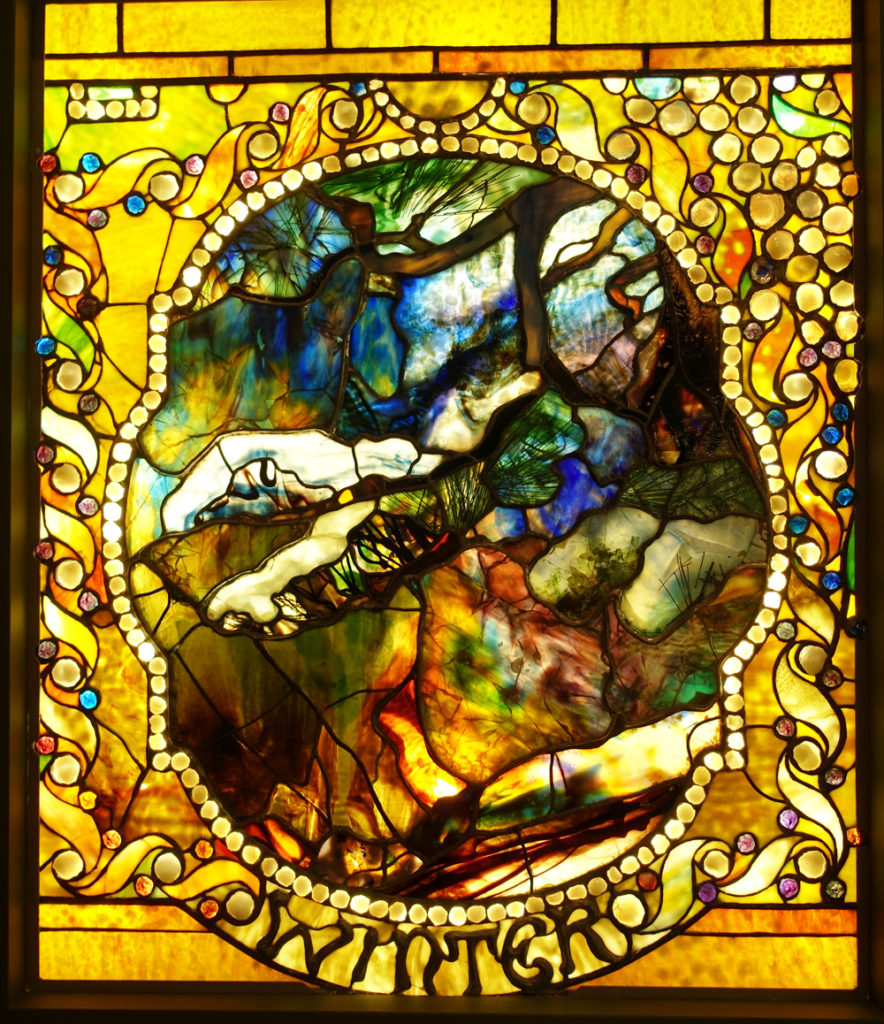
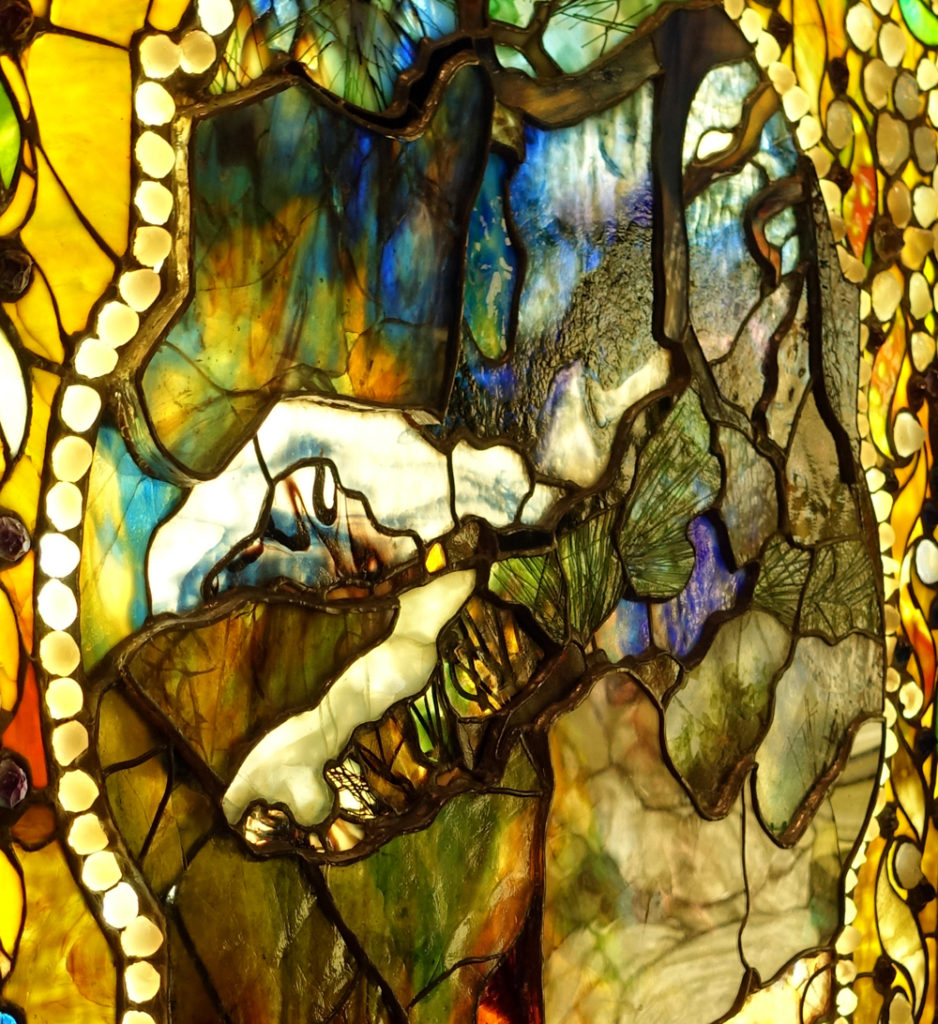
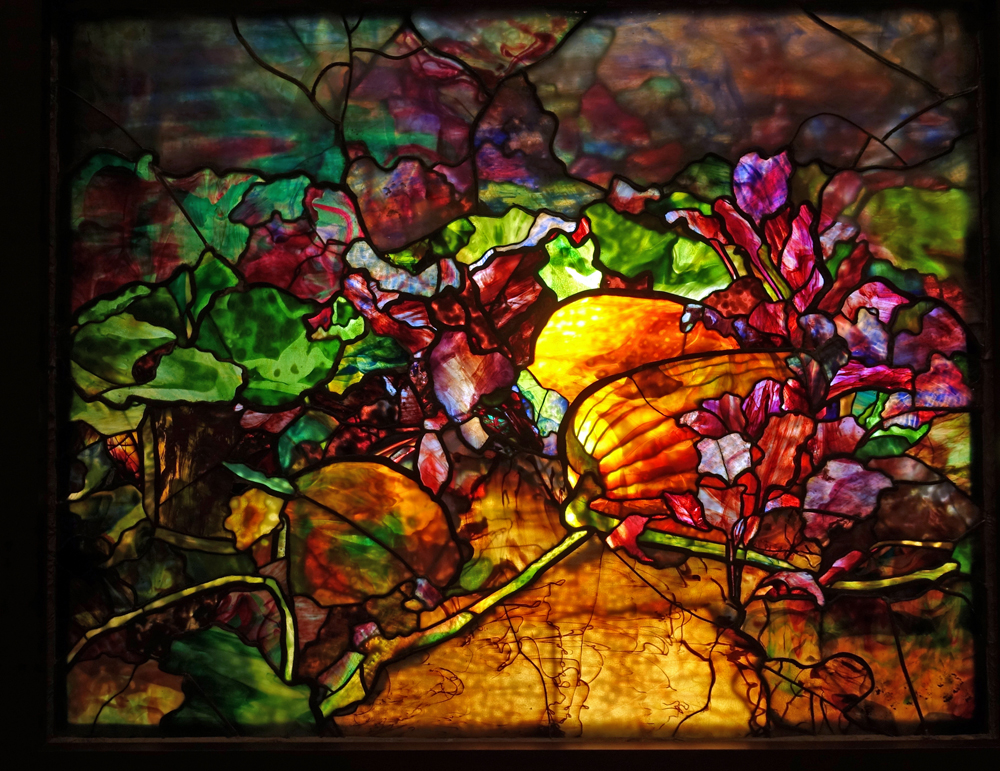
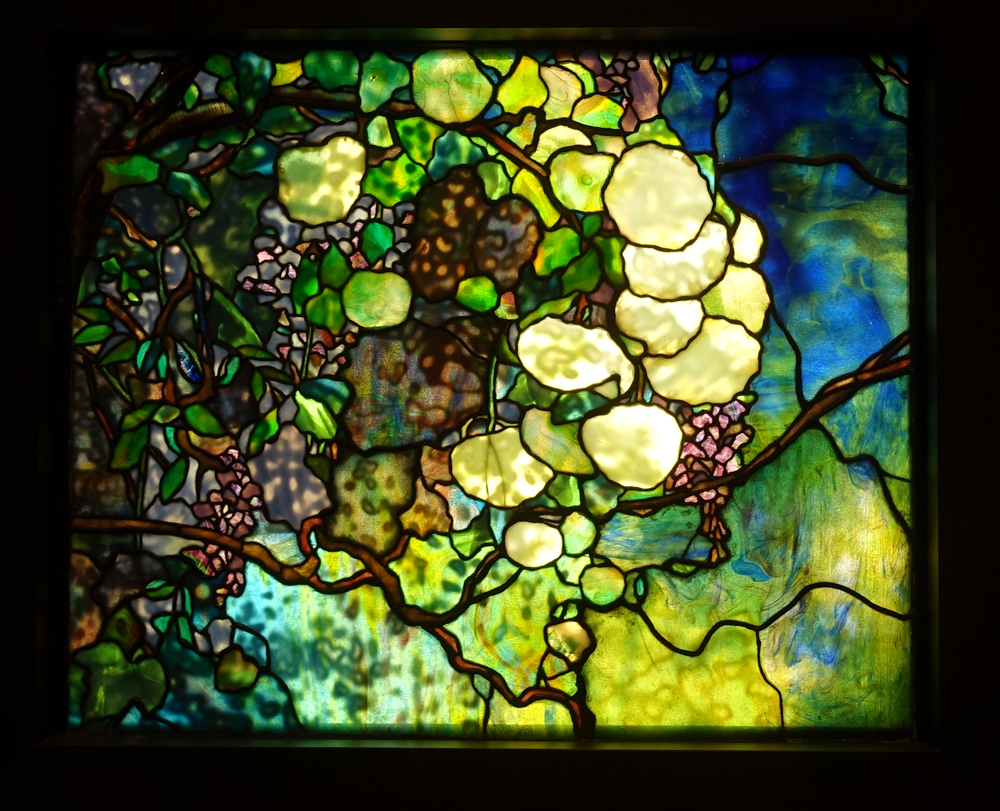
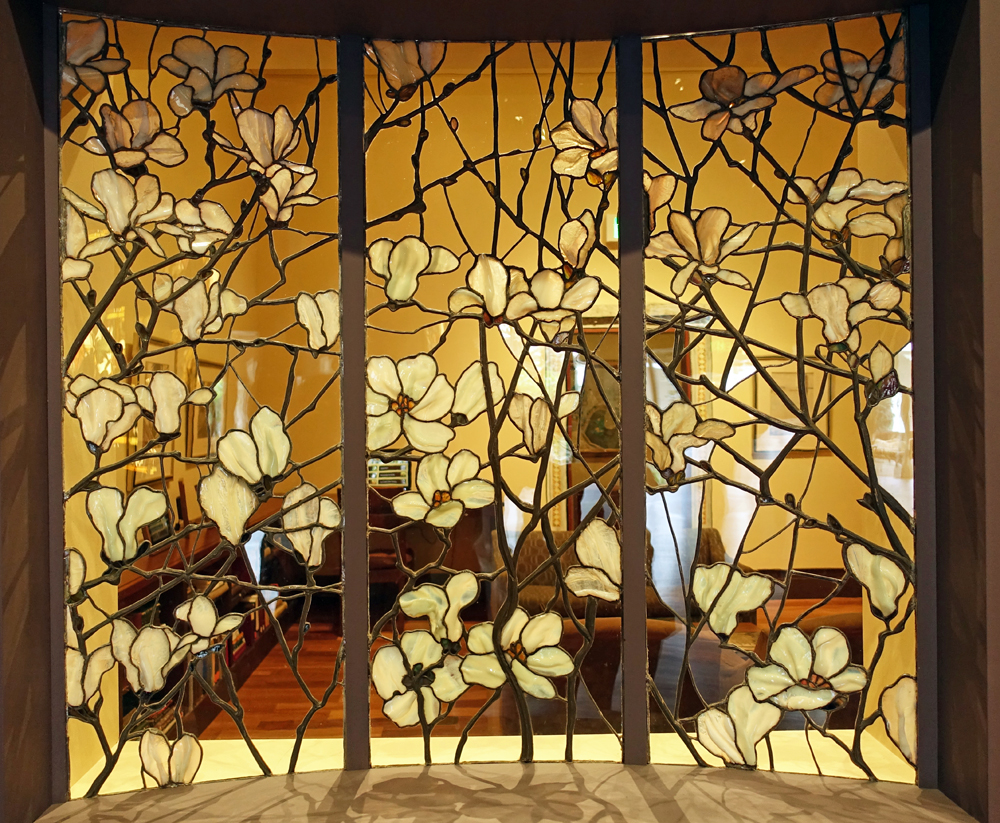
Who’d have expected that the world’s best collection of stained glass by Louis Comfort Tiffany (1848-1933) would be within an hour of Disney World? The Morse Museum also has the remarkable chapel that Tiffany designed for the World’s Columbian Exposition in 1893 and partial reconstructions of several of the rooms of Laurelton Hall, Tiffany’s home on Long Island. Aside from all that, there’s a very good collection of decorative arts ca. 1850-1920, which includes Arts and Crafts and Art Nouveau.
The museum is named for Charles Hosmer Morse (1833-1921), head of Fairbanks, Morse & Co., which manufactured scales, pumps, engines, windmills, and more. He retired to Winter Park, which he helped develop into a resort community. The museum was founded by his grand-daughter and her husband, Jeannette Genius McKean and Hugh F. McKean. It’s run on an endowment, without government funds, and the admission is a mere $6 (seniors $5, students $1).
The Morse is lovely and quite manageable: you can see it easily in a couple hours. As an art historian who’s often distracted by too much verbal information, one of the features I appreciated most about the Morse is that the individual works don’t have labels. There’s introductory text for each gallery printed on the wall, but if you want full information on each item, you go to your smartphone or to the printed pamphlets in each gallery. Or you can do as I mostly did on my first trip: just enjoy looking at all these lovely pieces.
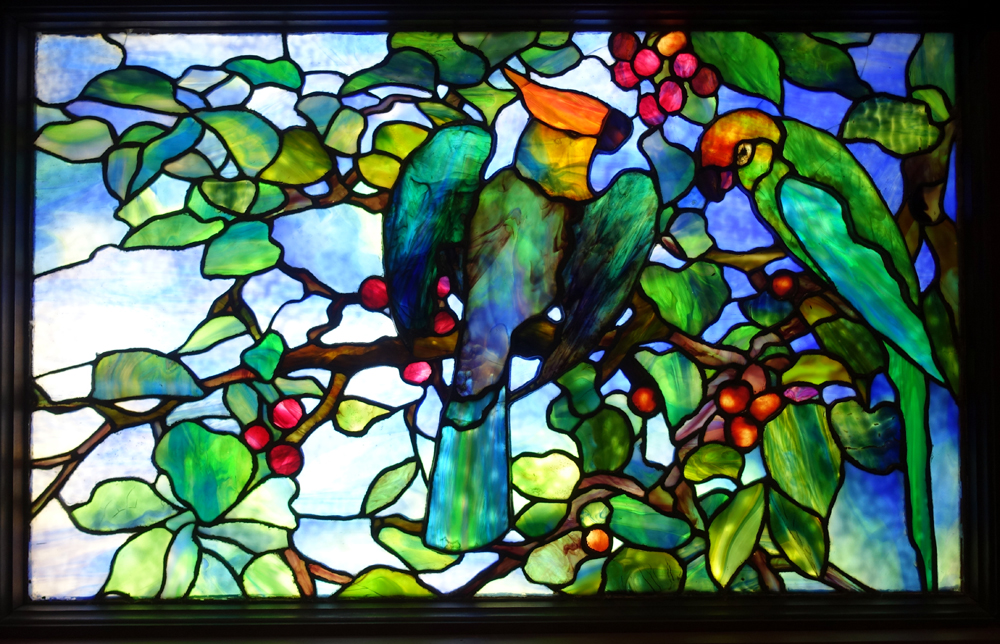
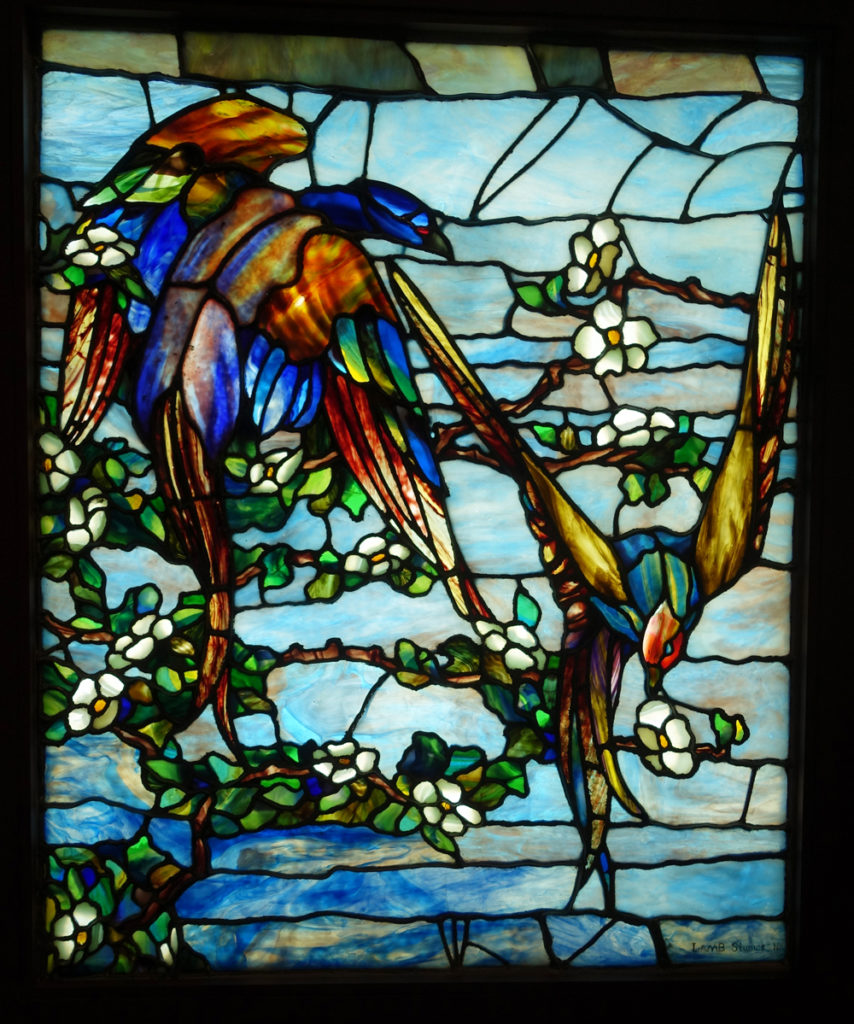
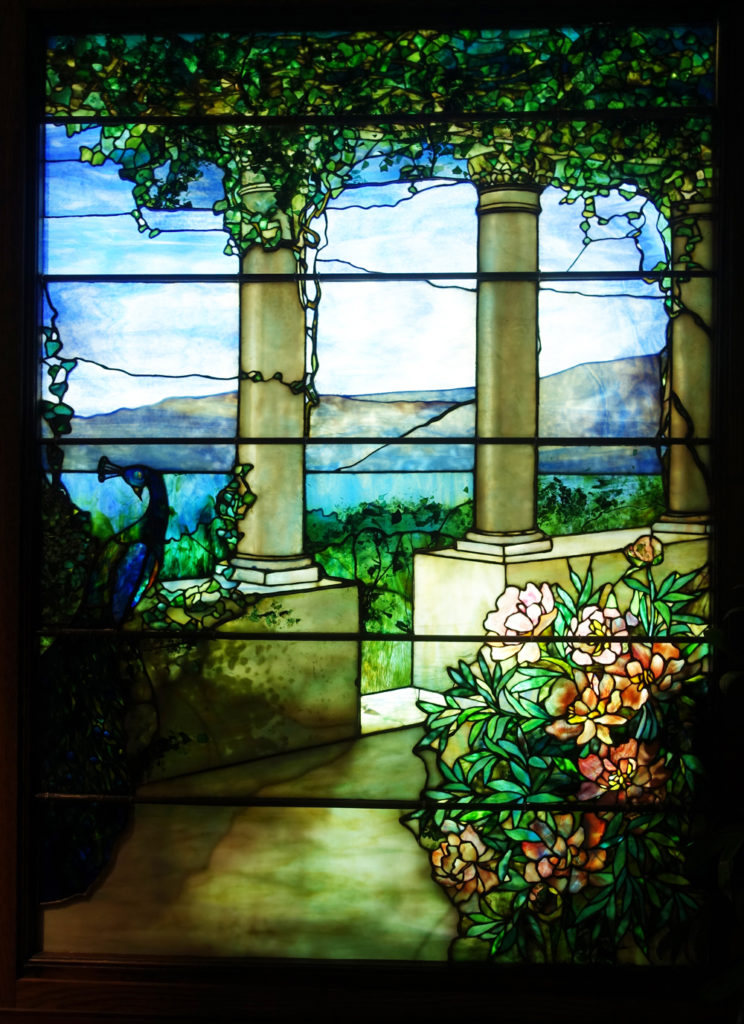
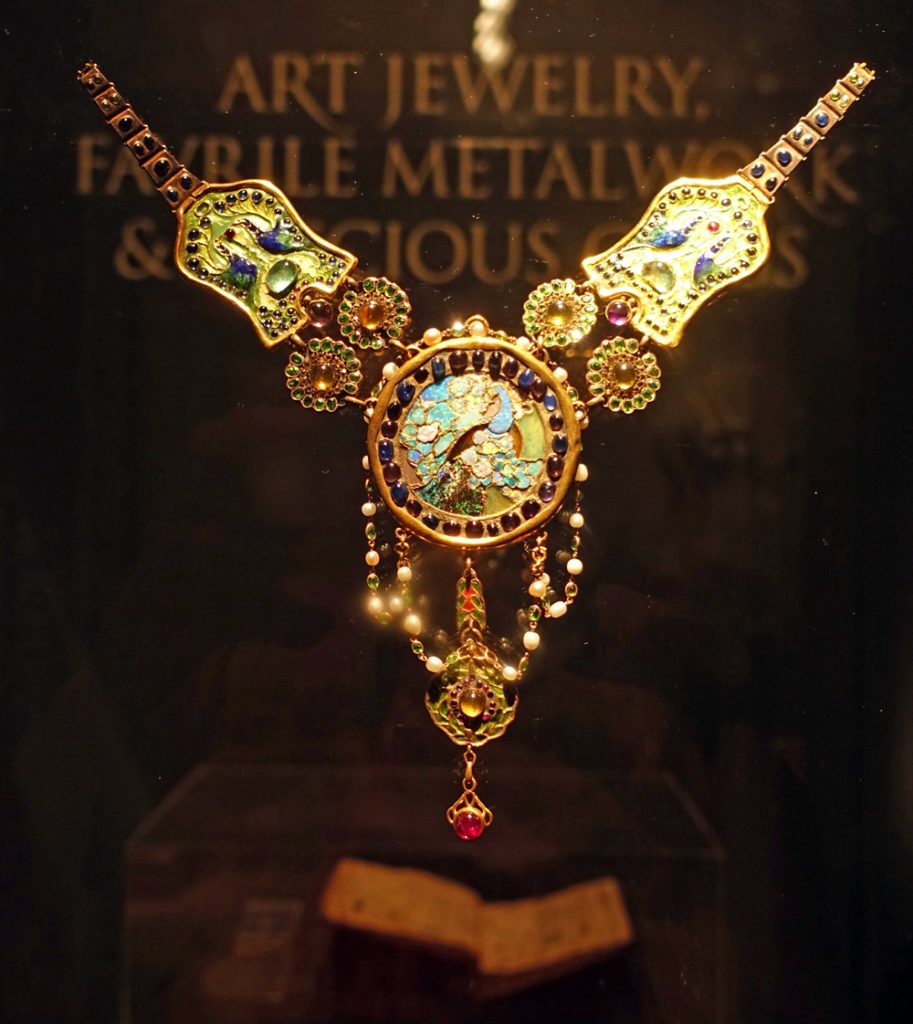
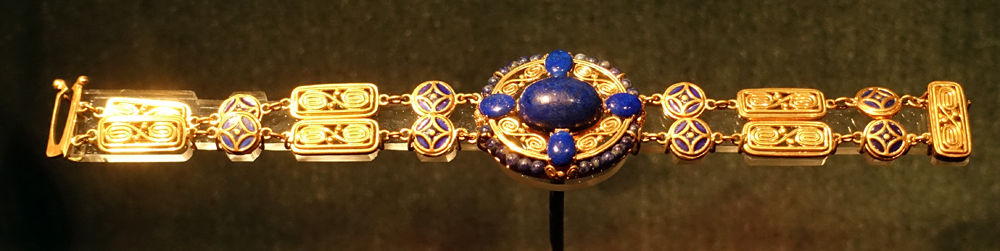
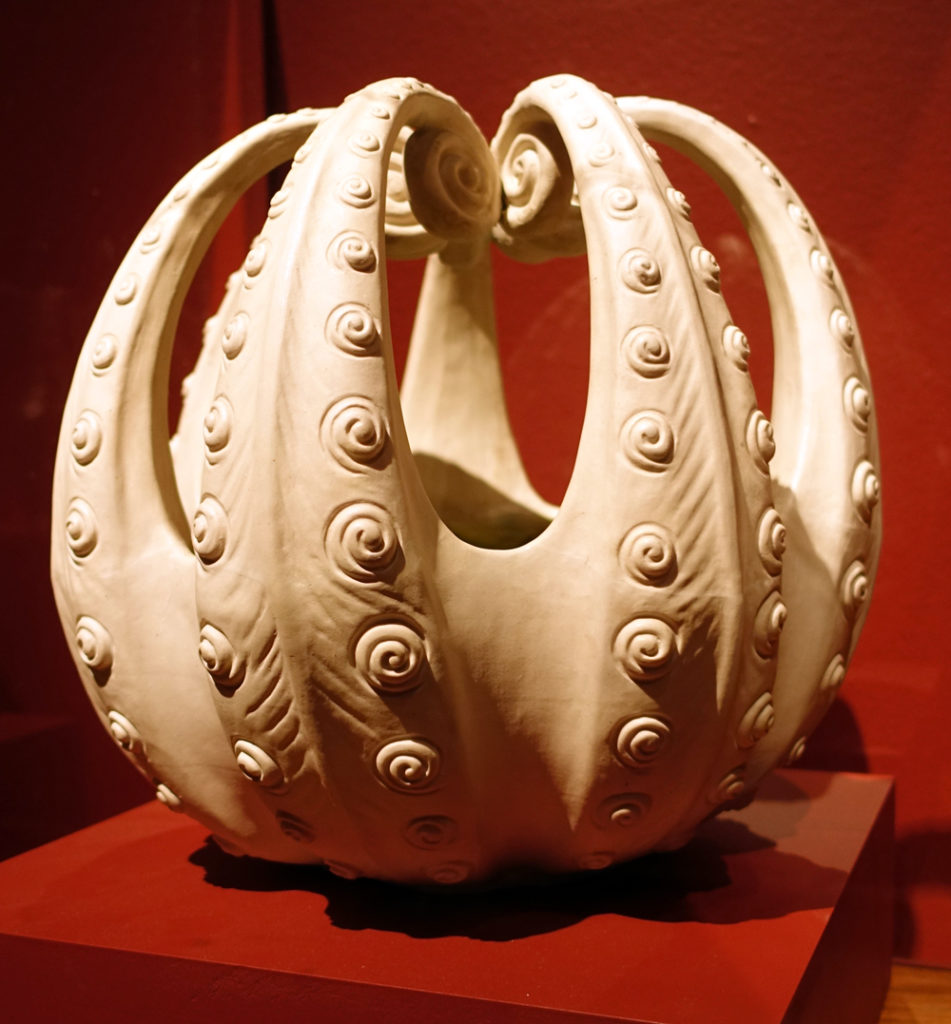
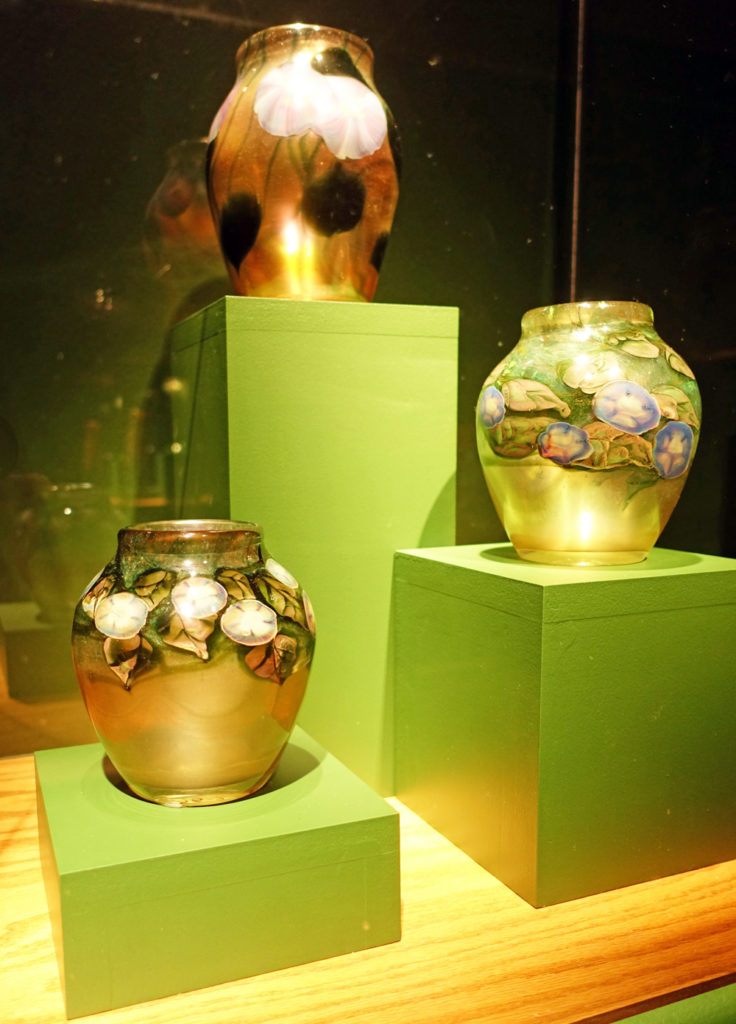
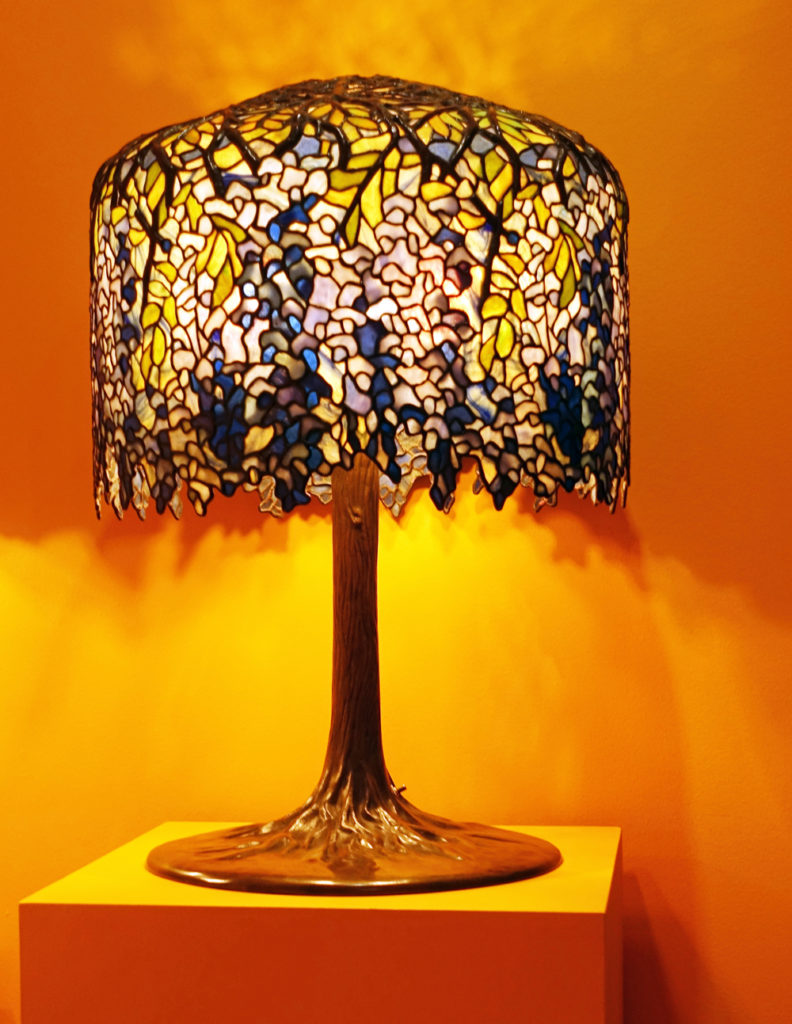
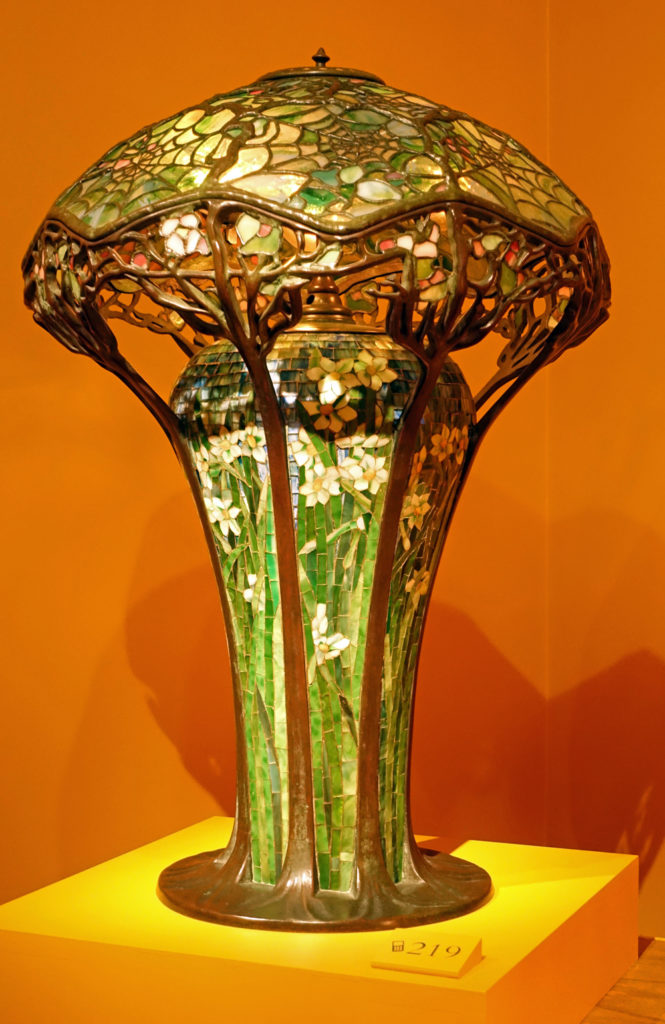
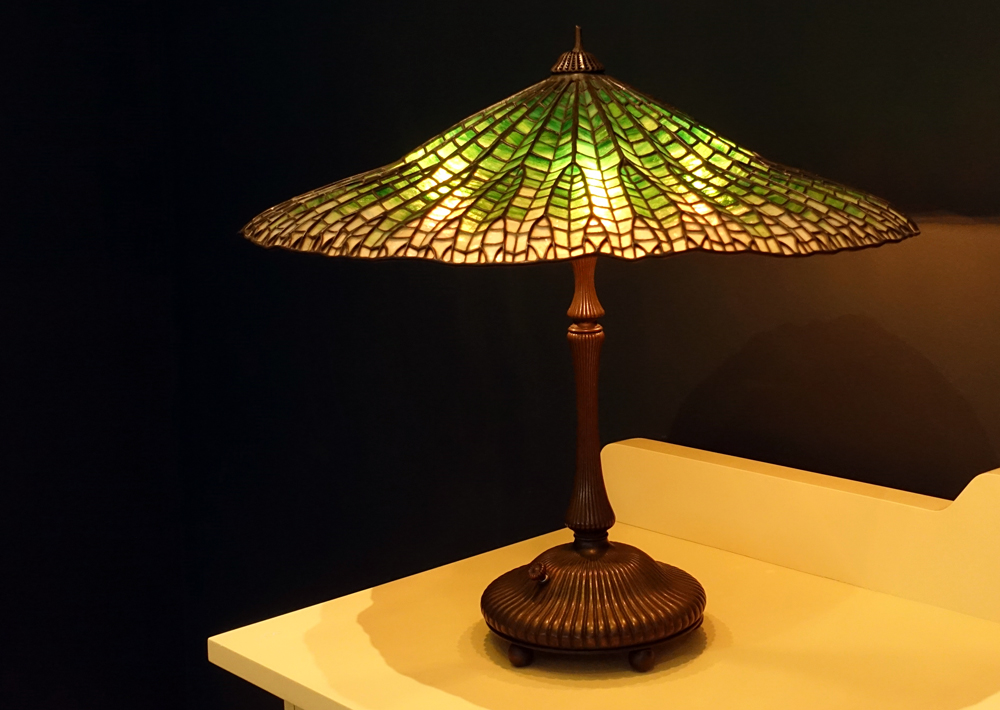
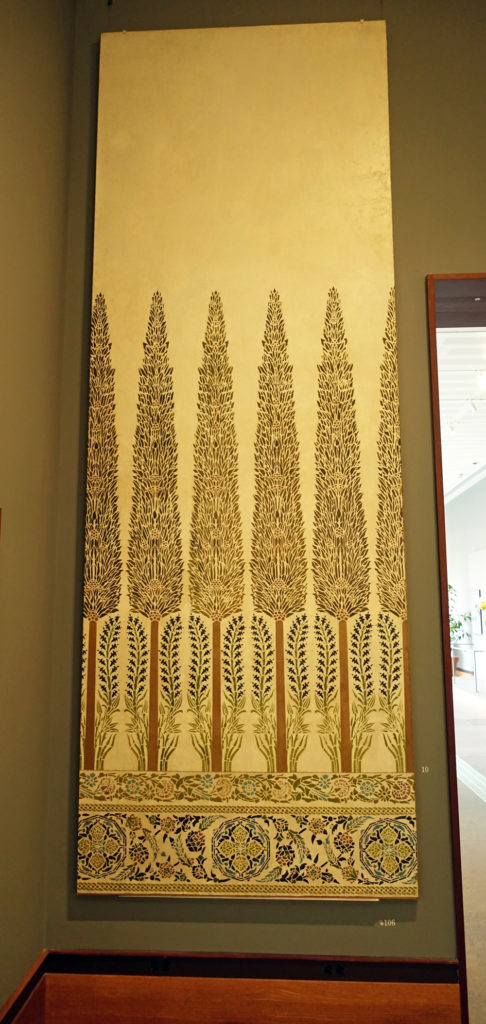
For those of you who can’t get to Winter Park, I’m including a lot of photos in this post. But do remember that even two-dimensional works are better seen in person … especially when they glow like these do. Also: since there weren’t labels attached, I haven’t done proper captions.
These photos are more or less in the order in which I took them while wandering through the museum.
Stained glass panels
If you were wealthy enough to build a mansion in the late nineteenth century, these are the sort of pieces you’d have wanted to commission. NOTE: Some of the stained glass panels in this section are not by Tiffany. They were part of a two-gallery exhibit setting the context of Tiffany’s work. These are all rather large, ranging from two to ten feet high.
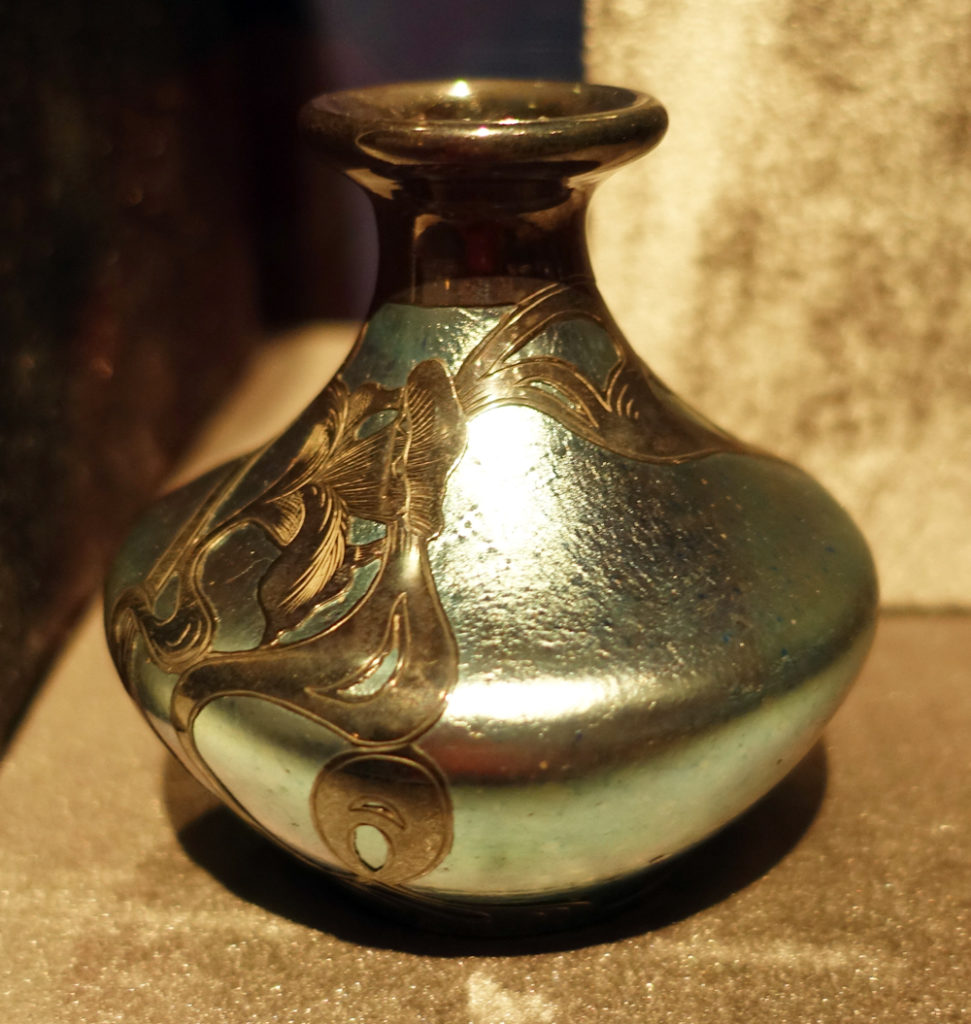
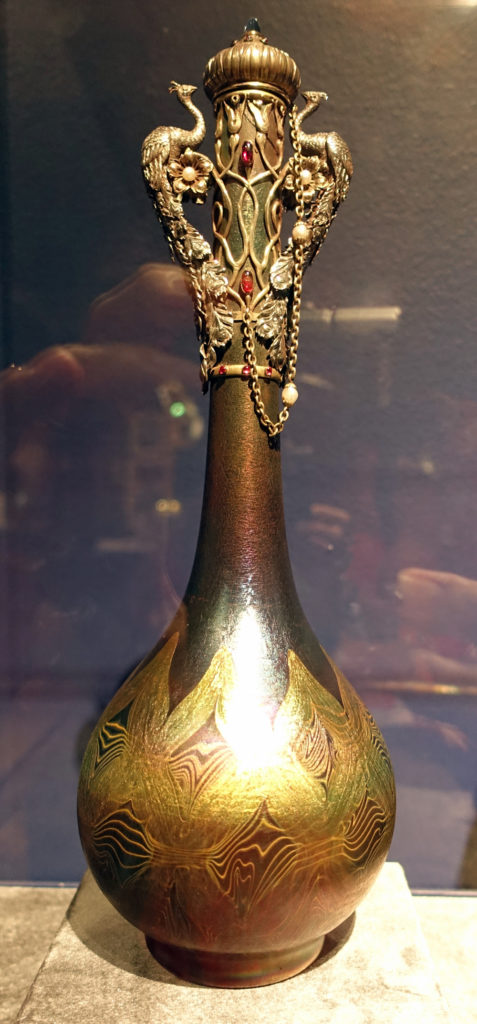
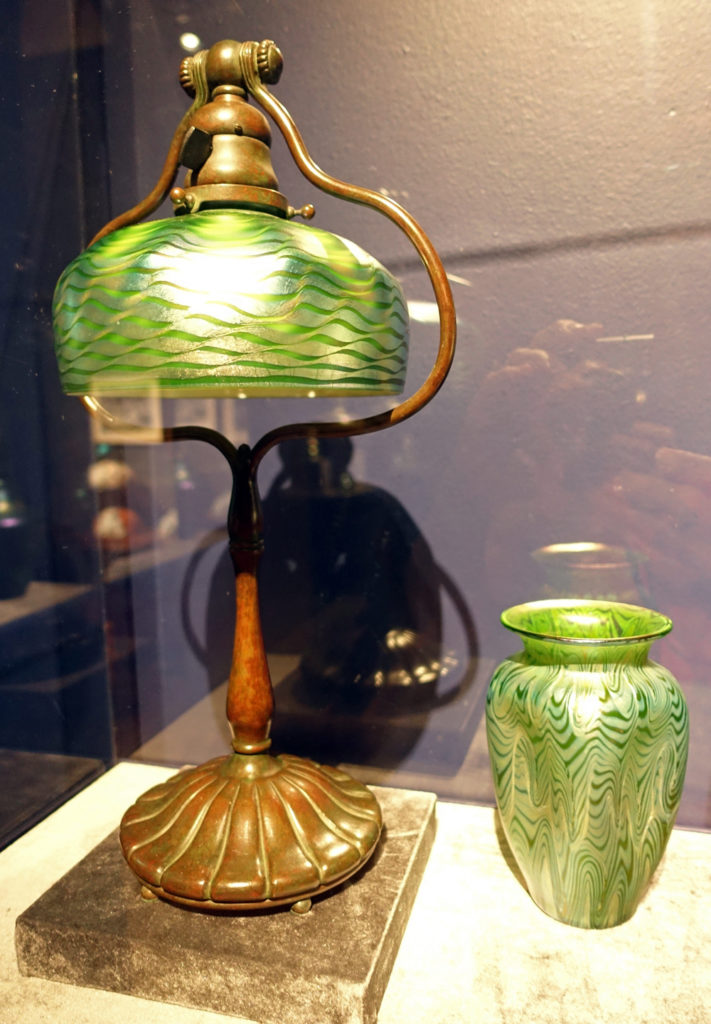
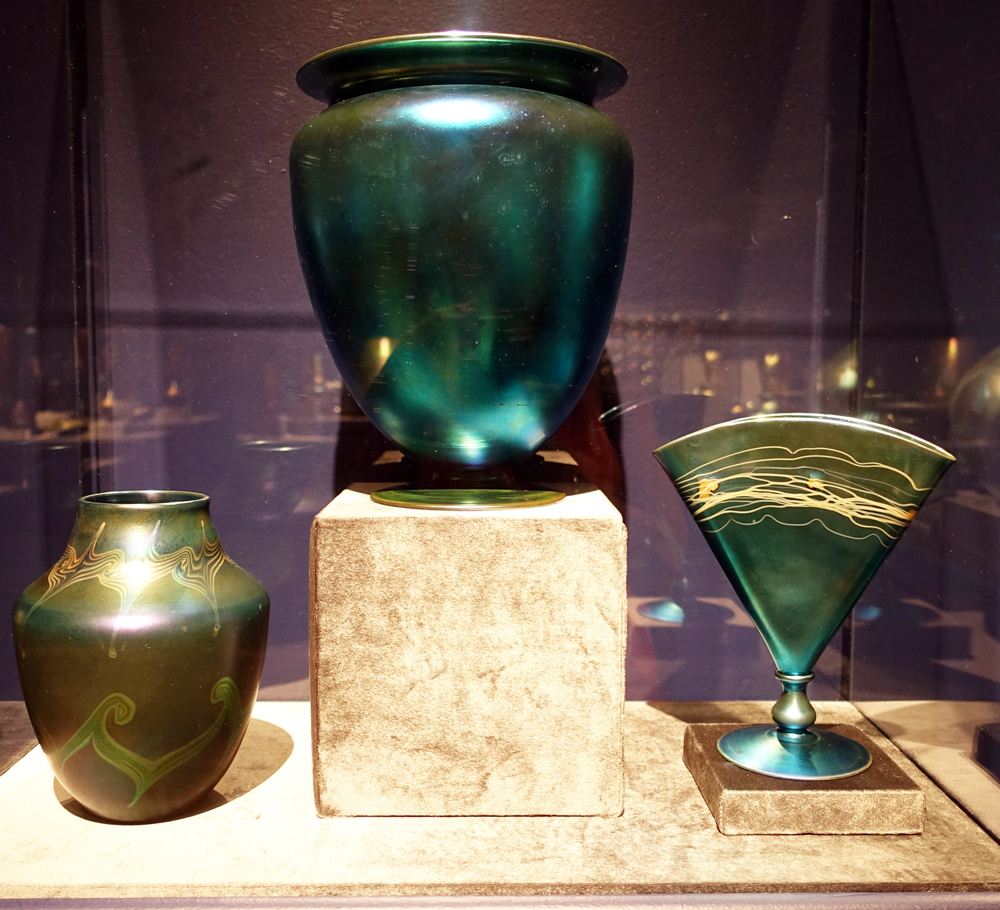
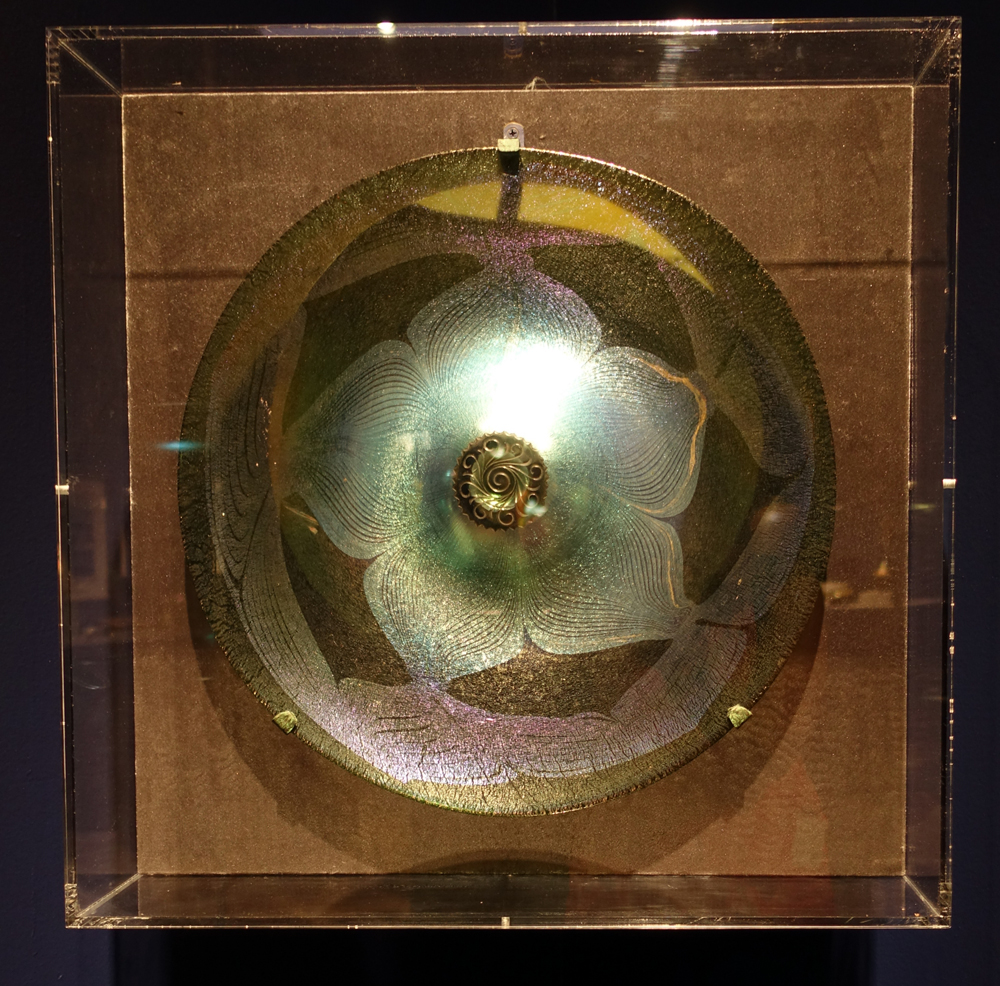
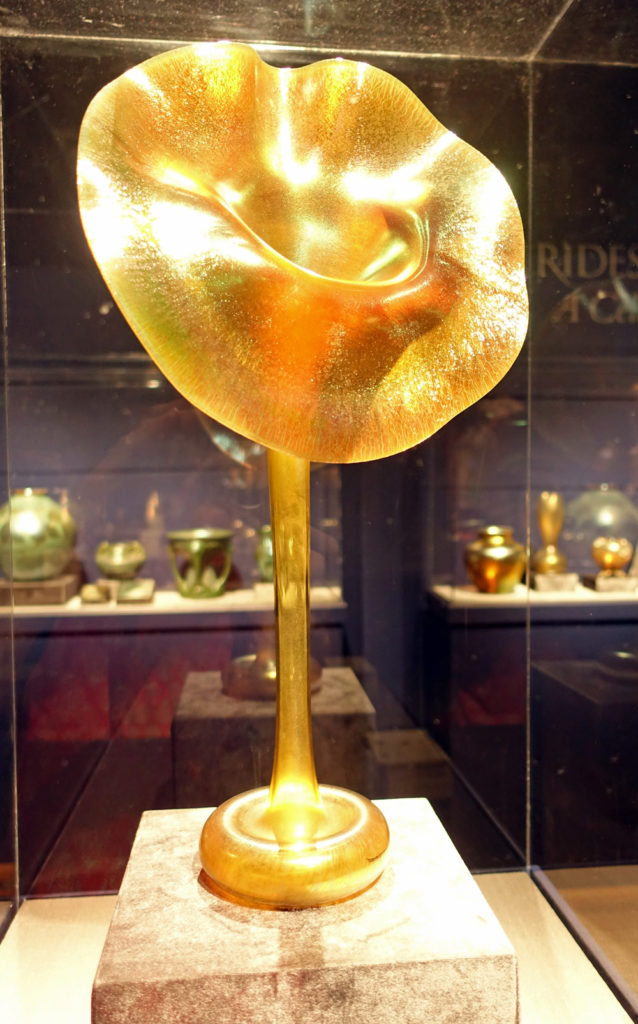
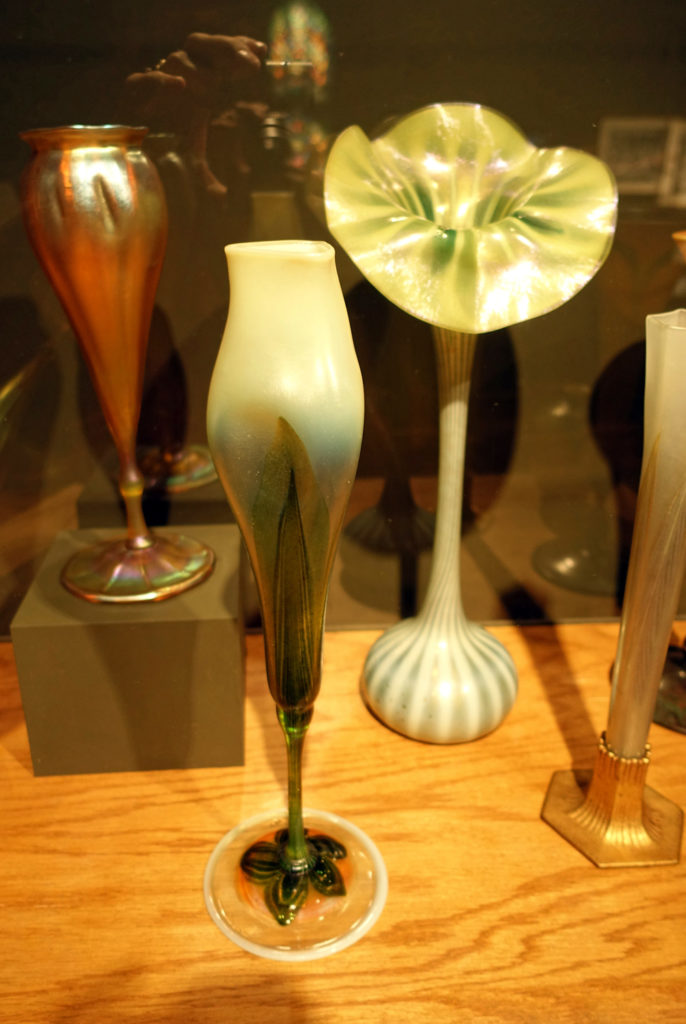
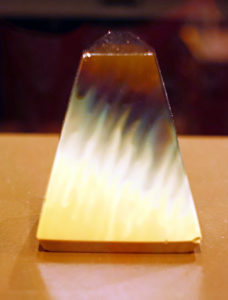
According to the info on the gallery wall, iridescence wasn’t applied to glass until the late nineteenth century. It remained a very popular technique until the end of World War I.
This vase is small, but my fingers actually itch to hold it. What a lovely shape and design!
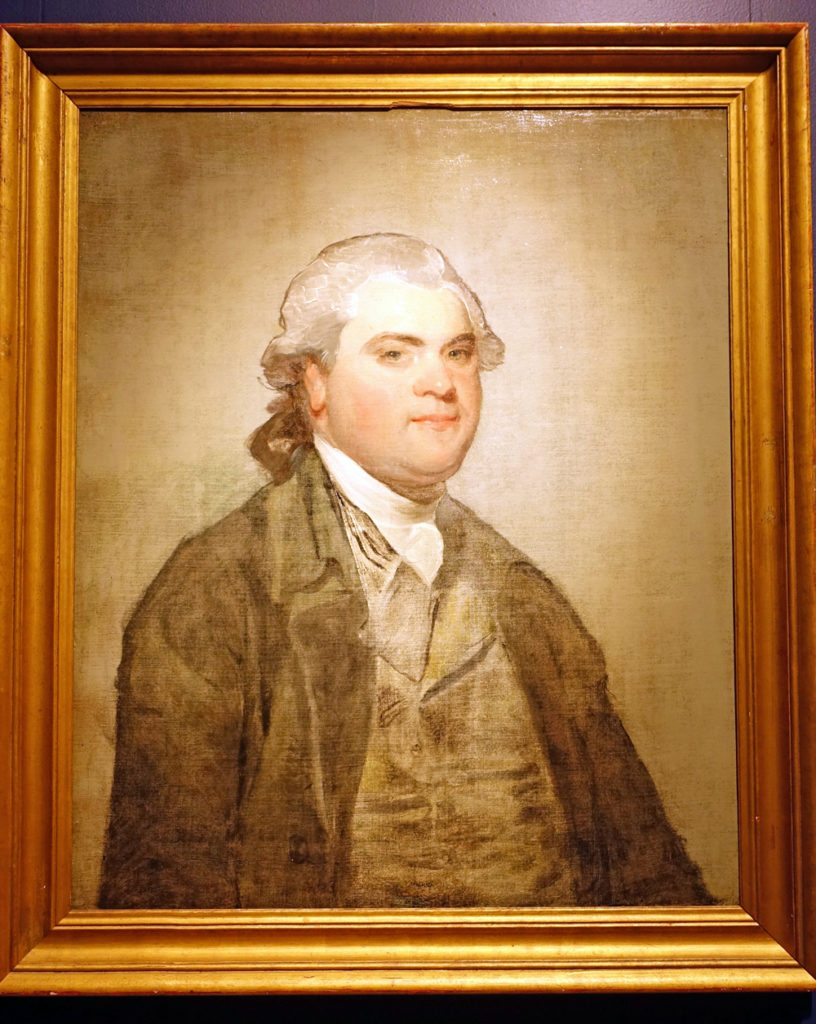
The Morse has a handful of portraits. My favorites are this one and a full-length portrait of a man by Robert Henri that I couldn’t get a good photo of.
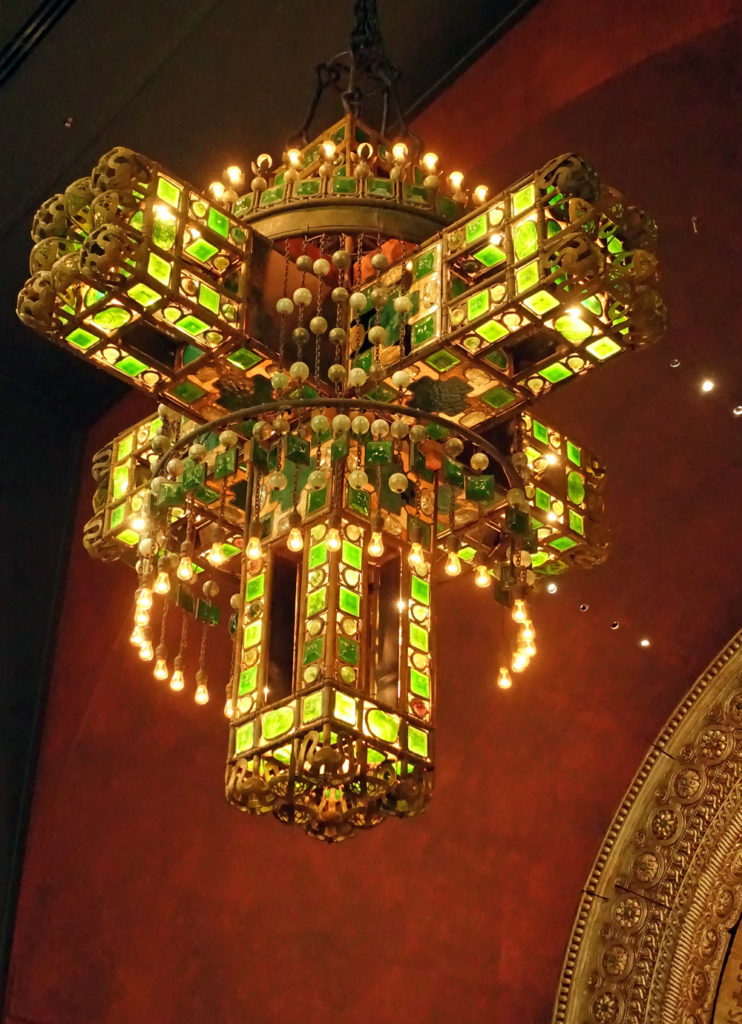
More on the Exposition here. Every detail of this chapel was created by Tiffany for the Exposition. After the Exposition ended, the chapel was moved to Tiffany’s home on Long Island, Laurelton Hall. (See below.)
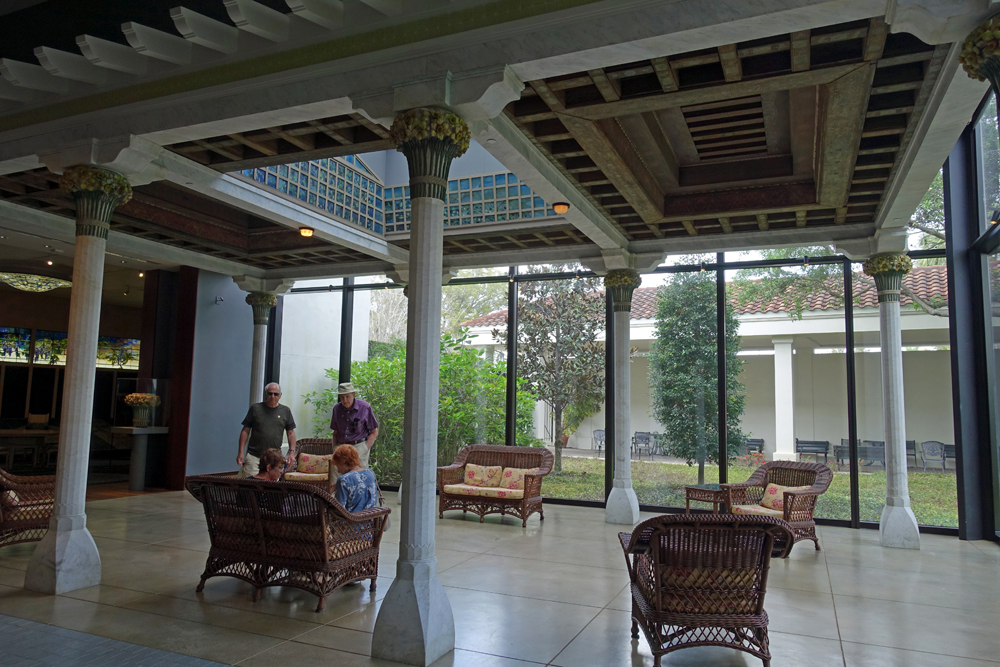
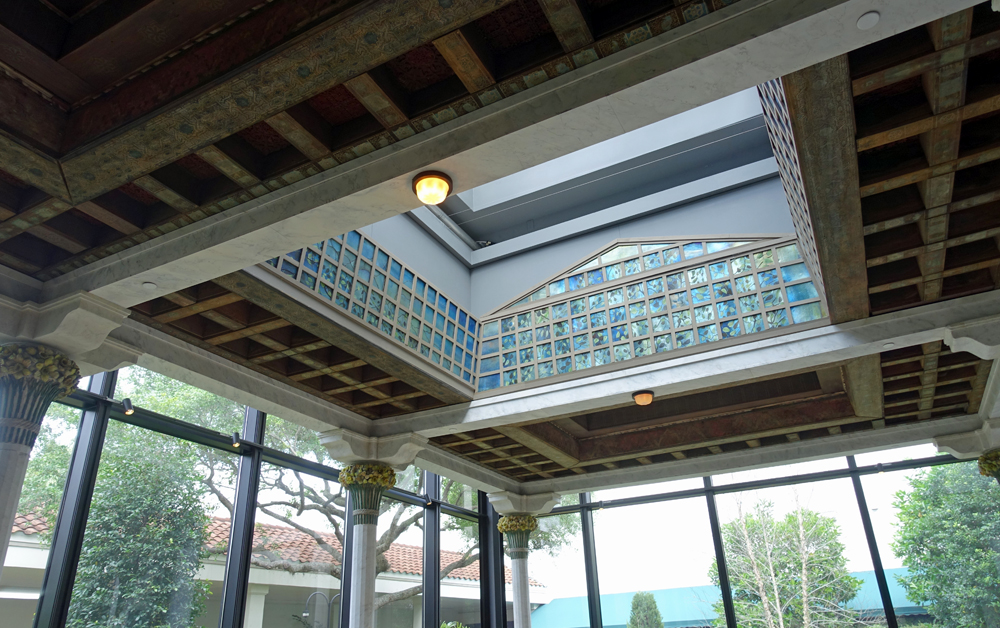
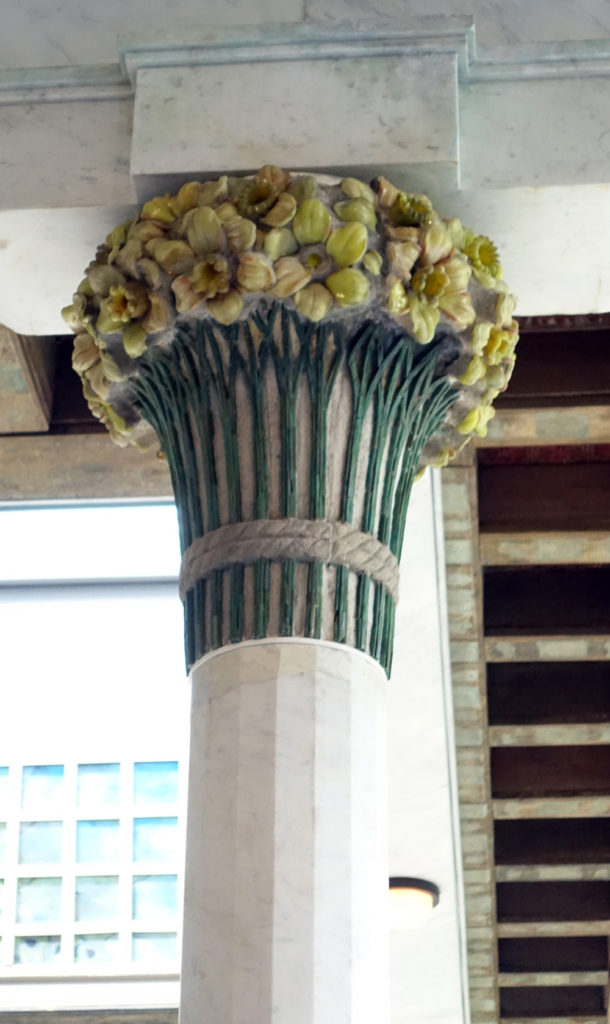
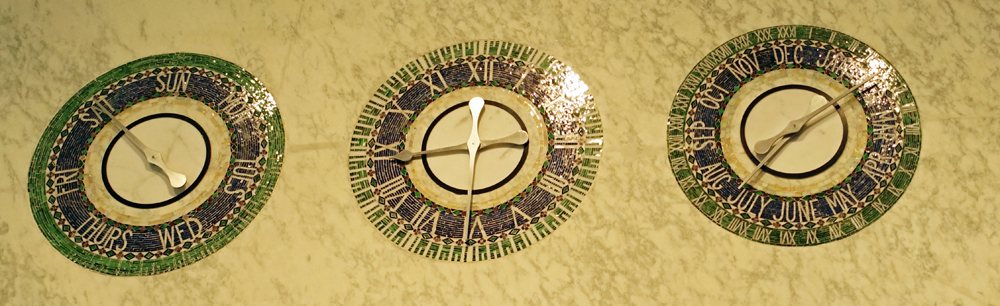
Tiffany began construction of Laurelton Hall, his estate on Long Island, in 1902. The house had 84 rooms on eight levels, plus numerous outbuildings (including the chapel, shown above). Decorations included some of Tiffany’s favorite works of his own and objects from around the world. After a fire gutted the house in 1957, many of the surviving works came to the Morse Museum.
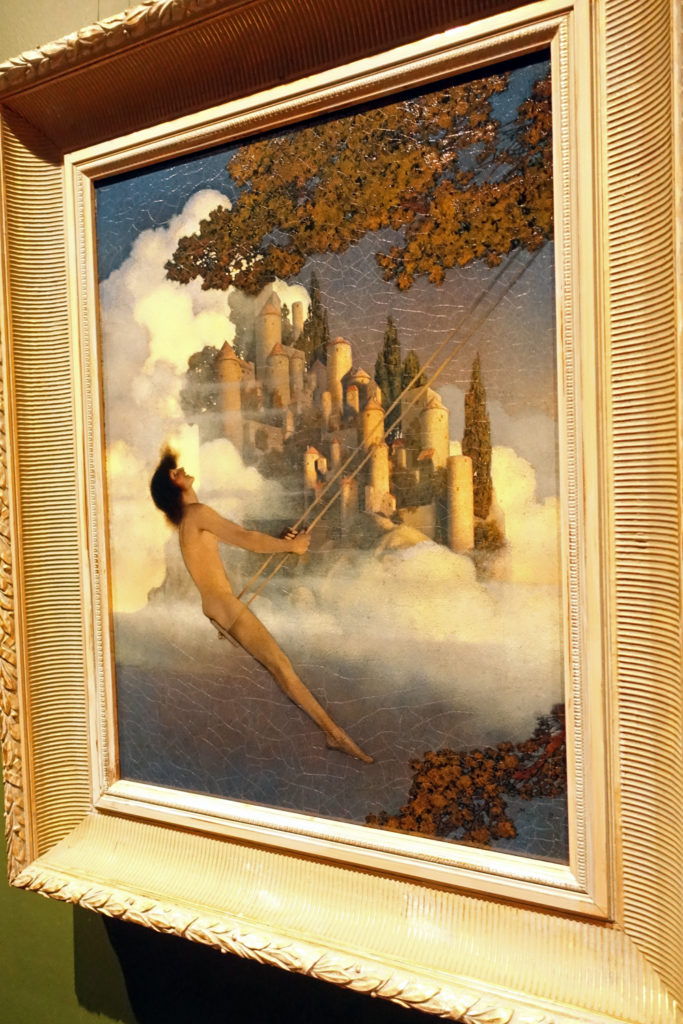
Just before you exit to the gift shop is Parrish’s The Dinky Bird, ca. 1904. I think it’s the original: it’s an oil painting, not a mechanical reproduction. Here’s your chance to see Parrish’s glowing colors, which (like Tiffany’s stained glass) are much better in the original than in reproductions.
The Morse is in charming, elegant Winter Park, which also offers upscale shopping, restaurants, and a scenic boat tour of three of the areas lovely lakes. Our meal at Tabla was delicious.
In Getting More Enjoyment from Sculpture You Love, I demonstrate a method for looking at sculptures in detail, in depth, and on your own. Learn to enjoy your favorite sculptures more, and find new favorites. Available on Amazon in print and Kindle formats.
Want wonderful art delivered weekly to your inbox? Check out my free Sunday Recommendations list and rewards for recurring support: details here.
{"id":null,"mode":"text_link","open_style":"in_modal","currency_code":"USD","currency_symbol":"$","currency_type":"decimal","blank_flag_url":"https:\/\/diannedurantewriter.com\/wp-content\/plugins\/tip-jar-wp\/\/assets\/images\/flags\/blank.gif","flag_sprite_url":"https:\/\/diannedurantewriter.com\/wp-content\/plugins\/tip-jar-wp\/\/assets\/images\/flags\/flags.png","default_amount":200,"top_media_type":"featured_image","featured_image_url":"https:\/\/diannedurantewriter.com\/\/wp-content\/uploads\/2015\/12\/straushome2.jpg","featured_embed":"","header_media":null,"file_download_attachment_data":null,"recurring_options_enabled":true,"recurring_options":{"never":{"selected":true,"after_output":"One time only"},"weekly":{"selected":false,"after_output":"Every week"},"monthly":{"selected":false,"after_output":"Every month"},"yearly":{"selected":false,"after_output":"Every year"}},"strings":{"current_user_email":"","current_user_name":"","link_text":"Tip directly on my website, one-time or recurring","complete_payment_button_error_text":"Check info and try again","payment_verb":"Pay","payment_request_label":"Dianne L. Durante, Writing Addict + Adept","form_has_an_error":"Please check and fix the errors above","general_server_error":"Something isn't working right at the moment. Please try again.","form_title":"Dianne L. Durante","form_subtitle":"Say \"Well done, Dianne!\"","currency_search_text":"Country or Currency here","other_payment_option":"Other payment option","manage_payments_button_text":"Manage your payments","thank_you_message":"Thanks for your support!","payment_confirmation_title":"Dianne L. Durante, Writing Addict + Adept","receipt_title":"Your Receipt","print_receipt":"Print Receipt","email_receipt":"Email Receipt","email_receipt_sending":"Sending receipt...","email_receipt_success":"Email receipt successfully sent","email_receipt_failed":"Email receipt failed to send. Please try again.","receipt_payee":"Paid to","receipt_statement_descriptor":"This will show up on your statement as","receipt_date":"Date","receipt_transaction_id":"Transaction ID","receipt_transaction_amount":"Amount","refund_payer":"Refund from","login":"Log in to manage your payments","manage_payments":"Manage Payments","transactions_title":"Your Transactions","transaction_title":"Transaction Receipt","transaction_period":"Plan Period","arrangements_title":"Your Plans","arrangement_title":"Manage Plan","arrangement_details":"Plan Details","arrangement_id_title":"Plan ID","arrangement_payment_method_title":"Payment Method","arrangement_amount_title":"Plan Amount","arrangement_renewal_title":"Next renewal date","arrangement_action_cancel":"Cancel Plan","arrangement_action_cant_cancel":"Cancelling is currently not available.","arrangement_action_cancel_double":"Are you sure you'd like to cancel?","arrangement_cancelling":"Cancelling Plan...","arrangement_cancelled":"Plan Cancelled","arrangement_failed_to_cancel":"Failed to cancel plan","back_to_plans":"\u2190 Back to Plans","update_payment_method_verb":"Update","sca_auth_description":"Your have a pending renewal payment which requires authorization.","sca_auth_verb":"Authorize renewal payment","sca_authing_verb":"Authorizing payment","sca_authed_verb":"Payment successfully authorized!","sca_auth_failed":"Unable to authorize! Please try again.","login_button_text":"Log in","login_form_has_an_error":"Please check and fix the errors above","uppercase_search":"Search","lowercase_search":"search","uppercase_page":"Page","lowercase_page":"page","uppercase_items":"Items","lowercase_items":"items","uppercase_per":"Per","lowercase_per":"per","uppercase_of":"Of","lowercase_of":"of","back":"Back to plans","zip_code_placeholder":"Zip\/Postal Code","download_file_button_text":"Download File","input_field_instructions":{"tip_amount":{"placeholder_text":"How much would you like to tip?","initial":{"instruction_type":"normal","instruction_message":"How much would you like to tip? Choose any currency."},"empty":{"instruction_type":"error","instruction_message":"How much would you like to tip? Choose any currency."},"invalid_curency":{"instruction_type":"error","instruction_message":"Please choose a valid currency."}},"recurring":{"placeholder_text":"Recurring","initial":{"instruction_type":"normal","instruction_message":"How often?"},"success":{"instruction_type":"success","instruction_message":"How often?"},"empty":{"instruction_type":"error","instruction_message":"How often?"}},"name":{"placeholder_text":"Name on Credit Card","initial":{"instruction_type":"normal","instruction_message":"Enter the name on your card."},"success":{"instruction_type":"success","instruction_message":"Enter the name on your card."},"empty":{"instruction_type":"error","instruction_message":"Please enter the name on your card."}},"privacy_policy":{"terms_title":"Terms and conditions","terms_body":null,"terms_show_text":"View Terms","terms_hide_text":"Hide Terms","initial":{"instruction_type":"normal","instruction_message":"I agree to the terms."},"unchecked":{"instruction_type":"error","instruction_message":"Please agree to the terms."},"checked":{"instruction_type":"success","instruction_message":"I agree to the terms."}},"email":{"placeholder_text":"Your email address","initial":{"instruction_type":"normal","instruction_message":"Enter your email address"},"success":{"instruction_type":"success","instruction_message":"Enter your email address"},"blank":{"instruction_type":"error","instruction_message":"Enter your email address"},"not_an_email_address":{"instruction_type":"error","instruction_message":"Make sure you have entered a valid email address"}},"note_with_tip":{"placeholder_text":"Your note here...","initial":{"instruction_type":"normal","instruction_message":"Attach a note to your tip (optional)"},"empty":{"instruction_type":"normal","instruction_message":"Attach a note to your tip (optional)"},"not_empty_initial":{"instruction_type":"normal","instruction_message":"Attach a note to your tip (optional)"},"saving":{"instruction_type":"normal","instruction_message":"Saving note..."},"success":{"instruction_type":"success","instruction_message":"Note successfully saved!"},"error":{"instruction_type":"error","instruction_message":"Unable to save note note at this time. Please try again."}},"email_for_login_code":{"placeholder_text":"Your email address","initial":{"instruction_type":"normal","instruction_message":"Enter your email to log in."},"success":{"instruction_type":"success","instruction_message":"Enter your email to log in."},"blank":{"instruction_type":"error","instruction_message":"Enter your email to log in."},"empty":{"instruction_type":"error","instruction_message":"Enter your email to log in."}},"login_code":{"initial":{"instruction_type":"normal","instruction_message":"Check your email and enter the login code."},"success":{"instruction_type":"success","instruction_message":"Check your email and enter the login code."},"blank":{"instruction_type":"error","instruction_message":"Check your email and enter the login code."},"empty":{"instruction_type":"error","instruction_message":"Check your email and enter the login code."}},"stripe_all_in_one":{"initial":{"instruction_type":"normal","instruction_message":"Enter your credit card details here."},"empty":{"instruction_type":"error","instruction_message":"Enter your credit card details here."},"success":{"instruction_type":"normal","instruction_message":"Enter your credit card details here."},"invalid_number":{"instruction_type":"error","instruction_message":"The card number is not a valid credit card number."},"invalid_expiry_month":{"instruction_type":"error","instruction_message":"The card's expiration month is invalid."},"invalid_expiry_year":{"instruction_type":"error","instruction_message":"The card's expiration year is invalid."},"invalid_cvc":{"instruction_type":"error","instruction_message":"The card's security code is invalid."},"incorrect_number":{"instruction_type":"error","instruction_message":"The card number is incorrect."},"incomplete_number":{"instruction_type":"error","instruction_message":"The card number is incomplete."},"incomplete_cvc":{"instruction_type":"error","instruction_message":"The card's security code is incomplete."},"incomplete_expiry":{"instruction_type":"error","instruction_message":"The card's expiration date is incomplete."},"incomplete_zip":{"instruction_type":"error","instruction_message":"The card's zip code is incomplete."},"expired_card":{"instruction_type":"error","instruction_message":"The card has expired."},"incorrect_cvc":{"instruction_type":"error","instruction_message":"The card's security code is incorrect."},"incorrect_zip":{"instruction_type":"error","instruction_message":"The card's zip code failed validation."},"invalid_expiry_year_past":{"instruction_type":"error","instruction_message":"The card's expiration year is in the past"},"card_declined":{"instruction_type":"error","instruction_message":"The card was declined."},"missing":{"instruction_type":"error","instruction_message":"There is no card on a customer that is being charged."},"processing_error":{"instruction_type":"error","instruction_message":"An error occurred while processing the card."},"invalid_request_error":{"instruction_type":"error","instruction_message":"Unable to process this payment, please try again or use alternative method."},"invalid_sofort_country":{"instruction_type":"error","instruction_message":"The billing country is not accepted by SOFORT. Please try another country."}}}},"fetched_oembed_html":false}