Research for a visit to Venice in early April 2026, with notes after the visit. Sections: 1) History, sights, and transportation, 2) Culinary traditions, 3) Restaurants.
1. History
1.2 Medieval and Renaissance
Venice is built on well over a hundred islands in a shallow lagoon on the north end of the Adriatic Sea. It was founded when the residents of the neighboring coast (the Veneto) fled the barbarian Huns, Goths, and Lombards, who were invading the Italian peninsula, heartland of the disintegrating Roman Empire. Traditional date of founding: March 25, 421. Within a century, Venice was under control of the Byzantine Empire, the eastern part of the old Roman Empire, whose capital was Constantinople (now Istanbul).
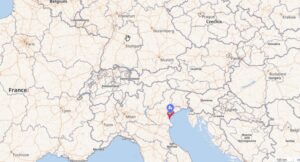
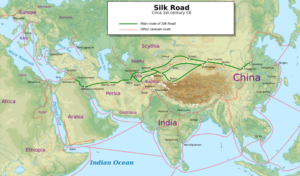
Around 697 the separate communities in the lagoon elected the first doge (duke, leader), and began some local self-government. For the next eight centuries, the city was the harbor of Christian Europe nearest to the Middle East and Asia. Venetian merchants specialized in exotic luxury goods from those regions, such as silks and spices.

In 828, intrepid Venetian merchants in Alexandria, Egypt, smuggled the relics of St. Mark back to Venice. St. Mark became the patron saint of Venice. His winged-lion symbol is the city’s emblem. By around that time, the Serenissima Repubblica di Venezia had become de facto independent of Byzantium. It was ruled by the doge and a council of aristocratic oligarchs who wielded immense power.
The Venetian navy dominated the eastern Mediterranean, far outnumbering the navies of the Byzantines or the Ottoman Empire. In 1202, Pope Innocent III called for the Fourth Crusade, with the stated goal of defeating the Ottoman ruler of Egypt and then conquering Jerusalem. The Crusaders (mostly French) commissioned Venice to build them a huge fleet. As it turned out, the Crusaders couldn’t pay for it. An exiled Byzantine prince promised to pay off the Crusaders’ debt to Venice and to fund the attack on Jerusalem … if the Crusaders would put him on the throne of Byzantium. So the Fourth Crusade marched on Constantinople – a Christian (albeit Orthodox rather than Catholic) city. In 1204 the Crusaders sacked the city. Venice brought home a pile of loot, most famously the four gilded horses now on St. Mark’s Basilica.
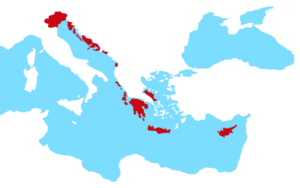
By the 15th century, Venice controlled Dalmatia (east coast of Adriatic ), Crete, Cyprus, and much of the Greek mainland.

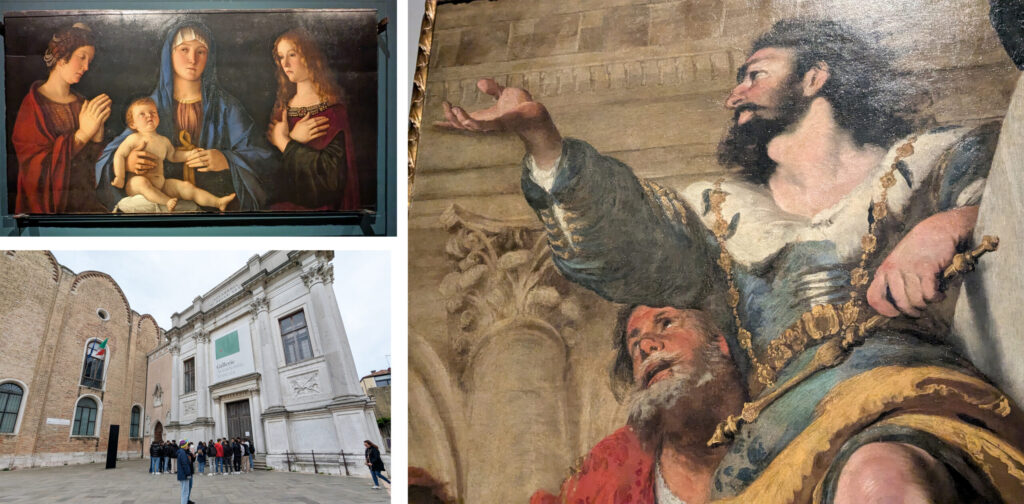
By this time Venice was Europe’s wealthiest and most powerful city-state, a hub for trade, finance, and culture. In the Renaissance, Venetian artists such as the Bellini family, Titian, Tintoretto and Veronese were famed – and widely influential – for brilliant renditions of luminous colors and sumptuous textures. The Gallerie dell’Accademia is the place to go to see works by Venetian artists. The top floor is arranged in chronological order, and has a useful audio guide. The ground floor has many other lovely works, including several Tiepolos that you don’t have to crane your neck to see. (Most of Tiepolo’s work was on ceiling frescoes.)
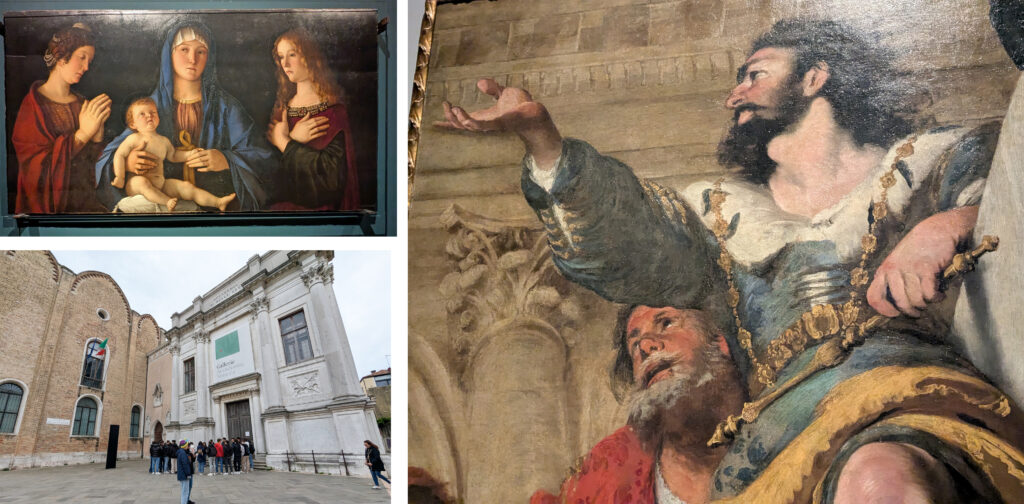
Venice’s star began to dim following Columbus’s voyage to the Americas (1492) and Vasco da Gama’s voyage to India (1498). Soon the major trade routes shifted to the Atlantic and Indian Oceans, and Venice became literally a backwater. It gradually lost its money, naval power, and territories.
1.3 19th century & later
The Venetian Republic ceased to exist in 1797, when the Treaty of Campo Formio divided northern Italy between France (under Napoleon) and Austria, which took control of Venice. Austria continued to rule the city until Venice became part of a reunified Italy in 1866.
1.4 Modern sights
We visited for 2 days in early April 2026, the week before Easter. Tickets to St. Mark’s Basilica and the Doge’s Palace were sold out until the following week: none accessible even through Viator. I should have taken it more seriously when people told me to book early, even if it’s not a holiday. What we saw instead:
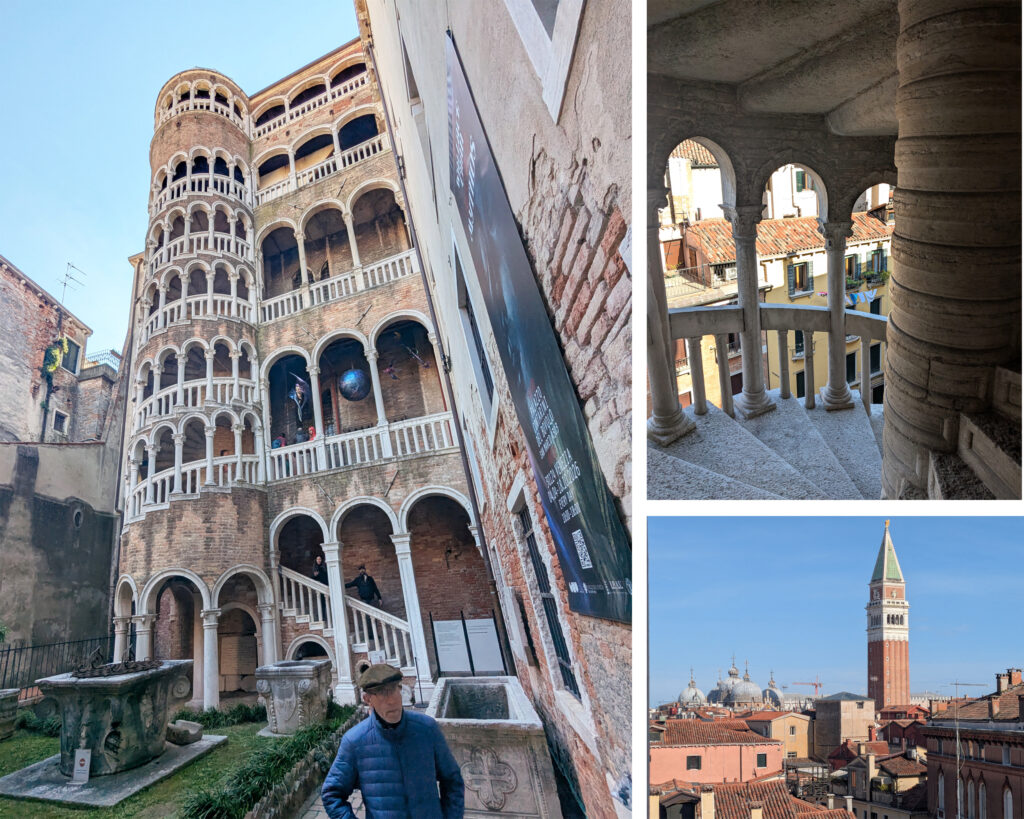
- Scala Contarini del Bovolo: 85 feet high, with 113 easy, wide, shallow steps to the Belvedere Terrace. Legend has it that in 1499, the owner decided he’d like to be able to ride his horse up 5 flights of stairs. Legend doesn’t say why. The terrace has a view of San Marco and its bell tower, the Campanile. When we were there, the exhibition rooms were closed for installation of new exhibit.
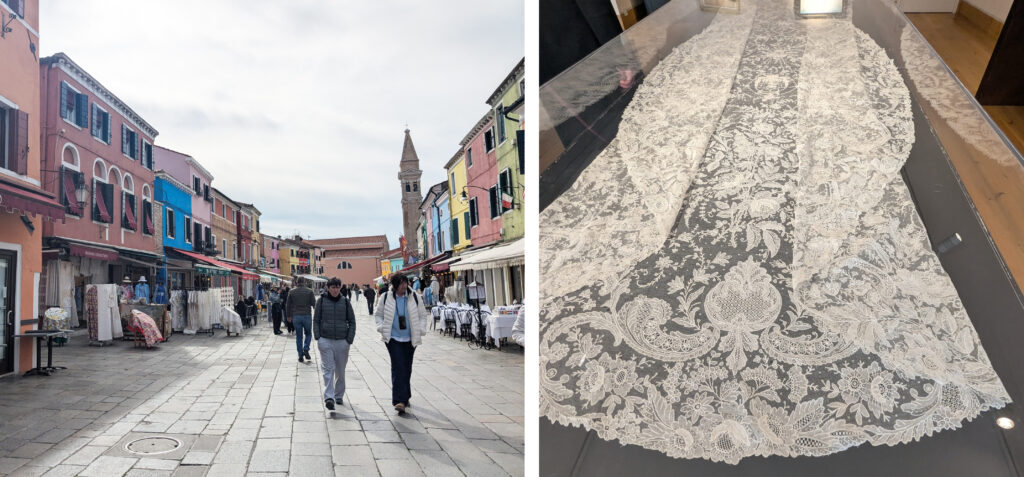
- Lace Museum, Burano (45-min. ferry ride from Venice proper). Lovely examples of handmade lace from the 16th-20th centuries. The town was full of tourists, but not as full as the Piazza San Marco or the Rialto Bridge at the same time of day. Grok warns that a lot of “Burano lace” is now made in China. We bought a piece that was cheap enough that it didn’t matter if it’s authentic.
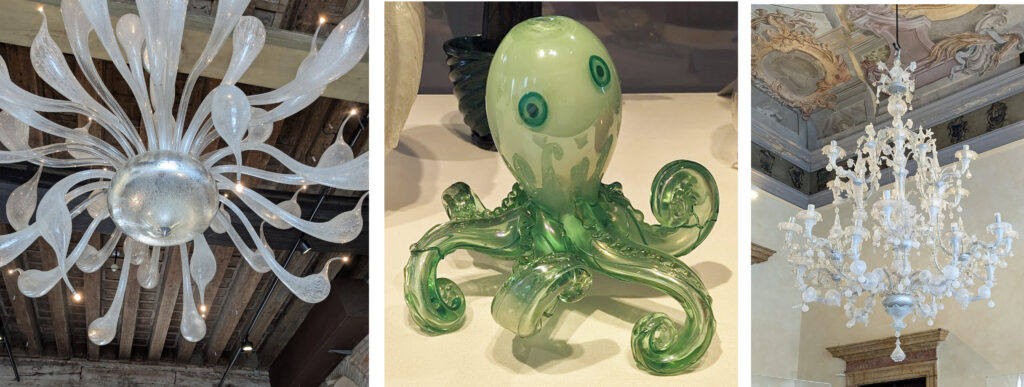
- Murano – Glass Museum, Museo del Vettrio. How did such delicate things survive centuries? You can (with some difficulty) download the museum’s informative audio guide to your phone.
- Rialto Bridge – so crowded! If you wander off into Cannaregio (to the north of the Rialto), it’s much less touristy.
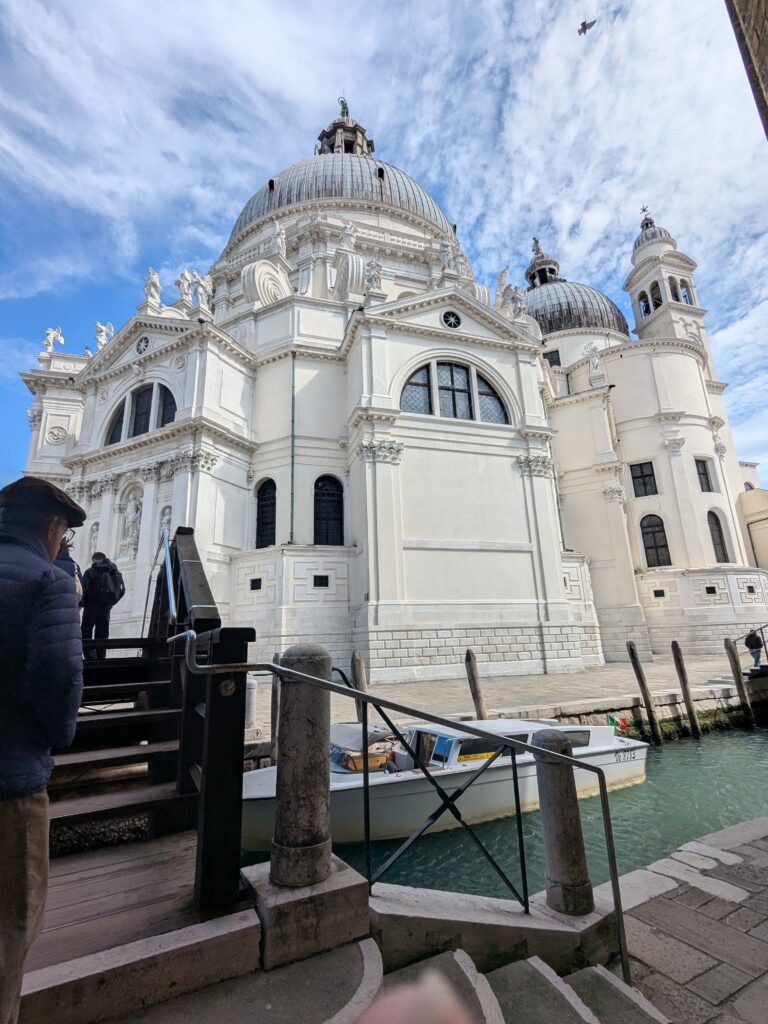
- Santa Maria della Salute – at the east end of the Grand Canal. In the standard Venetian image of the Grand Canal looking east, this is the church (circular, Renaissance, spectacular) is on the right. We were eager to climb the dome, but just missed the last tour of the day.
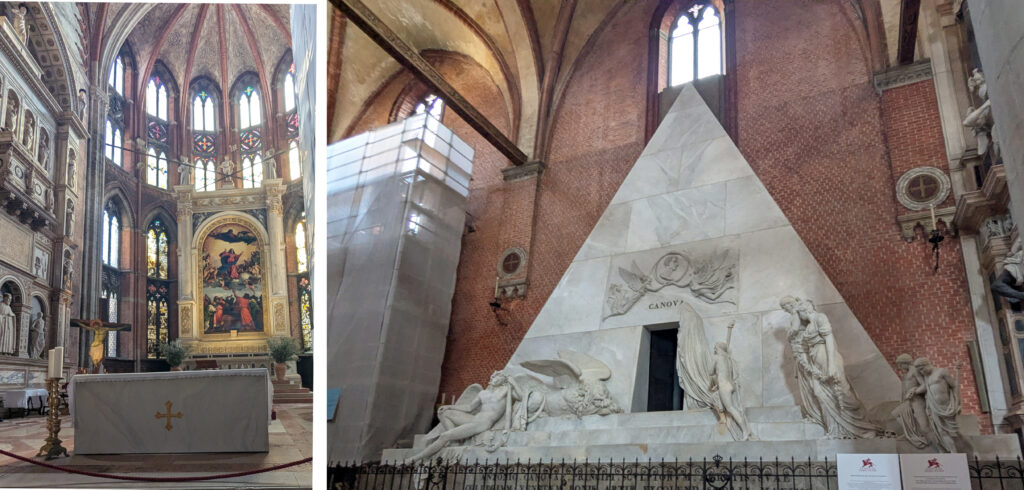
- Basilica S.Maria Gloriosa dei Frari, with Titian’s stunning Assumption and a memorial to the sculptor Canova. The Canova memorial is based on 2 models that Canova did for a different memorial, which are now in the collection of the Gallerie dell’Accademia.
1.5 Transportation
- No cars are allowed in Venice proper. The road from the mainland ends about where the main railroad station (Santa Lucia) is. There are huge parking garages in that area where you can leave a car, if you’re silly enough to arrive with one. If you’re staying in the main part of Venice, you’ll have to figure out how to schlep your luggage to your hotel from that area.
- We stayed in the Tronchetto, which is served by a water taxi and Ubers. Unless you’re traveling very light, you won’t want to be hauling luggage yourself from the railroad station to the Tronchetto, especially at night. The area isn’t geared to pedestrians, although the next morning (when we could see to keep our bearings), we had a leisurely stroll from the Tronchetto to the Gallerie dell’Accademia.
- Ubers can’t pull up to the train station entrance/exit. To reach Ubers or taxis, you have to haul your suitcases across a high bridge over the canal, then go just beyond the bus terminal.
- Water ferries: the ferries don’t move predictably – not all north on one side of the canal, all south on the other. They criss-cross. To get to a destination you have to know a route (e.g., #1), a stop where you’ll board (e.g., Ferrovia), and a particular letter (e.g., A) for the dock. To be safe, ask the attendant when you get on if this ferry is going where you want. If you no speak so good Italian, just say (for example) “Tronchetto?”, with a worried tilt of your head, and the attendant will nod yes or no. An all-day pass to the ferry makes errors less costly.
2. Culinary traditions
Venetian cuisine relies on seafood, rice or polenta, and sweet-sour-savory (agrodolce) flavors. It tends to be lighter than south-Italian fare.
2.1 Typical & unusual ingredients
Cod: baccalà
Dried salt cod, historically from Norway. See Codfish spread (2.2.3).
Crabs: moeche
Soft-shell crabs caught in the lagoon during molting season (spring and fall). Served whole, fried.
Cuttlefish or squid: seppie
See Cuttlefish, stewed (2.2.1). The ink (nero di seppia) gives a briny taste and dramatic black color to risotto and pasta.
Goby fish: gò or ghiozzo
Small bottom-dweller found only in the Venetian lagoon mudflats. Used for delicate, sweet broths in risottos.
Polenta
Cornmeal porridge.
Risotto and rice: risotto and risi
To make risotto, you slowly simmer rice in broth to make a creamy texture (without adding cream). As opposed to rice, risotto is starchy and cohesive. Venetian risottos often use Vialone Nano Veronese rice (IGP-protected).
Seafood (assorted other)
Sardines = sarde. Clams = vongole. Mussels = cozze. See also Cod, Crabs, Cuttlefish, Goby fish, and Shrimp.
Shrimp (local): schie
Tiny gray shrimp from the lagoon, subtly sweet. Often served on polenta.
Sweet-sour sauce: agrodolce
Pine nuts and raisins, used in preparations such as sweet-sour sardines (2.2.3). A signature combo from the medieval trade with the East.
Zucchini flowers: fiori di zucca
Flowers of the plant, rather sweet. Sometimes stuffed with ricotta, mozzarella, anchovies, or herbs, then fried. I’ve had this in NYC and loved it, but didn’t see it on the menu in Venice in March.
2.2 Classic dishes
2.2.1 Entrees
Entrees are secondi piatti, second courses.
Cod: baccalà alla vicentina
Slow cooked with onions, milk, olive oil, garlic, and anchovies. Served with polenta.
Cuttlefish, stewed: seppie in umido or seppie con polenta
Cuttlefish stewed in tomato, onion, white wine, and herbs, often served over polenta.
Horse-meat stew: patissada de caval
Horse meat braised in red wine with carrots, onions, and spices. Rich and gamey.
Liver Venetian-style: Fegato alla veneziana
Thin slices of liver sautéed with sweet onions, white wine, olive oil, and parsley. Served with polenta. Bold and savory.
Octopus salad: insalata di polpo
Boiled or grilled octopus with leafy greens, celery, olive oil, lemon, and light vinegar.
Pasta with anchovies & onions: bigoli in salsa
Thick whole-wheat pasta with anchovy-onion sauce.
Rice and peas: risi e bisi
Creamy rice with peas.
Risotto with cuttlefish ink: Risotto al nero di sepia
Venice’s signature dish, with cuttlefish ink (2.1). Often includes pieces of cuttlefish, garlic, white wine, and buter.
Scallops Venetian-style: capesante alla veneziana
Scallops sautéed or baked with garlic, breadcrumbs, parsley, olive oil, and lemon.
Seafood, mixed and fried: fritto misto di mare
Lightly battered and fried calamari, shrimp, sardines, zucchini flowers (2.1), and small fish.
Spaghetti with shrimp: spaghetti alla Busara
Spaghetti with langoustines or prawns in a sauce of tomato, garlic, and white wine, spicy-sweet from chili and sometimes brandy.
2.2.2 Soups
Simple broths and thick vegetable medleys (menestre) are common.
Bean soup: pasta e fasioi (pasta fagioli alla veneta)
Slow-cooked borlotti (cranberry) beans, small pasta (ditalini or broken tagliatelle), onions, pancetta or pork rind, bay leaf, potato, herbs. Often finished with olive oil or Parmesan.
Fish soup, Venetian: zuppa di pesce alla veneziana
Broth with mixed seafood (shrimp, clams, white fish), veggies (carrots, onions), olive oil, garlic, and white wine. Sometimes served over toast rubbed with garlic.
Risotto soups: risi e bisi or risotto di gò
Soupier risottos, with peas or with goby fish (2.1).
Vegetable soup: minestra di verdure
Lightly simmered broth with finely chopped carrots, celery, onions, zucchini, tomatoes, and herbs.
2.2.3 Snacks
Classic Venetian snacks are cicchetti, tapas-style plates served in wine bars, sometimes shared or eaten standing. I love cicchetii: you get to try 4-5 different flavors in small bites.
Codfish spread: baccalà mantecato
Creamed cod emulsified with olive oil, garlic, milk, and parsley. Served on toast, crostini, or polenta.
Crostini or bruschetta
Toast topped with mortadella or prosciutto, seafood (shrimp, octopus salad, anchovies), veggies (artichokes, tomatoes, eggplant), cheese spread, or olive tapenade.
Eggs and anchovies: ovetto con acciuga
Halves of hard-boiled eggs topped with marinated anchovies, sometimes with capers or herbs.
Meatballs: polpette
Small meatballs of beef, pork, or fish, seasoned simply and fried until crisp. Served on toothpicks or bread.
Sandwiches: tramezzini
Triangular white-bread sandwiches with fillings of tuna, prosciutto, or egg.
Sardines: sarde in saor
Sardines marinated in a sweet-sour onion sauce with white vinegar, raisins, pine nuts, and sometimes bay leaves, then fried. The agrodolce flavor (2.1) is very Venetian.
Seafood, mixed: fritti misti
Bite-sized fried calamari, shrimp, zucchini flowers (2.1), olives.
Shrimp and polenta: schie con polenta
Gray lagoon shrimp (2.1) on small squares of grilled or fried polenta.
2.2.4 Desserts
Try historic pastry-shops for these.
Cannoli
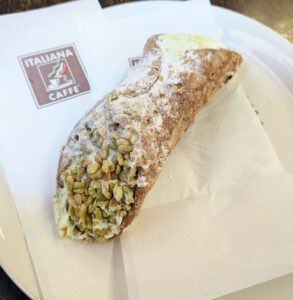
Pastry shell rolled into a tube and fried until crisp, then filled with a sweet ricotta. The ends are dipped in pistachios, chocolate chips, fruit bits, etc. Having the shell fresh rather than refrigerated (soggy) makes a tremendous difference. These originated in Sicily, but the one I had in Venice was so tasty that I’ve included it on the list of Venetian cuisine.
Christmas cake: Nadalin
Star-shaped Christmas cake with almonds and pine nuts.
Cookies, butter: baicoli
Thin, crisp, oblong butter cookes, subtly sweet. Good for dunking.
Cookies, cornmeal: zaletti or zaeti
“Little yellow ones” with a crumbly texture, flavored with lemon zest, vanilla, and raisins or pine nuts. Good for dipping in coffee or wine.
Cookies, S-shaped: bussolà, buranelli, bossolai
Crunchy “S”-shaped cookies from Burano, made with flour, butter, eggs, and sugar.
Custard, fried: crema fritta
Creamy vanilla or lemon custard squares, breaded and deep fried so they’re crisp outside and soft inside, dusted with powdered sugar. A Carnival favorite. I was looking for these – my favorite Italian restaurant in NYC served them – but couldn’t find them in late March, perhaps because Carnival was long over.
Doughnuts: frittelle, fritole veneziane
Fried dough balls, fluffy inside and crisp outside, often filled with raisins, pine nuts, or candied fruit, and dusted with powdered sugar. Seasonal (Carnival), but some pasticcerie make them year round.
Easter bread: fugassa
Sweet bread with candied fruit.
Fruitcake: pinza veneta or pinsa
Spiced fruit-and-nut cake with dried bread, milk, raisins, pine nuts, apples, fennel seeds, and sometimes figs or chestnuts. Usually served around Christmas, New Year’s, and Epiphany.
Nougat with almonds: mandorlato
Brittle almond-studded candy, with a base of honey, sugar, and egg whites. Tasty but capable of extracting your fillings.
Tiramisu
The most famous Venetian dessert: coffee-soaked ladyfingers, creamy mascarpone cheese, eggs, sugar, and a dusting of cocoa powder. Some versions have rum or Marsala.
2.2.5 Beverages
Cocktails & after-dinner drinks
- Aperol Spritz = Spritz Veneziano, mix of Prosecco or white wine with Aperol (bitter orange liqueur), soda water, ice, and an orange slice. Bittersweet and low alcohol. Variations: Select Spritz (Venetian Select bitter, slightly less sweet) or Campari Spritz (more bitter).
- Bellini: invented 1948 at Harry’s Bar by Giuseppe Cipriani. Prosecco with white peach puree, sometimes a dash of raspberry for color. Fruity and effervescent.
- Grappa: strong, clear grape pomace brandy. A fiery digestif after a meal.
- Sgroppino: after-dinner digestif of lemon sorbet blended with vodka or Prosecco and a splash of sparkling wine.
- Puccini: Prosecco plus tangerine juice. Similar to a mimosa.
Wine
An ombra de vin is a small glass of wine.
- Prosecco (local): Try local varieties from Conegliano-Valdobbiadene.
- White: Soave, Pinot Grigio
- Red: Valpolicella
2.3 For those with specific tastes or needs
2.3.1 For the meek
Venetian cuisine leans to subtle rather than spicy. “Without strong garlic” = senza aglio forte. Light or simple = leggero.
- Entrees: Rice and peas (2.2.1), Risotto with goby (2.1), Scallops (2.2.1), Codfish spread (2.2.3), Polenta with shrimp (2.2.3),
- Soups: Vegetable (2.2.2)
- Salad: chicory (radicchio rosso di Treviso)
2.3.2 For the bold
- Entrees: Crabs (2.1), Shrimp with polenta (2.1), Risotto with cuttlefish (2.1), Goby fish risotto (2.1), Liver (2.2.1), Horse-meat stew (2.2.1), Sardines (2.2.3).
2.3.3 Low-carb or diabetic
Focus on grilled or poached seafood, salads, veggie sides, and broths. Without pasta / risotto / polenta = senza pasta / risotto / polenta. Grilled = grigliato. Light or simple = leggero.
- Entrees: Scallops (2.2.1). Octopus salad (2.2.1).Seafood, mixed and fried (2.2.1), without breading or grilled. Codfish spread (2.2.3). Also: grilled branzino (sea bass), orate (sea bream), zander (pike-perch), or trout.
2.3.4 Low fat
Try fresh seafood or veggies with minimal olive oil. Steamed = cotto al vapore. Lightly grilled = grigliato leggero. Without butter / oil = senza burro / olio extra.
- Entrees: Scallops (2.2.1). Octopus salad (2.2.1). Also: fish grilled (alla griglia) or poached (bollito). Mussels (cozze) or clams steamed in white wine, garlic, and parsley. Pasta with veggies.
- Soups: Fish (2.2.2).
2.3.5 Vegetarian
- Entrees: Peas and rice (2.2.2). Risotto with mushrooms or veggies (2.1). Also: dishes with squash / pumpkin (zucca) that are vegetarian spins on classics like sardines (2.2.3).
- Soups: Bean (2.2.1).
3. Restaurants
Avoid the tourist traps on St. Mark’s Square or near the Rialto.
Terms
- Wine bars = bacari
- Small bites (tapas style) = cicchetti
- Taverns = osterie
- Casual restaurants = trattorie
Where we dined (all tasty by not life-changing)
- La Rivista – delicious lunch.
- Punto G – traditional dinner menu
- Murano Trattoria Valmarana – directly across the canal from the Museo del Vettrio (glass museum). Nice lunch.
- Cafe of the Hotel Antiche Figure: a good place to people- and gondola-watch with a glass of wine and a couple cicchetti.
Michelin rated
For popular restaurants, ALWAYS MAKE RESERVATIONS.
- Quadri: stunning view of St. Mark’s Square. Tasting menu.
- Il Ridotto: historic setting
- Osteria alle Testiere: exceptional seafood
- Glam Enrico Bartolini: innovative and high-end, local produce.
- Wistèria: creative dining with seasonal twists.
- Terrazza Danieli
- Alle Corone
- Ai Mercanti
- Oro Restaurant (St. Regis): rooftop & canal views.
Authentic Venetian
- Trattoria al Gatto Nero, Burano island. Famous for risotto di gò (goby fish) and fresh seafood. Family-run since 1965.
- Vini da Gigio, Cannaregio: cozy trattoria with traditional Venetian food.
- Antiche Carampane: fresh seafood. Off the beaten path.
- Nevodi: fresh seafood. Off the beaten path.
Casual
- Osteria Fanal Del Codega: seafood
- Bacaro Quebrado: excellent cicchetti
- Osteria al Vecio Forno: traditional
- Trattoria Dona: classic Venetian food.
Grok mentions in food discussions:
- Da Fiore
- Osteria al Squero
- Cantina del Vino già Schiavi in Dorosoduro
- Cantina do Mori, the oldest wine bar, dating from 1462
- Pasticceria Tonolo: historic pastry shop, for frittelle
- Rosa Salva: historic pastry shop, for tiramisù
- Rizzardini: historic pastry shop
More
For more in the Fearless Foreign Food series, see here.